








Jasmine Sambac absolute
Floral > White Flowers > Jasmine > Solar > Animalic
Jasminum sambac (L.) Aiton
Synonyms : Jasminum bicorollatum Noronha // Jasminum trifoliatum Telfair


| Company | Ingredient Name | Learn more | Naturality | Certifications | MOQ | Latin name | Treated part | Origin |
|---|---|---|---|---|---|---|---|---|

|
JASMIN SAMBAC
F1551
|
Discover | Absolue |

|
- | Jasminum sambac (L.) Aiton | Fleur | Inde |

|
JASMINE SAMBAC ABS P%N
JAAB-1
|
Discover | Naturel | 10 grs | - | - | - | |

|
Absolue de Jasmin Sambac - 30 gr | Discover | - | 30grs | - | - | - | |

|
JASMINE SAMBAC ABS
952605
|
Discover | Naturals |

|
- | - | - | - |
|
|
JASMINE SAMBAC FIRABS
942609
|
Discover | Naturals | - | - | - | - | |

|
JASMINE SAMBAC Absolute
M_0055030
|
Discover | Naturel | - | - | - | - | |
|
|
JASMINE SAMBAC Absolute India
M_0055030
|
Discover | Naturel | - | - | - | - | |
|
|
JASMINE SAMBAC Absolute India (decolourised on carrier - IPM)
M_0053371
|
Discover | Naturel | - | - | - | - | |

|
JASMINE SAMBAC ABSOLUTE
4410000027
|
Discover | Naturel | - | - | - | - |
F1551

JAAB-1
952605
942609
M_0055030
M_0055030
M_0053371
4410000027

General Presentation
-
CAS N° :
91770-14-8 // 1034798-23-6 -
EINECS number :
292-797-4 -
FEMA number :
2598
-
Volatility :
Heart -
Price Range :
€€€€€
Physico-chemical properties
-
Appearance :
Yellow to orange liquid -
Density :
-
Refractive Index @20°C :
Donnée indisponible. -
Optical rotation :
-
Vapor pressure :
Donnée indisponible. -
Flash Point :
Donnée indisponible. -
Acid Value :
Botanical informations
Botanical name :
Jasminum sambac (L.) Aiton
Synonyms : Jasminum bicorollatum Noronha // Jasminum trifoliatum Telfair
Botanical profile :
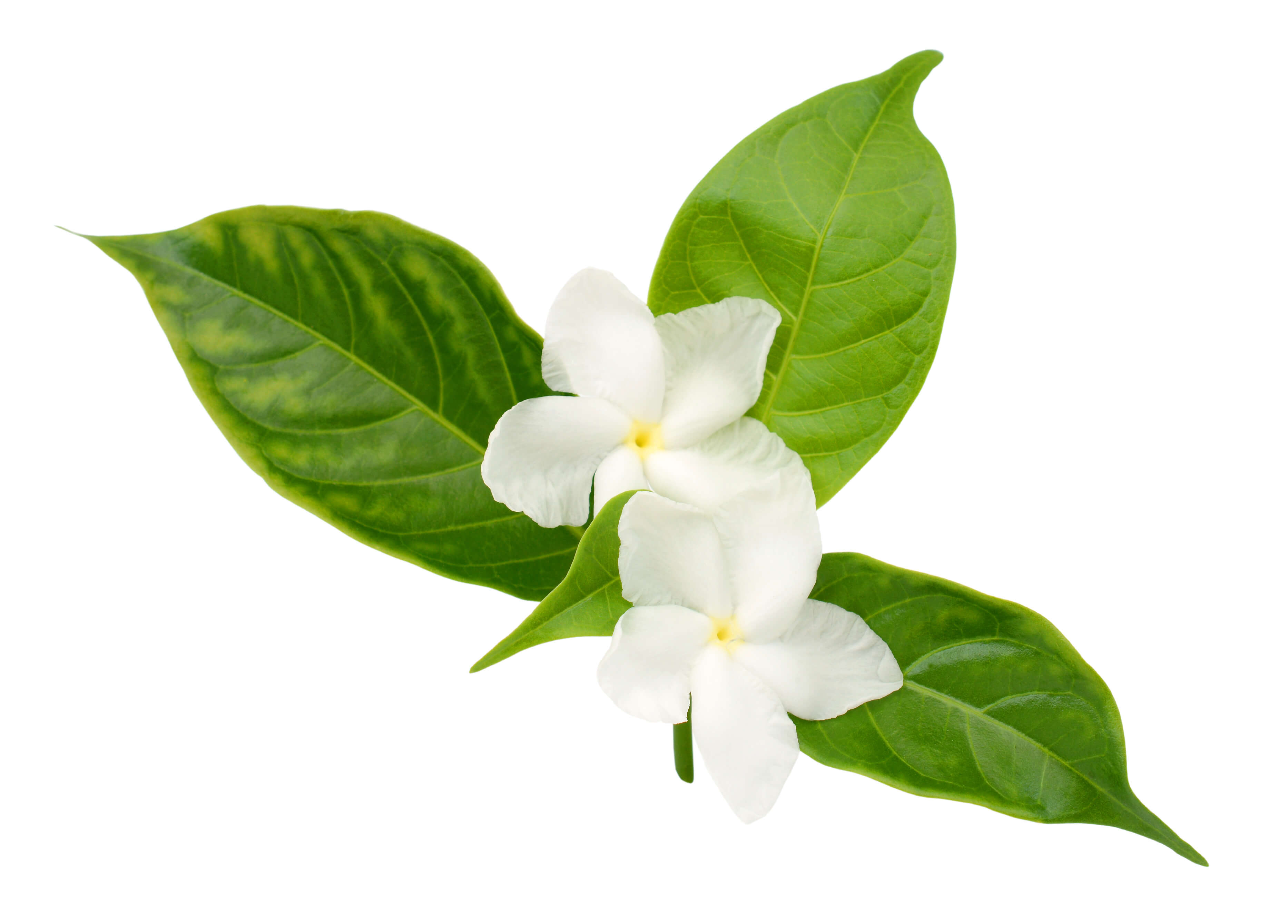
Jasminum, whether sambac, grandiflorum, or auriculatum, is a white-flowered shrub that can grow from 1 to 3 meters tall, often forming hedges in cultivated fields. It belongs to the Oleaceae family and the genus Jasminum L.
Chemotypes :
In perfumery, we use three species from the Jasminum L. genus :
- Jasminum grandiflorum L. (Jasmine Grandiflorum Absolute / Jasmine Grandiflorum Concrete) found for example in Grasse or Egypt.
- Jasminum sambac (L.) Aiton (Jasmine Sambac Absolute / Jasmine Sambac Concrete) mostly cultivated in India.
These two varieties are easily recognizable as grandiflorum has large and rounded flowers while those of sambac are thinner and longer.
- Jasminum auriculatum Vahl (Jasmine Auriculatum Absolute / Jasmine Auriculatum Concrete) mainly cultivated in India.
Extractions & Uses
Extraction process :
The jasmine sambac flower, also known as "White gold" in India, is usually harvested from March to September. These flowers are handpicked at sunrise and must be processed within the day because once separated from the shrub, they can only survive for a few hours. The flower buds are then transported to the factory, and a resting phase of approximately 1 to 2 hours allows for the aeration and opening of the buds. At this moment, the jasmine flowers can be processed.
Formerly extracted using the enfleurage technique, the flower is now mainly processed with volatile solvents. This extraction is carried out using hexane. The flowers macerate in the solvent for 10 to 12 hours until exhausted. They are then removed from the extractor, and the solvent is evaporated. This produces a waxy, greenish-orange paste, the Jasmine Sambac Concrete (yielding 0.1 to 0.2% from fresh flowers).
In most cases, the extraction does not stop there and goes on to obtain the Jasmin Sambac Absolute through a succession of steps: alcohol glazing, wax filtration, and alcohol evaporation. The yield of such a product is then less than 0.1% from fresh flowers.
At this stage, molecular distillation may practiced to match regulatory or olfactory requirement. The result is a Jasmin Sambac Absolute DM.
As is the case with many flowers, the harvesting period has a significant influence on the scent. For Jasmin Sambac, it is known that jasmine flowers harvested in spring (March-May) are much greener and more vibrant because of an higher farnesene content , while those harvested in autumn (September-October) are more animalic and dense because of indole content.
Uses in perfumery :
f
Stability :
Terpens found in this extract are subjected to polymerization under high oxydation.
Esters found in this extract may form their corresponding acid under the effect of heat.
The presence of Methyl Anthranilate can cause coloration of the extract when in contact with aldehydes and ketones, forming Schiff bases.
Major Components :
- Farnesene (20 - 25%)
- Benzyl acetate (15 - 20%)
- Methyl linoleate (≈13%)
- Linalool (≈15%)
- Methyl anthranilate (≈8%)
- (Z)-3-hexenyl benzoate (≈8%)
- Benzyl alcohol (≈7%)
- D-germacrene (≈4%)
- (Z)-3-Hexenyl acetate (≈2%)
- Phenylacetonitrile (≈2%)
- Indole (≈2%)
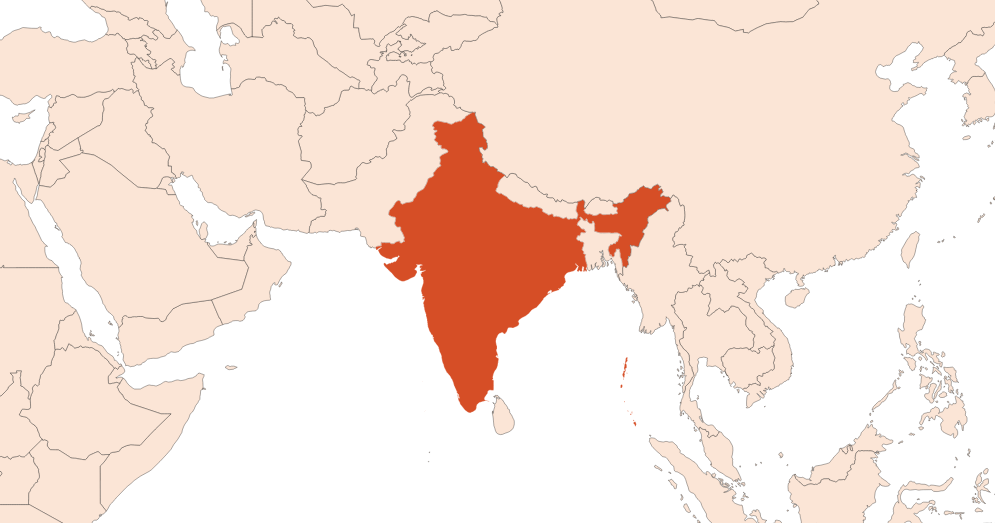
Photo credits: ScenTree SAS
Other comments :
While Jasminum grandiflorum L. (Jasmine Grandiflorum Absolute) has been used by perfumers since the beginning of perfumery, Jasminum sambac L. only gained popularity in the 1980s. Although the absolute is produced in relatively large volumes compared to other flowers, it represents only a small part of the global market for jasmine (~10%). Indeed, the main part of the flowers are reserved for religious ceremonies, decoration, divine offers, ornaments, or in women's hairstyles. This flower is also the queen of weddings.
In Sanskrit, one of India's official languages, "Sambac" means "hauting perfume." Jasmine is also the national flower of Indonesia, despite cultivation there is quite rare.
The cultivation of Jasminum sambac L. is subject to thrips invasions (small insects attacking the leaves), moths, and nematodes (attacking the roots).
The scent of Jasminum sambac L. is greener due to its high level of Farnesene. The scent of Egyptian jasmine is more fruity and sweet. Indian jasmine, on the other hand, is more jammy, gourmand and petal-like.
While Jasminum grandiflorum L. (Jasmine Grandiflorum Absolute) has been used by perfumers since the beginning of perfumery, Jasminum sambac L. only gained popularity in the 1980s. Although the absolute is produced in relatively large volumes compared to other flowers, it represents only a small part of the global market for jasmine (~10%). Indeed, the main part of the flowers are reserved for religious ceremonies, decoration, divine offers, ornaments, or in women's hairstyles. This flower is also the queen of weddings.
In Sanskrit, one of India's official languages, "Sambac" means "hauting perfume." Jasmine is also the national flower of Indonesia, despite cultivation there is quite rare.
The cultivation of Jasminum sambac L. is subject to thrips invasions (small insects attacking the leaves), moths, and nematodes (attacking the roots).
The scent of Jasminum sambac L. is greener due to its high level of Farnesene. The scent of Egyptian jasmine is more fruity and sweet. Indian jasmine, on the other hand, is more jammy, gourmand and petal-like.
Labelling
Allergens :
Signal word :
Danger
Hazard pictograms :

Precautionary statements :
| HAZARD | PRECAUTION |
|---|---|
| H315 Causes skin irritation.
H317 May cause an allergic skin reaction. H330 Fatal if inhaled. H412 Harmful to aquatic life with long lasting effects. |
IFRA
IFRA 51th :
This ingredient is restricted by the 51th amendment
-
Restriction type :
RESTRICTION -
Cause of restriction :
DERMAL SENSITIZATION -
Amendment :
49
Quantitative limit on the use :
| Cat.1 | Cat.2 | Cat.3 | Cat.4 |
Cat.5
A
B
C
D
|
Cat.6 | |||
|---|---|---|---|---|---|---|---|---|
| 0,68 % | 0,2 % | 4,1 % | 3,8 % |
0,96 %
0,96 %
0,96 %
0,96 %
|
||||
|
Cat.5
A
B
C
D
|
Cat.6 | |||||||
|
0,96 %
0,96 %
0,96 %
0,96 %
|
2,2 % | |||||||
|
Cat.7
A
B
|
Cat.8 | Cat.9 |
Cat.10
A
B
|
Cat.11
A
B
|
Cat.12 | |||
|
7,7 %
7,7 %
|
0,4 % | 7,4 % |
26 %
26 %
|
15 %
15 %
|
||||
|
Cat.10
A
B
|
Cat.11
A
B
|
Cat.12 | ||||||
|
26 %
26 %
|
15 %
15 %
|
No Restriction | ||||||
Disclaimer :
ScenTree is solely responsible for the information provided here.
To learn more about IFRA's standards : https://ifrafragrance.org/safe-use/library