








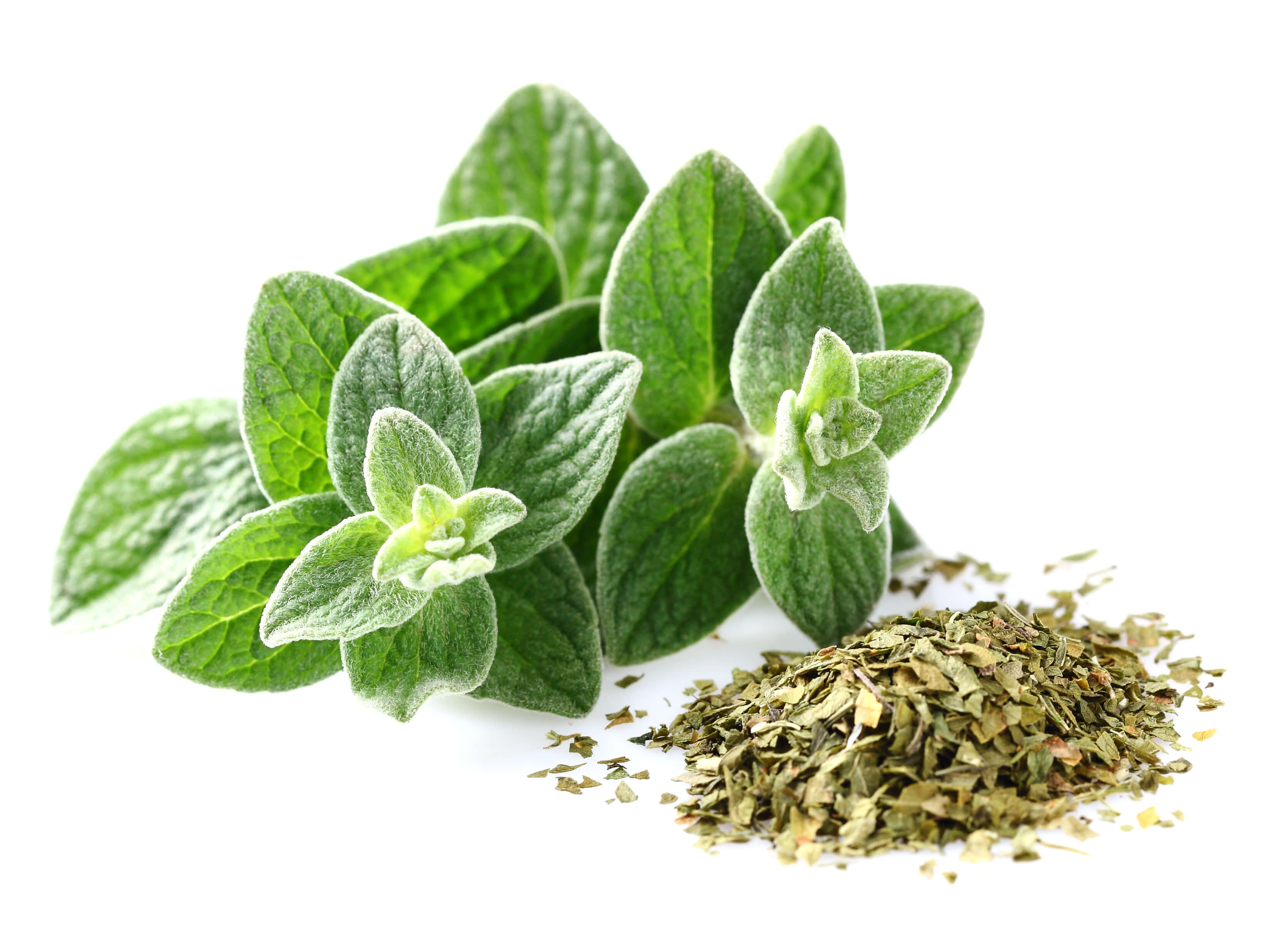
Origanum oil
Herbal > Agrestic > Grassy > Leather
Origanum vulgare L.
Synonyms : Origanum elegans Sennen // Origanum floridum Salisb.


| Company | Ingredient Name | Learn more | Naturality | Certifications | MOQ | Latin name | Treated part | Origin |
|---|---|---|---|---|---|---|---|---|

|
ORIGANUM OIL ORGANIC
OVB
|
Discover | Pure & Natural Organic |


|
1 Kg | Origanum vulgare ct. carvacrol | Leaves & Flowers | Spain |
|
|
ORIGANUM OIL
OV
|
Discover | Pure & Natural |

|
1 Kg | Origanum vulgare ct. carvacrol | Leaves & Flowers | Spain |
|
ORIGAN VERT
B708
|
Discover | Huile essentielle |
|
- | Origanum vulgare subsp. hirtum (Link) Ietsw. | Sommité fleurie | Espagne |
|
|
ORIGAN VERT
B707
|
Discover | Huile essentielle |
|
- | Origanum vulgare subsp. hirtum (Link) Ietsw. | Sommité fleurie | France |
|
|
ORIGAN
706
|
Discover | Huile essentielle | - | Origanum vulgare L. | Sommité fleurie | Albanie | |
|
OREGANO BALKAN EO
ORIGHE-1
|
Discover | Naturel | 10 grs | - | - | - | |

|
Huile essentielle d'Origan - 30 gr | Discover | - | 30grs | - | - | - | |

|
Origanum Oil | Discover | Essential Oils | - | - | - | - |
OVB

OV
B708
B707
706
ORIGHE-1

General Presentation
-
CAS N° :
8007-11-2 -
EINECS number :
616-905-4 -
FEMA number :
2828
-
Volatility :
Heart/Base -
Price Range :
€€€
Physico-chemical properties
-
Appearance :
Yellow liquid -
Density :
0,930 - 0,955 @20°C -
Refractive Index @20°C :
1,500 - 1,513 @20°C -
Optical rotation :
–5° // +2° -
Vapor pressure :
Donnée indisponible. -
Flash Point :
Donnée indisponible. -
Acid Value :
Botanical informations
Botanical name :
Origanum vulgare L.
Synonyms : Origanum elegans Sennen // Origanum floridum Salisb.
Botanical profile :
Oregano is a plant belonging to the Lamiaceae family and the genus Origanum L.
The Lamiaceae family is the most important in perfumery, notably including lavenders, basils, mints, sages, rosemaries, patchoulis, and thymes.
Chemotypes :
The genus Origanum L. is very largue, as it designates lots of species. In perfumery, we communly use two species :
Origanum vulgare L.: Common oregano - Oregano EO, to which belong two major species : var. macrostachyum (from Crete, a Carvacrol and Thymol chemotype) and var. virescens (containing Carvacrol and Terpineol or Thymol alone or Beta-Terpineol). Many sub-varieties also exist, but we are not explaining them in details here.
Origanum majorana L. : Including Marjoram EO (Thujanols or Terpinen-4-ol chemotype)
Other species of interest:
Origanum compactum L. : Oregano with compact inflorescence, found in Morocco and in the South-West of Spain, gives an oil rich in Carvacrol, Thymol, or both.
Origanum glaucum L. : Glaucous oregano of Afghanistan, containing Carvacrol and a small part of Thymol.
Origanum floribundum L. : Flower-bearing oregano, containing Carvacrol and a small part of Thymol.
Origanum syriacum L.: Syrian Oregano (A thymol and a Carvacrol chemotype)
Origanum xmajoricum Cambess. : Italian Oregano
Origanum dictamnus L. : Rich in pulegone
Extractions & Uses
Extraction process :
Oregano is a group of leafy stems, with hairy leaves. Flowering occurs between june and august. The yield out of the obtention of the essential oil is always better during the hot flowering season, rather than the cold winter, even if oregano is a perennial plant. Its growth is majorly wild, but can also be controlled after 3 or 4 month of growth, under greenhouse. Propagation is done by sowing (during spring) or cutting, depending on the regions of culture, and the plant is cultivated once or twice a year. Plants are spaced-apart from at least 10 cm. One plantation can reach up to 63 000 plants per hectare. Soil can be treated with ammonium phosphate to enhance the harvesting yield.
Cutting of the plant starts when half of the plants have flowered, during warm season. Cutting is done manually, for about 1260 cumulated hours per hectare (labour supply represents the major part of the price of oregano). After harvesting, stems are dried in the shade for a few hours, to reach 7 to 12% of humidity. Leaves can also be frozen to extract them later.
Once dry, stems are compacted in a steam distillation tank. Under pressure, steam is injected in the tank and takes volatile compounds to the top of the distillation column. In one hour and a half, essential oil is obtained by decanting after being liquefied with a 0,08% yield, which is very low. This can explain the low usage of oregano in perfumes and its price.
Uses in perfumery :
Oregano is rarely used in perfumes because of its price, but can be used in fine fragrance to bring a natural aromatic note and a leather nuance.
Stability :
Terpenes contained in this oil may polymerize under the effect of strong oxydation.
Major Components :
| Component | % min | % max |
|---|---|---|
| Carvacrol | 60 | 80 |
| p-Cymene | 4 | 10 |
| Gamma-Terpinene | 3 | 9 |
| Linalool | 3 | |
| Thymol | 2 | 10 |
| Beta-caryophyllene | 0.50 | 4 |
| Myrcene | 0.50 | 3 |
| Alpha-Terpinene | 0.50 | 2 |
| Terpinen-4-ol | 0.50 | 2 |
| Thymol | 0.50 | 2 |
| Alpha-pinene | 0.20 | 2.50 |
| Alpha-thuyène | 0.20 | 1.50 |
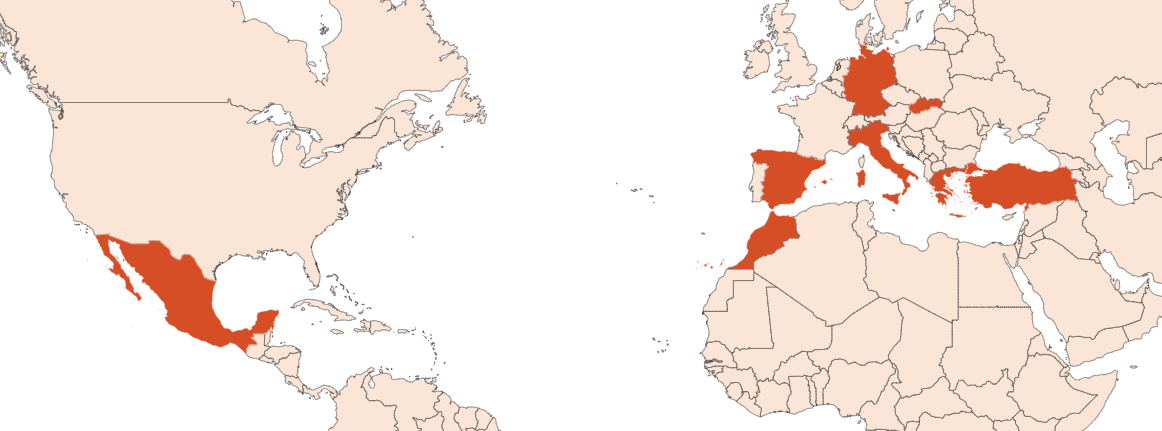
Photo credits: ScenTree SAS
Other comments :
The term oregano comes from the Greek "oros" meaning mountain and "ganos" meaning ornament.
Oregano's quality varies according to its location, altitude, temperature of culture and many other parameters. This gave birth to many varieties and crossings incuding hirtum, vulgare, glandulosum and viride.
Oregano from the balkans is considered as the best quality of oregano on Earth. Many adulterations are to be mentionned, using oils with a close composition as Red Thyme EO or Marjoram EO, to make Oregano EO less costly. Standards make it possible to avoid those practices.
Marjoram EO is much more floral than Oregano EO, meanwhile Red Thyme EO and White Thyme EO are more animalic, because of the presence of Thymol.
The term oregano comes from the Greek "oros" meaning mountain and "ganos" meaning ornament.
Oregano's quality varies according to its location, altitude, temperature of culture and many other parameters. This gave birth to many varieties and crossings incuding hirtum, vulgare, glandulosum and viride.
Oregano from the balkans is considered as the best quality of oregano on Earth. Many adulterations are to be mentionned, using oils with a close composition as Red Thyme EO or Marjoram EO, to make Oregano EO less costly. Standards make it possible to avoid those practices.
Marjoram EO is much more floral than Oregano EO, meanwhile Red Thyme EO and White Thyme EO are more animalic, because of the presence of Thymol.
Labelling
Allergens :
Geraniol - Citronellol
Signal word :
Danger
Hazard pictograms :
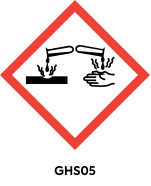
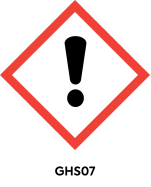
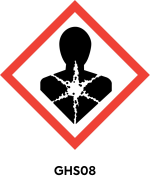
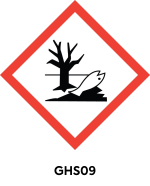
Precautionary statements :
| HAZARD | PRECAUTION |
|---|---|
| H302 Harmful if swallowed.
H304 May be fatal if swallowed and enters airways. H315 Causes skin irritation. H317 May cause an allergic skin reaction. H318 Causes serious eye damage. H411 Toxic to aquatic life with long lasting effects. |
P264 Wash ... thoroughly after handling. P270 Do no eat, drink or smoke when using this product. P272 Contaminated work clothing should not be allowed out of the workplace. P273 Avoid release to the environment. P280 Wear protective gloves/protective clothing/eye protection/face protection. P301 + P310 IF SWALLOWED: Immediately call a POISON CENTER/doctor/… |
IFRA
IFRA 51th :
This ingredient is restricted by the 51th amendment
Annexe I :
Some regulated synthetic ingredients are found in nature and in certain proportions in natural ingredients. This presence in nature has to be taken into account when calculating limits of use recommended by the IFRA. In case you do not know these concentrations, you can use the ones estimated by the IFRA. Here they are :
| List of regulated compounds contained in this ingredient | ||
|---|---|---|
| Regulated ingredient name | CAS N° | Estimated Concentration |
| Eugenol | 97-53-0 | 0,08 |
| Carvone | 99-49-0 | 0,1 |
Disclaimer :
ScenTree is solely responsible for the information provided here.
To learn more about IFRA's standards : https://ifrafragrance.org/safe-use/library