












Photo credits: ScenTree SAS
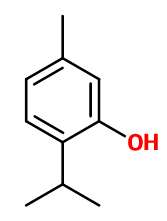
Thymol
Herbal > Agrestic > Grassy > Leather > Animalic
5-methyl-2-propan-2-ylphenol ; Apiguard ; Para-cymen-3-ol ; Alpha-cymophenol ; 3-para-cymenol ; 3-hydroxy-para-cymene ; 3- hydroxy-1-methyl-4-isopropylbenzene ; 5-methyl-2-(1-methylethyl)phenol ; 5-methyl-2-isopropyl-1-phenol ; 5-methyl-2-isopropylphenol ; Isopropyl cresol ; 2-isopropyl-5-methylphenol ; Thyme camphor


Photo credits: ScenTree SAS
| Company | Ingredient Name | Learn more | Naturality | Certifications | MOQ | Purity |
|---|---|---|---|---|---|---|

|
THYMOL
THY-1
|
Discover | - | 10 grs | 99 - 100 | |

|
THYMOL CRYSTALS NF
M_0051351
|
Discover | Synthétique | - | - | |

|
Thymol | Discover | Synthetic Aroma Chemicals | - | - | |
|
|
Thymol natural | Discover | Natural Aroma Chemicals | - | - |
THY-1

M_0051351

General Presentation
-
CAS N° :
89-83-8 -
EINECS number :
201-944-8 -
FEMA number :
3066 -
FLAVIS number :
4,006
-
JECFA number :
709 -
Volatility :
Heart/Base -
Price Range :
€€
Physico-chemical properties
-
Appearance :
White solid -
Density :
0,965 -
Refractive Index @20°C :
Donnée indisponible. -
Optical rotation :
Donnée indisponible. -
Vapor pressure :
Donnée indisponible. -
Flash Point :
101°C (213,8°F)
-
Molecular formula :
C10H14O -
Molecular Weight :
150,22 g/mol -
Log P :
3,3 -
Fusion Point :
50°C (122°F) -
Boiling Point :
233°C (451,4°F) -
Detection Threshold :
86 à 790 ppb (0,000079%)
Chemistry & Uses
Uses in perfumery :
Thymol is used in thyme reconstitutions and in aromatic notes.
Year of discovery :
Data not available.
Natural availability :
Thymol is the major constituent of Red Thyme EO and is present in Oregano EO. It can be extracted from these two raw materials.
| Ingredient | % min | % max |
|---|---|---|
| Origanum oil | 2 | 10 |
| Origanum oil | 0.50 | 2 |
| Tanacetum vulgare | 1.50 | |
| Thyme oil (red) (CT Thymol) | 70 | 80 |
| Zygis thyme oil | 35 | 55 |
Isomerism :
Ortho-Thymol, also called Carvacrol, has to be distinguished from para-Thymol, also called para-Cymen-5-ol. Both are Thymol isomers and do not share the same smell. L-Carvone and Dimethyl Benzyl Carbinol are some of the constitutional isomers of Thymol. Their smell is however very different, as it is more minty or floral-fresh.
Synthesis precursor :
Thymol is a precursor to L-Menthol synthesis by catalytic hydrogenation under high temperature and pressure.
Synthesis route :
Thymol is synthesized by an ortho-alkylation process of meta-Cresol with propylene, in the presence of aluminum oxide. This synthesis must be carried out at high pressure and temperature. The reaction is not total, the rest of the reagents are separated from the mixture by a fractional distillation at the end of the reaction.
Stability :
Stable in perfumes and diverse functional bases
Other comments :
Data not available.
Labelling
Allergens :
This ingredient does not contain any allergen.
Signal word :
Danger
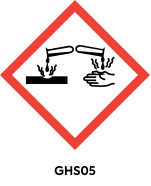
Hazard pictograms :
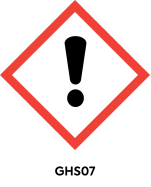
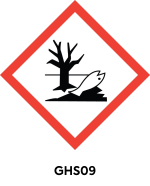
Precautionary statements :
| HAZARD | PRECAUTION |
|---|---|
| H302 Harmful if swallowed.
H314 Causes severe skin burns and eye damage. H318 Causes serious eye damage. H411 Toxic to aquatic life with long lasting effects. |
P260 Do not breathe dust/fume/gas/mist/vapours/spray. P264 Wash ... thoroughly after handling. P270 Do no eat, drink or smoke when using this product. P273 Avoid release to the environment. P280 Wear protective gloves/protective clothing/eye protection/face protection. P301 + P312 IF SWALLOWED: Call a POISON CENTER/doctor/… if you feel unwell. P301 + P330 IF SWALLOWED: rinse mouth. Do NOT induce vomiting. P303 + P361 + P353 IF ON SKIN (or hair): Take off immediately all contaminated clothing. Rinse skin with water [or shower]. P304 + P340 IF INHALED: Remove person to fresh air and keep comfortable for breathing. P305 + P351 + P338 IF IN EYES: Rinse cautiously with water for several minutes. Remove contact lenses, if present and easy to do. Continue rinsing. P405 Store locked up. P310 Immediately call a POISON CENTER/doctor/… P321 Specific treatment (see ... on this label). P330 Rinse mouth. P363 Wash contaminated clothing before reuse. P391 Collect spillage. P501 Dispose of contents/container to… |
IFRA
IFRA 51th :
This ingredient is not restricted for the 51th amendment