








Geranium oil
Floral > Rosy > Geranium
Pelargonium graveolens (Thunb.) L'Hér.
Synonyms : Pelargonium asperum Ehrh. // Geraniospermum terebintaceum (Cav.) Kuntze


| Company | Ingredient Name | Learn more | Naturality | Certifications | MOQ | Latin name | Treated part | Origin |
|---|---|---|---|---|---|---|---|---|
|
GERANIUM EO EGYPT
GEE-1
|
Discover | Naturel | 10 grs | - | - | Egypte | |
|
|
GERANIUM EO CHINA
GERA-1
|
Discover | Naturel | 10 grs | - | - | - | |

|
GERANIUM EGYPT EO
945686
|
Discover | Naturals | - | PELARGONIUM GRAVEOLENS | - | - | |

|
Huile essentielle de Géranium Bourbon - 30 gr | Discover | - | 30grs | - | - | - | |

|
GERANIUM Essential Oil
M_0063050
|
Discover | Naturel | - | - | - | - | |
|
|
GERANIUM Rectified Essential Oil
M_0065401
|
Discover | Naturel | - | - | - | - | |
|
|
GERANIUM Rectified Essential Oil
M_0066119
|
Discover | Naturel | - | - | - | - | |

|
Geranium Oil Chinese | Discover | Essential Oil | - | Pelargonium graveolens | - | - | |
|
|
Geranium Oil Egyptian | Discover | Essential Oil | - | Pelargonium Roseum Leaf Oil | - | - | |
|
|
Geranium Oil Madagascan | Discover | Essential Oil | - | Pelargonium graveolens | - | - | |

|
Geranium Oil Chinese | Discover | Essential Oils | - | - | - | - | |
|
|
Geranium Oil Egyptian | Discover | Essential Oils | - | - | - | - |
GEE-1

GERA-1
945686
M_0063050
M_0065401
M_0066119

General Presentation
-
CAS N° :
8000-46-2 -
EINECS number :
90082-52-3 -
FEMA number :
2508
-
Volatility :
Heart -
Price Range :
€€€
Physico-chemical properties
-
Appearance :
Colorless liquid -
Density :
0,885 - 0,905 @20°C -
Refractive Index @20°C :
1,461 - 1,475 @20°C -
Optical rotation :
-15° // -8° -
Vapor pressure :
Donnée indisponible. -
Flash Point :
86°C (186,8°F) -
Acid Value :
Botanical informations
Botanical name :
Pelargonium graveolens (Thunb.) L'Hér.
Synonyms : Pelargonium asperum Ehrh. // Geraniospermum terebintaceum (Cav.) Kuntze
Botanical profile :
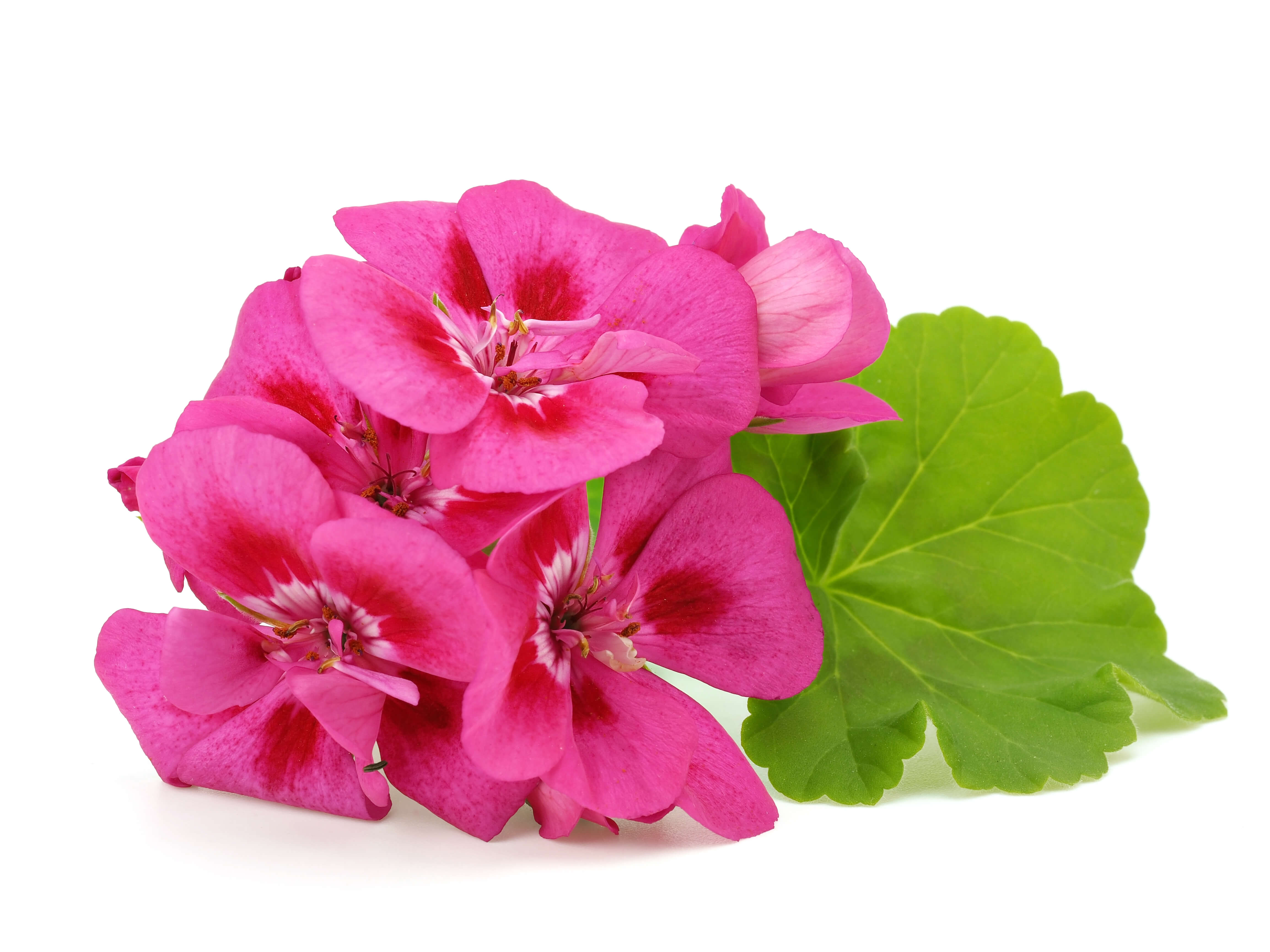
The geranium used in perfumery is a species of the Geraniaceae family and the Pelargonium genus. It is actually a hybrid between Pelargonium capitatum and Pelargonium radens.
Chemotypes :
The several varieties of geranium differentiate according to their place of culture by the composition of their essential oil:
The geranium from North Africa, like the geranium of Egypt, is the only variety containing 10-Epi-gamma-Eudesmol in its essential oil.
The first distinction between the geranium from China and the one from Reunion is in their rate of Citronellyl Formate as it is about 2% for the Chinese and about 7% for bourbon. If Citronellyl Formate has been added to the essential oil from China, it is by crossing the ratios of Citronellol / Geraniol, Linalool + Geraniol / Geraniol among others that we can differentiate with physicochemical data between them.
Chinese geranium is less lemony and powdery, but more minthy than the Egyptian one, which is more terpenic. The rosiest one is the Geranium Bourbon EO.
In addition, there are other species of geranium belonging to the genus Pellargonium: geranium citronella (Pelargonium denticulatum) and geranium mint (Pelargonium tomentosum) belong to it.
Extractions & Uses
Extraction process :
Growing in a Mediterranean environment, geraniums are usually planted around november. The flowering happens a couple of months later, around March-April. The part which interests the producers being the leaves and not the flowers, the harvest takes place after the bloom, in June-July. Stem bunches and leaves are cutted, grouped together and brought to the factory for traditional extraction. Ideally, extraction is done on the dry plant. If it is not hot enough during cultivation, the leaves are dried 24 to 72 hours before extraction. In the vessel, they are pressed barefoot to put 300 to 500 kg of plants in. It consists in heating the leaves without adding water, to evaporate the plant's water and recover the essential oil from the process by settling. The extraction yield varies around 0.5 %.
In addition, it is possible to extract these same parts of the plant using a volatile solvent, which will result in the production of a concrete, which will then deliver about 60% absolute, after dilution of the concrete in alcohol, chilling, filtration and evaporation of the solvent. We then talk about a Geranium Absolute
Uses in perfumery :
Used for rose reconstitutions, in fougere fragrances and male notes for a camphor-like appearance.
Stability :
The terpenes identified in this raw material can polymerize when they are oxidized
The esters identified in this raw material can form their corresponding acid in stability tests
Major Components :
- For China : Citronellol (32 - 43%)
- Citronellyl formate (7 - 12%)
- Geraniol (5 - 12%)
- Isomenthone (4 - 7%)
- Linalool (2 - 4,5%)
- (Z)-Rose oxide (1,3 - 3,5%)
- Geranyl formate (1 - 3%)
- (E)-Rose oxide (0,5 - 1,5%)
- Geranyl butyrate (0,4 - 1%)
- Alpha-terpineol (< 0,5%)
- 10-epi-Gamma-eudesmol (Traces)
- For Madagascar : Citronellol (18 - 26%)
- Geraniol (10 - 20%)
- Citronellyl formate (6 - 11%)
- Isomenthone (5 - 10%)
- Linalool (4 - 10%)
- Geranyl formate (4 - 7%)
- Alpha-terpineol (< 1%)
- Geranyl butyrate (0,7 - 1,7%)
- (Z)-Rose oxide (0,4 - 1,4%)
- (E)-Rose oxide (0,1 - 0,6%)
- 10-epi-Gamma-eudesmol (Traces)
- Traceurs : Citronellyl formate
- For Egypt & N/africa : Citronellol (25 - 36%)
- Geraniol (8 - 10%)
- Linalool (4 - 8,5%)
- Isomenthone (4 - 8%)
- Citronellyl formate (4 - 8%)
- 10-epi-Gamma-eudesmol (3 - 6%)
- Geranyl formate (2 - 7%)
- Alpha-terpineol (<1%)
- Geranyl butyrate (0,7 - 2%)
- (Z)-Rose oxide (0,7 - 1,5%)
- (E)-Rose oxide (0,3 - 0,6%)
- Traceurs : Citronellyl formate // 10-épi-γ-Eudesmol
- For Bourbon Quality : cf. Geranium oil (bourbon)
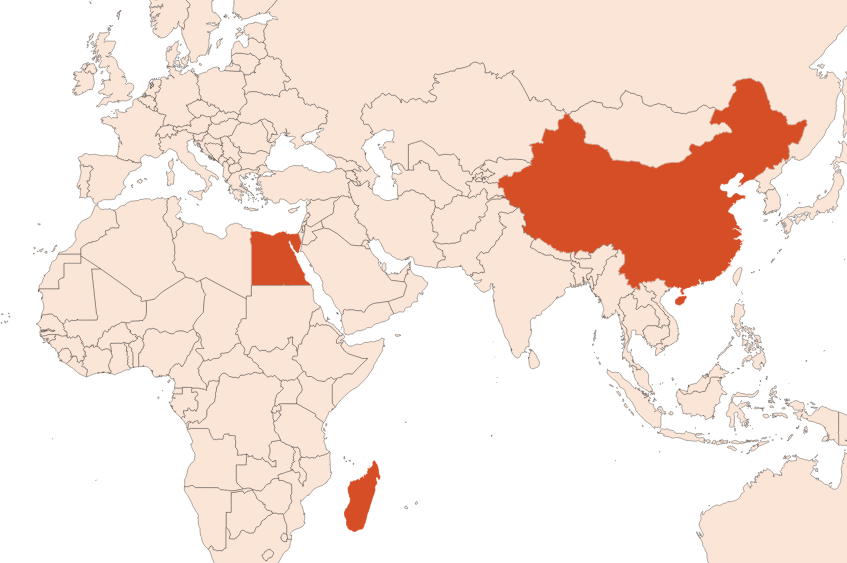
Photo credits: ScenTree SAS
Other comments :
Bourbon geranium is subject to "rust". An adapted treatment can be provided, based on Captane, with a composition similar to so called "bouillie bordelaise".
Bourbon geranium, a geranium cultivated on Reunion Island, was introduced on the island at the beginning of the 19th century. It appeared in France, Algeria, Egypt and Morocco as "African geranium" at the beginning of the 20th century.
Geranium is one of the plants from which natural Geraniol is extracted, along with Palmarosa EO for example.
The ratio of proportions of Citronellyl Formate and Isomenthone in essential oil may vary depending on the nature of the soil on which the geranium is grown.
The level of Citronellyl Formate is an indication of the quality of a geranium essential oil. Then, this molecule can be added in an essential oil as an adulterant and to lowen its price. This is the case with some geraniums from China. In addition, Bourbon geranium is often adulterated with Chinese geranium essential oil.
Bourbon geranium is subject to "rust". An adapted treatment can be provided, based on Captane, with a composition similar to so called "bouillie bordelaise".
Bourbon geranium, a geranium cultivated on Reunion Island, was introduced on the island at the beginning of the 19th century. It appeared in France, Algeria, Egypt and Morocco as "African geranium" at the beginning of the 20th century.
Geranium is one of the plants from which natural Geraniol is extracted, along with Palmarosa EO for example.
The ratio of proportions of Citronellyl Formate and Isomenthone in essential oil may vary depending on the nature of the soil on which the geranium is grown.
The level of Citronellyl Formate is an indication of the quality of a geranium essential oil. Then, this molecule can be added in an essential oil as an adulterant and to lowen its price. This is the case with some geraniums from China. In addition, Bourbon geranium is often adulterated with Chinese geranium essential oil.
Labelling
Allergens :
This ingredient is classified as an allergen under European Regulation 2023/1545, dated August 26, 2023.
Its presence must therefore be declared on product labels when it exceeds 0.001% in leave-on products and 0.01% in rinse-off products.
Signal word :
Danger
Hazard pictograms :
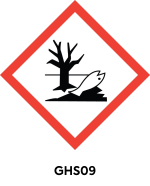
Precautionary statements :
| HAZARD | PRECAUTION |
|---|---|
| H227 Highly flammable liquid and vapour. H315 Causes skin irritation. H317 May cause an allergic skin reaction. H318 Causes serious eye damage. H412 Harmful to aquatic life with long lasting effects. |
P272 Contaminated work clothing should not be allowed out of the workplace. P273 Avoid release to the environment. P280 Wear protective gloves/protective clothing/eye protection/face protection. P302 + P352 IF ON SKIN: Wash with plenty of water/… |
IFRA
IFRA 51th :
This ingredient is not restricted for the 51th amendment