







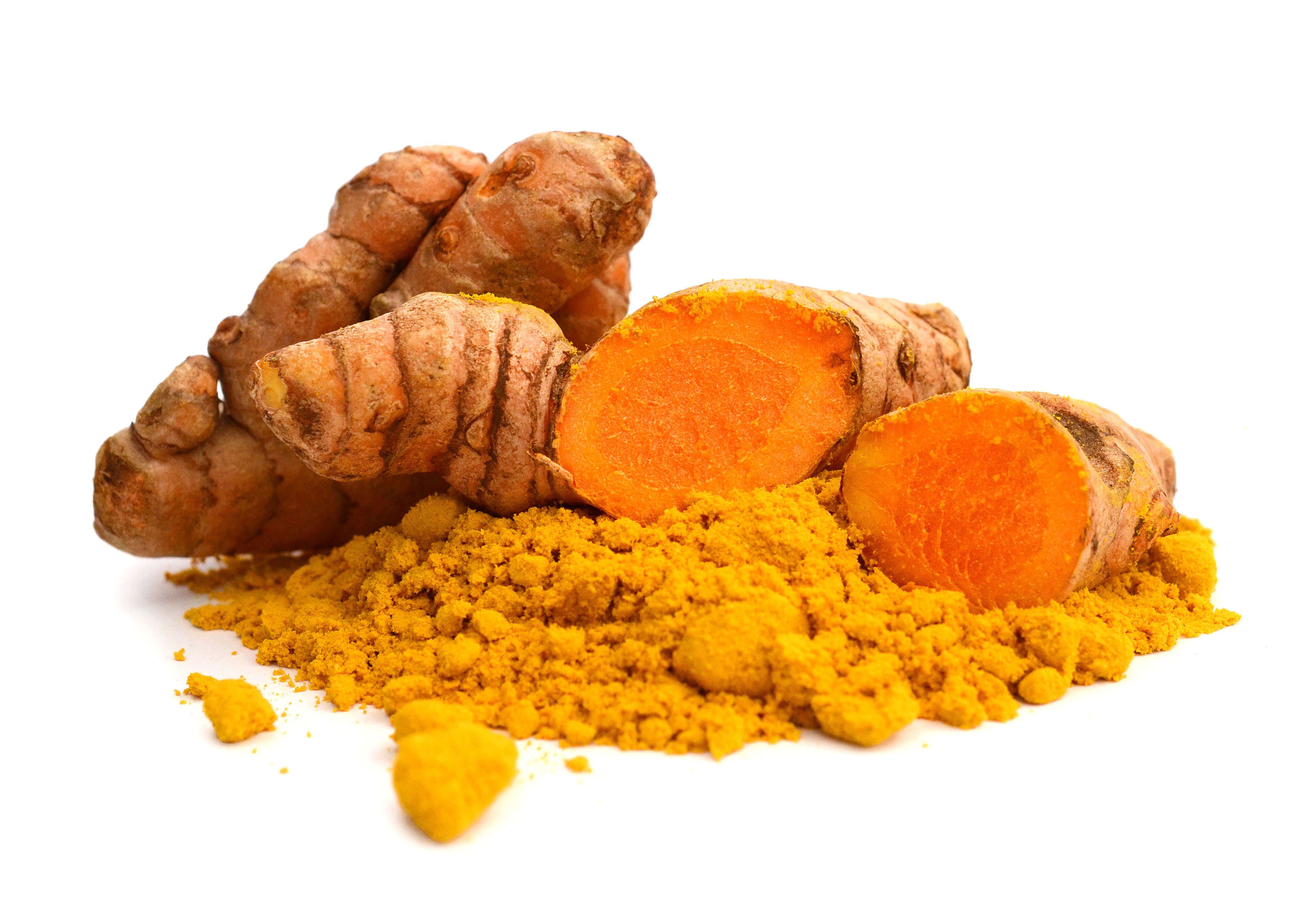
Turmeric roots oil
Spicy > Warm Spices > Dry Woods > Cedar > Green
Curcuma longa L.
Synonyms : Amomum curcuma Jacq. // Curcuma domestica L.


| Company | Ingredient Name | Learn more | Naturality | Certifications | MOQ | Latin name | Treated part | Origin |
|---|---|---|---|---|---|---|---|---|

|
Curcuma Longa (Turmeric Root Oil) - CO2
CU-001
|
Discover | Natural |


|
25 Kgs | Curcuma Longa | Root | Indonesia |
|
|
Curcuma Longa (Turmeric Extract)
CU-0201
|
Discover | Natural |
|
50 Kgs | Curcuma Longa | Root | Indonesia |
|
CURCUMA
N336F
|
Discover | Huile essentielle |

|
- | Curcuma longa L. | Racine | Madagascar |
|
|
CURCUMA
B336F
|
Discover | Huile essentielle |
|
- | Curcuma longa L. | Racine | Madagascar |
|
Turmeric Oil | Discover | Natural |
|
- | Curcuma longa | Roots / Rhizomes | Indonesia |
|
|
CURCUMA INCO 100
F1041
|
Discover | Extrait | - | Curcuma longa L. | Rhizome | Inde | |
|
TURMERIC ROOT OIL
CURRAC-1
|
Discover | Naturel | 10 grs | - | - | - | |
|
Huile Essentielle de Curcuma - 30 gr | Discover | - | 30grs | - | - | - | |
|
TURMERIC OIL Fresh-Tek
4410000038
|
Discover | Naturel | - | - | - | - | |
|
|
TURMERIC OIL-SCFE.
4410000014
|
Discover | Naturel | - | - | - | - |
CU-001

CU-0201
N336F
B336F
F1041
CURRAC-1
4410000038
4410000014

General Presentation
-
CAS N° :
8024-37-1 -
EINECS number :
283-882-1 -
FEMA number :
3085
-
Volatility :
Heart -
Price Range :
€€€€
Physico-chemical properties
-
Appearance :
Pale yellow liquid -
Density :
0,905 - 0,967 @25°C -
Refractive Index @20°C :
1,50 - 1,52 @20°C -
Optical rotation :
-35° // 0° -
Vapor pressure :
Donnée indisponible. -
Flash Point :
140°C (284°F) -
Acid Value :
Botanical informations
Botanical name :
Curcuma longa L.
Synonyms : Amomum curcuma Jacq. // Curcuma domestica L.
Botanical profile :
Curcuma is a flowering plant belonging to the Zingiberaceae family and the Curcuma L. genus.
Chemotypes :
There are approximately 180 species in the Curcuma L. genus. In perfumery, we mainly use two of them :
- Curcuma longa L. Turmeric roots oil, wich is the most widely used (because it is the one used as a spice so production volumes are huge).
- Curcuma zanthorrhiza Roxb. Temu lawak absolute / Temu Lawak SFE, mainly cultivated in Indonesia
Extractions & Uses
Extraction process :
Turmeric is a perennial herb native to India that can measure up to 1 meter. This plant is cultivated for its rhizome. Once the plant is harvested, the rhizome is separated and washed to remove any residual soil. It is then polished and ground into powder. This is similar to the treatment performed on Ginger EO. At this stage, two types of extraction are possible. Either by extraction with a volatile solvent to obtain an oleoresin ( which is the most common case as it gives a better yield, around 10-15%, and is easier to use in flavouring or cooking) or to obtain an essential oil. Curcuma Longa EO is obtained by steam distillation dry rhizome powdered. Yield between 2-4% for a process that lasts about 8-10 hours. It should be noted that an hydrodistillation of the Curcuma zedoatia variety is also carried out with a yield between 5 and 15%, leading to a green liquid EO
Uses in perfumery :
Perfumery is not the largest use of turmeric. Indeed, the rhizome is above all a spice. It is therefore widely used in aromatic food as well as in cooking. At the same time, its important medicinal properties have led to the use of turmeric extracts as a medicinal remedy since ancient times.
Stability :
Can easily turn to a red liquid.
Major Components :
- Turmerone (≈60%)
- Zingiberene (≈25%)
- Alpha-phellandrene (5 - 10%)
- Eucalyptol (< 3%)
- Beta-caryophyllene (< 3%)
- Beta-bisabolene (< 3%)
- Terpinolene (< 3%)
- D-Limonene (< 3%)
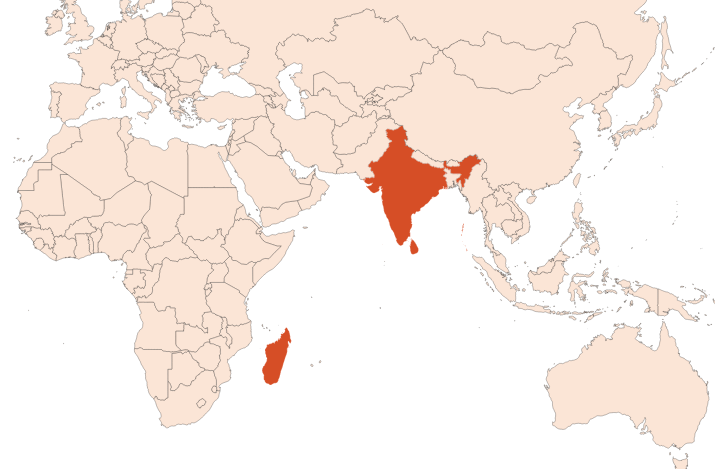
Photo credits: ScenTree SAS
Other comments :
There is in Turmeric oil a compound called Curcumin that can be used as a precursor for natural vanillin. This compound is also responsible for the yellow orange color of turmeric.
There is in Turmeric oil a compound called Curcumin that can be used as a precursor for natural vanillin. This compound is also responsible for the yellow orange color of turmeric.
Labelling
Allergens :
This ingredient does not contain any allergen.
Signal word :
-
Hazard pictograms :
Precautionary statements :
| HAZARD | PRECAUTION |
|---|---|
| H412 Harmful to aquatic life with long lasting effects. | P273 Avoid release to the environment. P302 + P352 IF ON SKIN: Wash with plenty of water/… P303 + P361 + P353 IF ON SKIN (or hair): Take off immediately all contaminated clothing. Rinse skin with water [or shower]. |
IFRA
IFRA 51th :
This ingredient is not restricted for the 51th amendment