









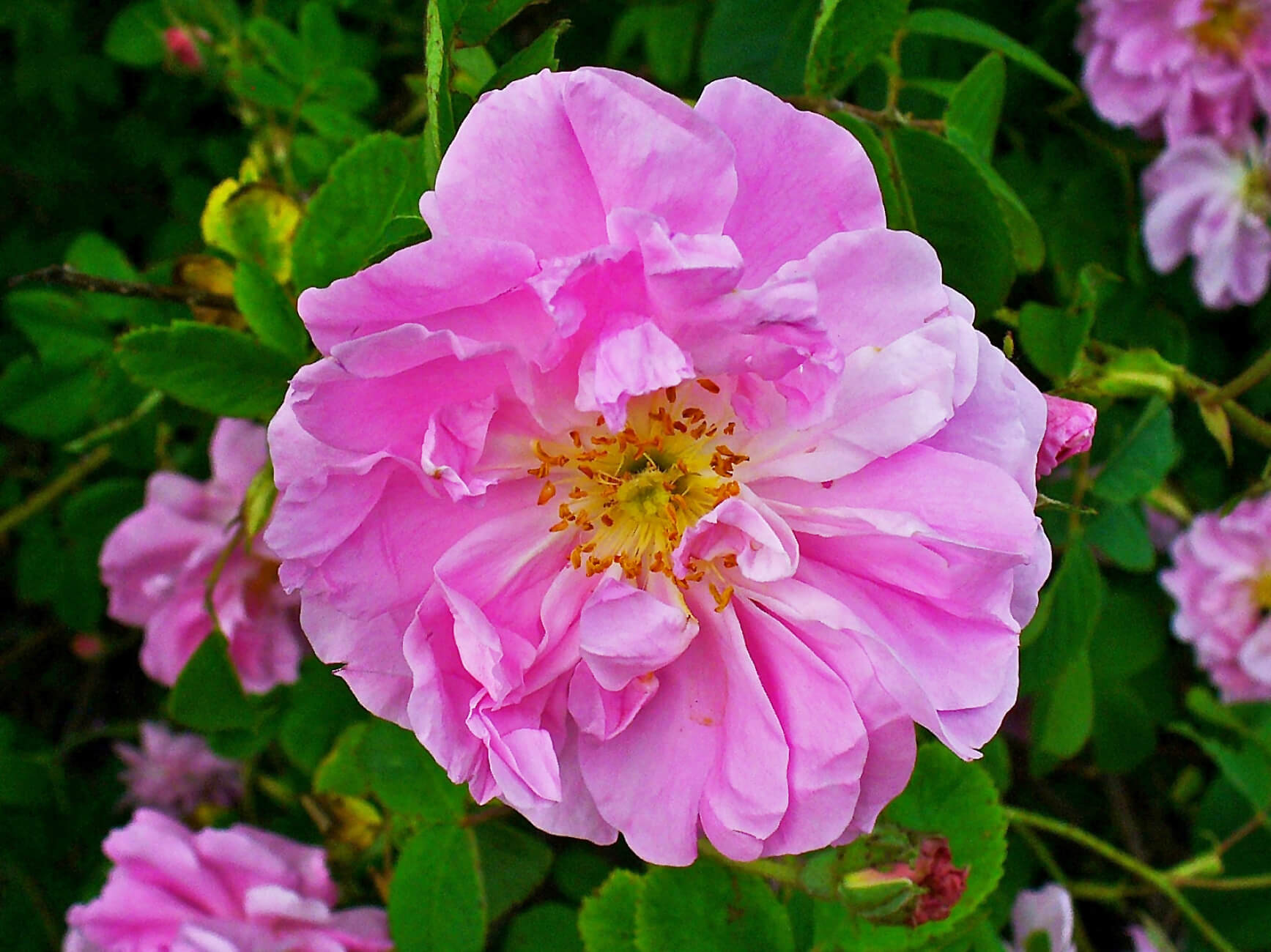
Rose absolute (damascena)
Floral > Rosy
Rosa ×damascena Mill.
Synonyms : Rosa belgica Mill. // Rosa gallica var. damascena Voss


| Company | Ingredient Name | Learn more | Naturality | Certifications | MOQ | Latin name | Treated part | Origin |
|---|---|---|---|---|---|---|---|---|
|
ROSE
F2180
|
Discover | Absolue |

|
- | Rosa x damascena Miller | Fleur | Bulgarie, Maroc, Turquie |
|
ROSE TURKEY ABS
RTA-1
|
Discover | Naturel | 10 grs | - | - | Turkey | |
|
|
ROSE 67%
P00554435000
|
Discover | Résinoide | - | Rosa x damascena Mill. | Fleur | Maroc | |
|
|
ROSE BY-ABSOLUE
F2240
|
Discover | Absolue | - | Rosa x damascena Miller | Fleur | Turquie | |
|
|
ROSE BY-DECOLOURIZED
F2250
|
Discover | Extrait | - | Rosa x damascena Miller | Fleur | Turquie | |
|
|
ROSE COSMETICS
E4421
|
Discover | Cire | - | Rosa x damascena Miller | Fleur | Bulgarie, Maroc, Turquie | |
|
|
ROSE DECOLOREE
F2140
|
Discover | Absolue | - | Rosa x damascena Miller | Fleur | Bulgarie, Maroc, Turquie | |

|
ROSE MOROCCO ABS
979195
|
Discover | Naturals | - | ROSA DAMASCENA | - | - | |
|
|
ROSE TURKISH ABS
979352
|
Discover | Naturals | - | ROSA DAMASCENA | - | - | |

|
Absolue de Rose Damascena - 30 gr | Discover | - | 30grs | - | - | - | |
|
|
ROSE DAMASCENA ABS TYPE
220622
|
Discover | Naturals | - | - | - | - | |

|
ROSE Absolute Turkey
M_0040082
|
Discover | Naturel | - | - | - | - | |
|
|
ROSE Absolute Turkey (decolourised)
M_0053278
|
Discover | Naturel | - | - | - | - | |
|
|
ROSE Absolute Turkey (Methyl eugenol reduced)
M_0059765
|
Discover | Naturel | - | - | - | - | |

|
Rose Oil | Discover | Essential Oils | - | - | - | - |
F2180

RTA-1
P00554435000
F2240
F2250
E4421
F2140
979195
979352
220622
M_0040082
M_0053278
M_0059765

General Presentation
-
CAS N° :
8007-01-0 -
EINECS number :
90106-38-0 -
FEMA number :
2989
-
Volatility :
Heart -
Price Range :
€€€€€
Physico-chemical properties
-
Appearance :
Yellow liquid -
Density :
-
Refractive Index @20°C :
Donnée indisponible. -
Optical rotation :
-
Vapor pressure :
Donnée indisponible. -
Flash Point :
Donnée indisponible. -
Acid Value :
Botanical informations
Botanical name :
Rosa ×damascena Mill.
Synonyms : Rosa belgica Mill. // Rosa gallica var. damascena Voss
Botanical profile :
The Damascus rose, or damascena rose, is the flower of a shrub of the Rosaceae family and the genus Rosa L.
Chemotypes :
Several species from Rosa L. genus can be extracted for the perfume industry :
- Rosa ×centifolia L. : or Rose de mai EO - Rose de Mai Absolute, grown in the region of Grasse, is the most prized of all rose species.
- Rosa ×damascena Mill. : or Damask Rose Absolute - Damask Rose EO
Other widely used species, not necessarily in perfumery :
- Rosa canina L. : dog rose, found in the temperate regions of Europe, Asia and Africa.
- Rosa gallica L. : French rose, native to Central Europe and Asia Minor.
- Rosa moschata Herrm. : musk rose, native to Asia Minor and cultivated in Europe.
- Rosa rugosa Thunb. : Rugosa rose, native to Japan and China.
Extractions & Uses
Extraction process :
As for the Rose de Mai, this rose native to Syria is harvested from May to June and picked by hand one by one. The crop starts early in the morning, around 6am, and ends in the late morning. Ideally, the roses that are picked should be half open, to ensure a good extraction yield. They are placed in sacks before they are brought to the factory, where the bags are weighed. It is best to extract the fresh roses to produce the essential oil. Although, these can not all be extracted at once. Therefore, to avoid maceration problems, it is advisable to keep them fresh and protected from moisture.
Every day about 200 tons of roses can be extracted, combining hydrodistillations and volatile solvent extractions. The first extraction with hexane gives a concrete after removing the flowers from the extractor and evaporating the solvent. The concrete can be diluted in the alcohol in order to precipitate the waxes, by glazing the mixture with a temperature gradient of 140 °F. to 32 °F. The absolute is obtained after filtration and evaporation of the alcohol.
A steam distillation allows to collect an essential oil with a more citrus and fresh smell.
A rose absolute can be distilled to remove the insoluble compounds.
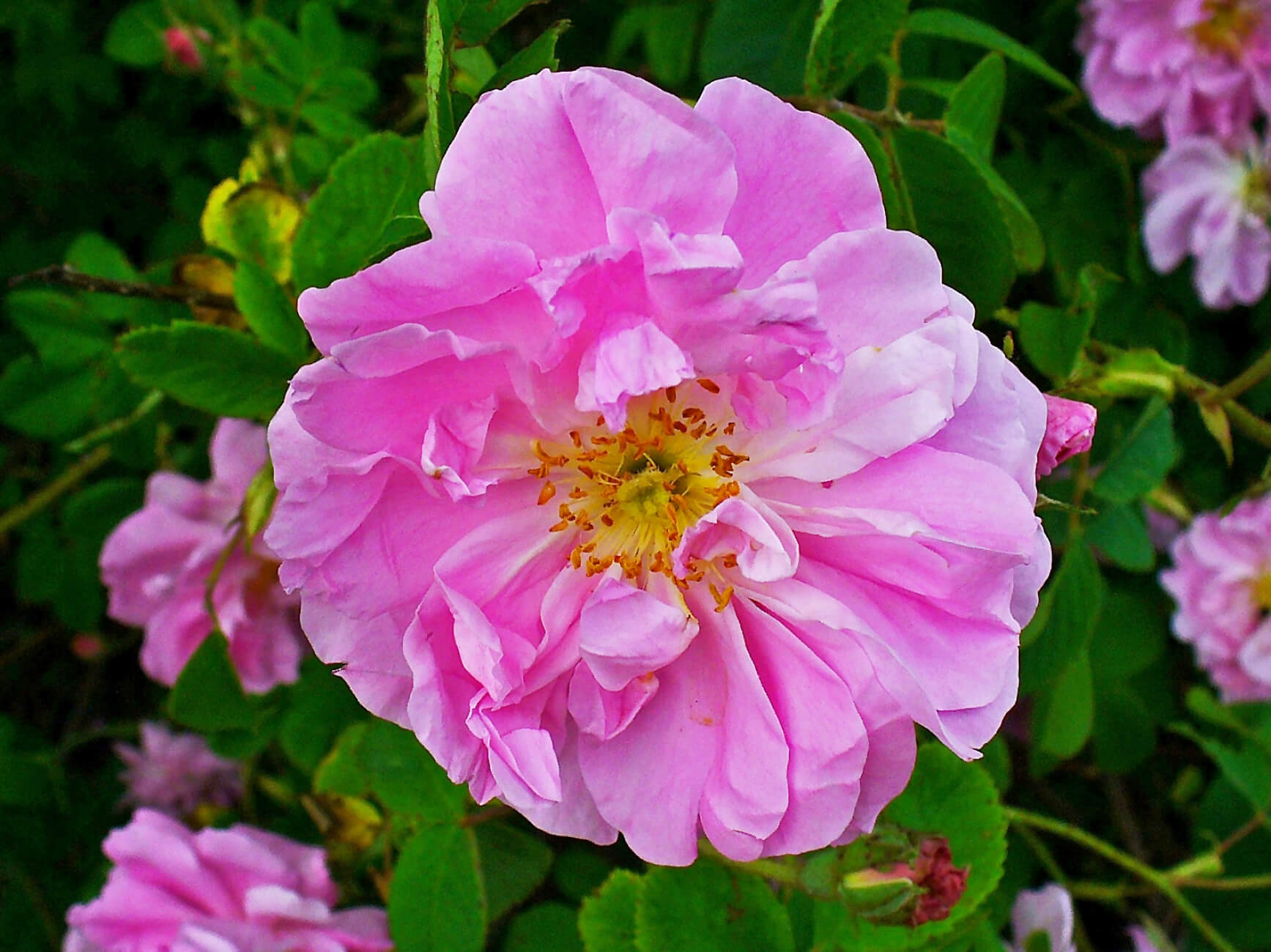
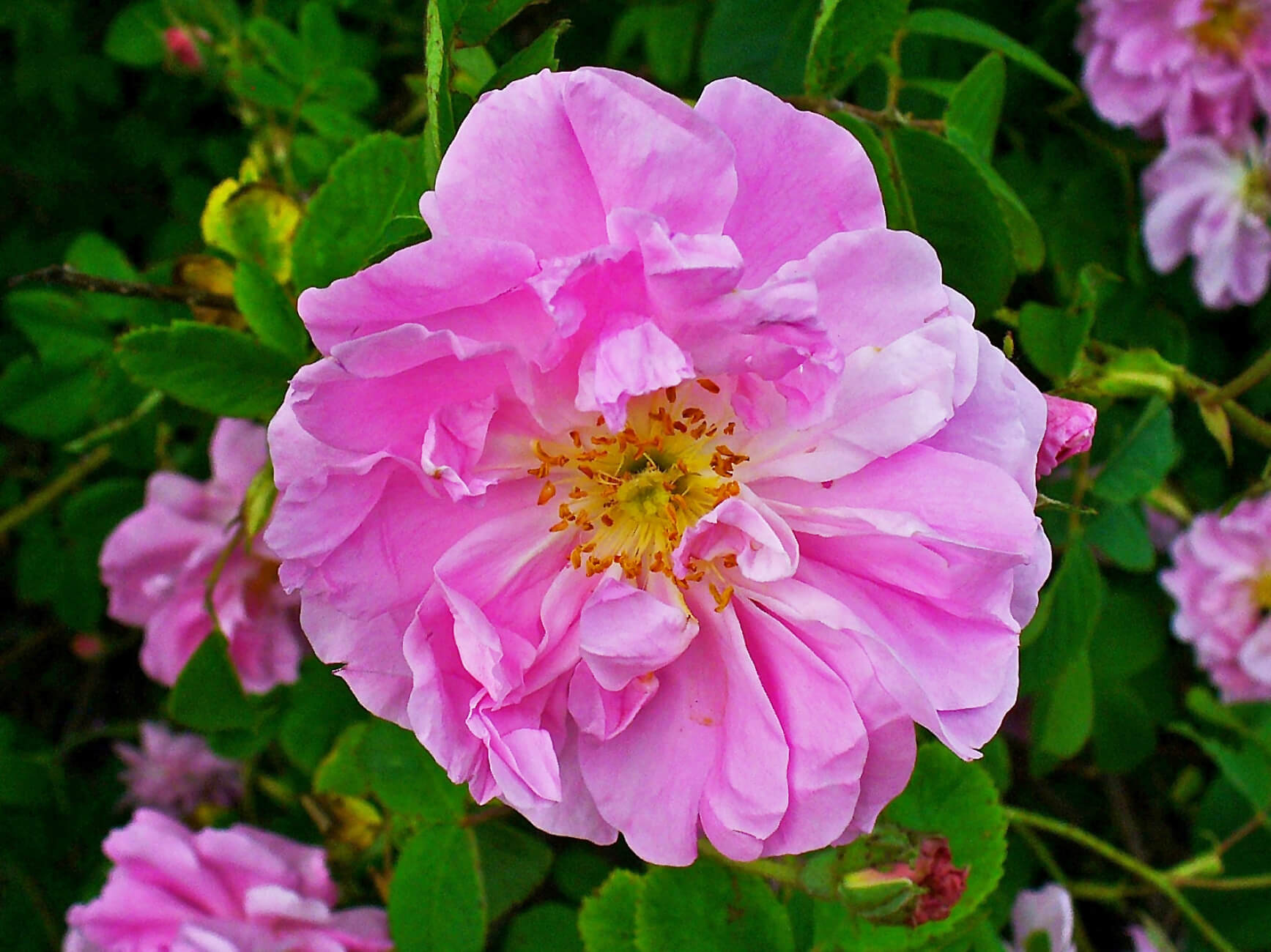
From the same botanical variety
Uses in perfumery :
Used in floral bouquets and women's fragrances. Often goes with jasmine notes. Use in all olfactory families.
Stability :
Solubility issues in perfumes
Aromatic compounds can be chromophoric and cause a coloration of the oil, especially in alkaline bases
The terpenes identified in this raw material can polymerize when they are oxidized
Major Components :
| Component | % min | % max |
|---|---|---|
| Phenyl ethyl alcohol | 60 | 80 |
| dl-Citronellol | 5 | 10 |
| Geraniol | 3 | 5 |
| Phenylethyl acetate | 2 | |
| Benzyl alcohol | 1 | |
| Geranyl isobutyrate | 1 | |
| Eugenol | 2 | |
| 4-Allylveratrole | 1 | |
| Farnesol | 1 | |
| Nonadecane | ||
| Heptadecane |
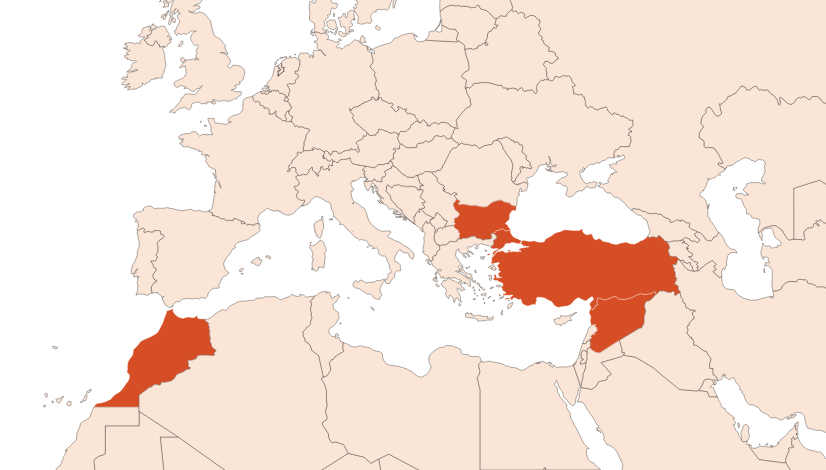
Photo credits: ScenTree SAS
Other comments :
Unlike the essential oil, it contains a lot of Phenyl Ethyl Alcohol.
In 1762, the term "Damask rose" was introduced for the first time in Europe by Jean Hermann, who found a hybrid of this rose in Damascus, Syria.
Unlike the essential oil, it contains a lot of Phenyl Ethyl Alcohol.
In 1762, the term "Damask rose" was introduced for the first time in Europe by Jean Hermann, who found a hybrid of this rose in Damascus, Syria.
Labelling
Allergens :
This ingredient is classified as an allergen under European Regulation 2023/1545, dated August 26, 2023.
Its presence must therefore be declared on product labels when it exceeds 0.001% in leave-on products and 0.01% in rinse-off products.
Signal word :
Danger
Hazard pictograms :

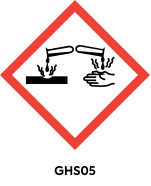
Precautionary statements :
| HAZARD | PRECAUTION |
|---|---|
| H315 Causes skin irritation.
H317 May cause an allergic skin reaction. H318 Causes serious eye damage. |
IFRA
IFRA 51th :
This ingredient is restricted by the 51th amendment
Annexe I :
Some regulated synthetic ingredients are found in nature and in certain proportions in natural ingredients. This presence in nature has to be taken into account when calculating limits of use recommended by the IFRA. In case you do not know these concentrations, you can use the ones estimated by the IFRA. Here they are :
| List of regulated compounds contained in this ingredient | ||
|---|---|---|
| Regulated ingredient name | CAS N° | Estimated Concentration |
| Citronellyl acetate | 150-84-5 | 0,13 |
| Citronellyl acetate | 150-84-5 | 0,03 |
| Benzaldehyde | 100-52-7 | 0,02 |
| Benzaldehyde | 100-52-7 | 0,5 |
| Citral | 5392-40-5 | 0,16 |
| dl-Citronellol | 106-22-9 | 4,02 |
| dl-Citronellol | 106-22-9 | 4,7 |
| Eugenol | 97-53-0 | 0,65 |
| Eugenol | 97-53-0 | 1 |
| Geraniol | 106-24-1 | 1,64 |
| Geraniol | 106-24-1 | 2,7 |
| Methyl eugenol | 93-15-2 | 0,43 |
| Methyl eugenol | 93-15-2 | 0,5 |
| Benzyl benzoate | 120-51-4 | 0,02 |
| Farnesol | 4602-84-0 | 0,32 |
| Benzyl alcohol | 100-51-6 | 0,54 |
| Geranial | 141-27-5 | 0,07 |
| Neral | 106-26-3 | 0,08 |
Disclaimer :
ScenTree is solely responsible for the information provided here.
To learn more about IFRA's standards : https://ifrafragrance.org/safe-use/library