










Eucalyptus globulus oil
Herbal > Agrestic > Terpenic > Icy
Eucalyptus globulus Labill.
Synonyms : Eucalyptus gigantea Denham // Eucalyptus globulus var. bicostata Maiden


| Company | Ingredient Name | Learn more | Naturality | Certifications | MOQ | Latin name | Treated part | Origin |
|---|---|---|---|---|---|---|---|---|
|
EUCALYPTUS GLOBULEUX 70/75
B382
|
Discover | Huile essentielle |

|
- | Eucalyptus globulus Labillardiere | Feuille, Rameau | Portugal |
|
|
EUCALYPTUS GLOBULEUX 80/85
B381P
|
Discover | Huile essentielle |
|
- | Eucalyptus globulus Labillardiere | Feuille | Portugal |
|
|
EUCALYPTUS GLOBULEUX 80/85
B381
|
Discover | Huile essentielle |
|
- | Eucalyptus globulus Labillardiere | Feuille | Portugal |
|
|
EUCALYPTUS GLOBULEUX BRUT
B386
|
Discover | Huile essentielle |
|
- | Eucalyptus globulus Labillardiere | Feuille | Portugal |
|
|
EUCALYPTUS GLOBULEUX
F1380
|
Discover | Huile essentielle | - | Eucalyptus globulus Labillardiere | Branche, Feuille | Espagne | |
|
|
EUCALYPTUS GLOBULEUX BY-ABSOLUE
F1240
|
Discover | Absolue | - | Eucalyptus globulus Labillardiere | Branche, Feuille | Espagne | |
|
EUCALYPTUS EO
EU-1
|
Discover | Naturel | 10 grs | - | - | - | |

|
Huile essentielle d'Eucalyptus Globulus - 30 gr | Discover | - | 30grs | - | - | - | |

|
Eucalyptus Oil Globulus | Discover | Essential Oil | - | Eucalyptus globulus | - | - | |

|
Eucalyptus Oil Globulus | Discover | Essential Oils | - | - | - | - |
B382

B381P
B381
B386
F1380
F1240
EU-1

General Presentation
-
CAS N° :
8000-48-4 -
EINECS number :
85203-56-1 -
FEMA number :
2466
-
Volatility :
Head -
Price Range :
€€
Physico-chemical properties
-
Appearance :
Colorless liquid -
Density :
Peut avoir des variations selon la pureté: Crue -> 0,905 - 0,925 @20°C 70-75% -> 0,904 - 0,920 @20°C 80-85% -> 0,906 - 0,920 @20°C -
Refractive Index @20°C :
Peut avoir des variations selon la pureté: Crue -> 1,457 - 1,475 @20°C 70-75% -> 1,460 - 1,468 @20°C 80-85% -> 1,458 - 1,465 @20°C -
Optical rotation :
Peut avoir des variations selon la pureté: Crue -> +2° // +8° 70-75% -> +0° // +10° 80-85% -> +2° // 10° -
Vapor pressure :
Donnée indisponible. -
Flash Point :
Donnée indisponible. -
Acid Value :
Botanical informations
Botanical name :
Eucalyptus globulus Labill.
Synonyms : Eucalyptus gigantea Denham // Eucalyptus globulus var. bicostata Maiden
Botanical profile :
The eucalyptus is a tree of the Myrtaceae family and the genus Eucalyptus L'Hér.
Chemotypes :
Eucalyptus L’Hér. genus groups nearly 1000 species. Someof them are used in perfumery :
Eucalyptus globulus Labill. : With high amount of Eucalyptol. Eucalyptus globulus oil / Eucalyptus globulus absolute / Eucalyptus PURE JUNGLE ESSENCE™
Eucalyptus citriodora : More citrus/rosy because of high amountof Citronellol and Citronellal, low Eucalyptol. Eucalyptus citriodora oil
Eucalyptus radiata A.Cunn. ex DC. : Terpineols replacing pinenes : Eucalyptus radiata oil
Eucalyptus kochii Maiden & Blakely : Eucalyptus horistes oil
Eucalyptus polybractea F.Muell. ex R.T.Baker : Eucalyptus polybractea oil
Eucalyptus dives Schauer : Eucalyptus dives oil / Eucalyptus dives extract
Eucalyptus staigeriana F.Muell. ex Bailey : Eucalyptus staigeriana oil
Eucalyptus smithii F.Muell. ex R.T.Baker : Eucalyptus Smithii oil
Eucalyptus olida L.A.S.Johnson & K.D.Hill : Eucalyptus Olida oil
Extractions & Uses
Extraction process :
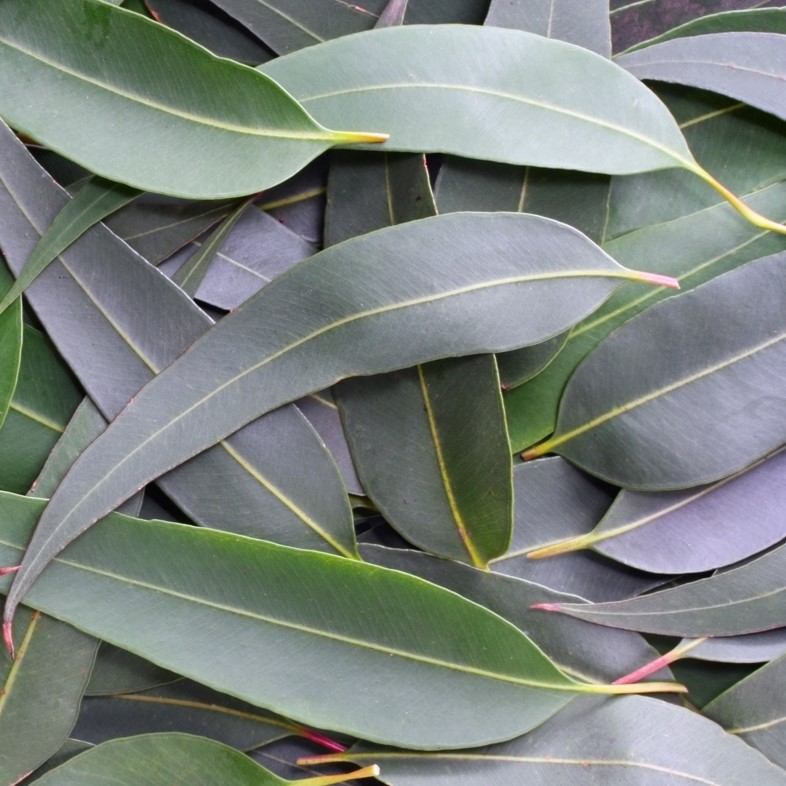
From July to October, at maturity, the leaves are collected when they have a deep green colour. If the owner wants, cultivation can be done by cutting down the tree to exploit the wood. Although, growing an old tree is preferable as it has more foliage. Only long leaves are collected for the distillation. Juvenile leaves are processed in other smaller crop areas such as California. The large leaves are dried to be crushed and steam distilled on a grid, above a boiling water. In some processes, the pressure can reach 5 to 10 bar in the steel tank. At the end of the extraction process, the essential oil is collected by decantation of the water. The extraction yield of the deciduous branches oscillates between 0.5 and 3%. Young leaves have a better extraction yield.
The essential oil can be rectified to remove parasite smells by adding soda. The oil can also be dried using anhydrous sodium sulphate.
Eucalyptus resinoid can be obtained by extracting the plant with organic solvent. The resulting scent is green, also closer to the sulphured smell of the blackcurrant bud and has a note of Fenugreek Absolute.
From the same botanical variety
Uses in perfumery :
Raw material often replaced by eucalyptol. Very good for boosting head notes.
Stability :
The terpenes identified in this raw material can polymerize when they are oxidized
Major Components :
| Component | % min | % max |
|---|---|---|
| Eucalyptol | 65 | |
| Alpha-pinene | 10 | 22 |
| D-Limonene | 1 | 8 |
| (E)-Pinocarveol | 1 | 6 |
| p-Cymene | 1 | 2 |
| Aromadendrène | 0.50 | 10 |
| Globulol | 0.50 | 1.50 |
| Alpha-phellandrene | 0.10 | 1 |
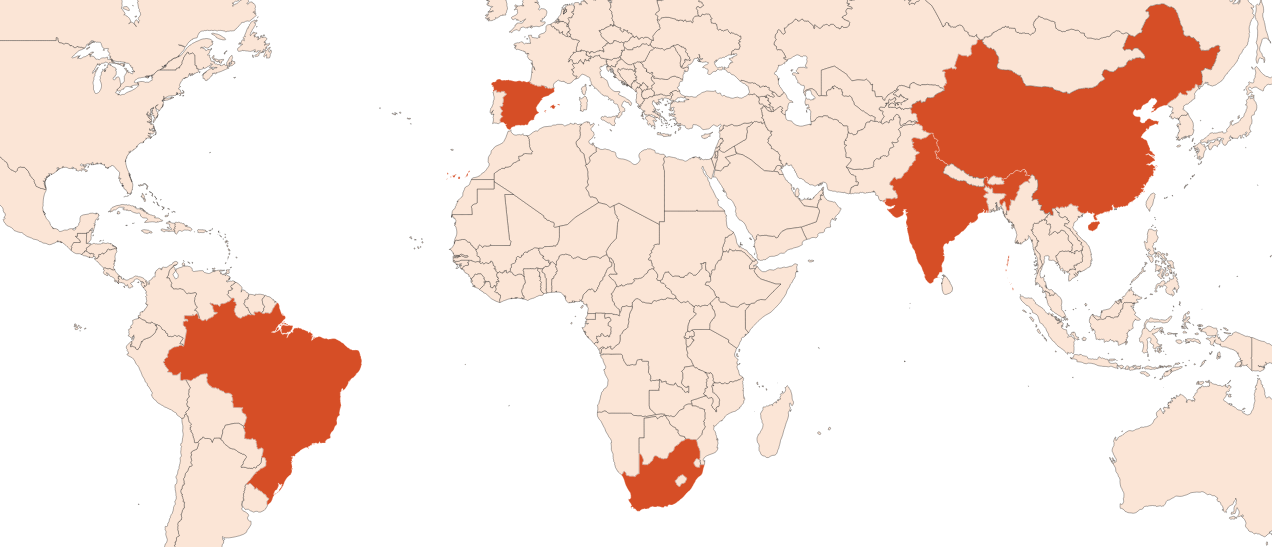
Photo credits: ScenTree SAS
Other comments :
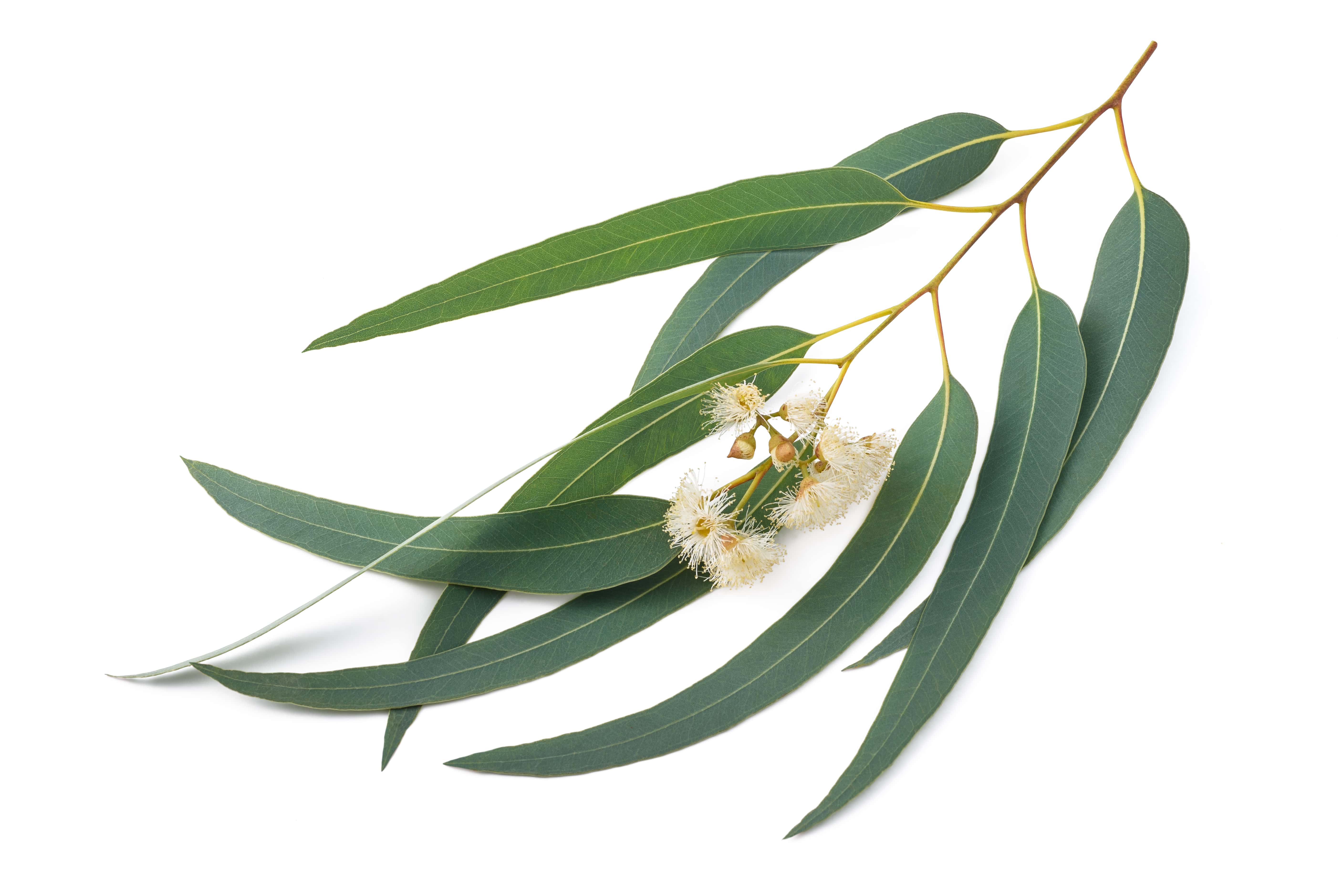
Juvenile eucalyptus leaves have a silvery blue colour, like the wood of the tree called blue gum for this very reason.
Eucalyptus essential oil is the main source of natural Eucalyptol, also called 1,8-Cineol. Natural Citronellal can also be extracted.
After its introduction in Spain and Portugal, Eucalyptus was called the "fever tree" because it was famous for keeping mosquitoes carrying malaria away.
The term Eucalyptus comes from the Greek "Eukalypto", which means "I cover well" in reference to the shape of the envelope of the flowers that covers the flowers until they hatch completely.
Juvenile eucalyptus leaves have a silvery blue colour, like the wood of the tree called blue gum for this very reason.
Eucalyptus essential oil is the main source of natural Eucalyptol, also called 1,8-Cineol. Natural Citronellal can also be extracted.
After its introduction in Spain and Portugal, Eucalyptus was called the "fever tree" because it was famous for keeping mosquitoes carrying malaria away.
The term Eucalyptus comes from the Greek "Eukalypto", which means "I cover well" in reference to the shape of the envelope of the flowers that covers the flowers until they hatch completely.
Labelling
Allergens :
This ingredient is classified as an allergen under European Regulation 2023/1545, dated August 26, 2023.
Its presence must therefore be declared on product labels when it exceeds 0.001% in leave-on products and 0.01% in rinse-off products.
Signal word :
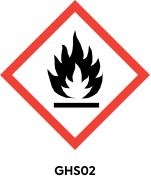
Danger
Hazard pictograms :
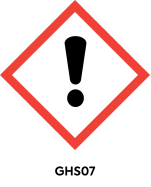
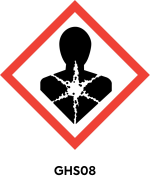
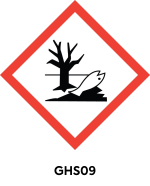
Precautionary statements :
| HAZARD | PRECAUTION |
|---|---|
| H226 Flammable liquid and vapour.
H304 May be fatal if swallowed and enters airways. H315 Causes skin irritation. H317 May cause an allergic skin reaction. H411 Toxic to aquatic life with long lasting effects. |
P210 Keep away from heat, hot surfaces, sparks, open flames and other ignition sources. No smoking. P233 Keep container tightly closed. P240 Ground and bond container and receiving equipment. P241 Use explosion-proof [electrical/ventilating/lighting/…] equipment. P242 Use non-sparking tools. P243 Take action to prevent static discharges. P261 Avoid breathing dust/fume/gas/mist/vapours/spray. P264 Wash ... thoroughly after handling. P272 Contaminated work clothing should not be allowed out of the workplace. P273 Avoid release to the environment. P280 Wear protective gloves/protective clothing/eye protection/face protection. P301 + P310 IF SWALLOWED: Immediately call a POISON CENTER/doctor/… P302 + P352 IF ON SKIN: Wash with plenty of water/… P303 + P361 + P353 IF ON SKIN (or hair): Take off immediately all contaminated clothing. Rinse skin with water [or shower]. P321 Specific treatment (see ... on this label). P331 Do NOT induce vomiting. P332 + P313 If skin irritation occurs: Get medical advice/attention. P333 + P313 If skin irritation or rash occurs: Get medical advice/attention. P362 Take off contaminated clothing. P363 Wash contaminated clothing before reuse. P370 + P378 In case of fire: Use… to extinguish. P391 Collect spillage. P403 + P235 Store in a well-ventilated place. Keep cool. P405 Store locked up. P501 Dispose of contents/container to… |
IFRA
IFRA 51th :
This ingredient is not restricted for the 51th amendment