









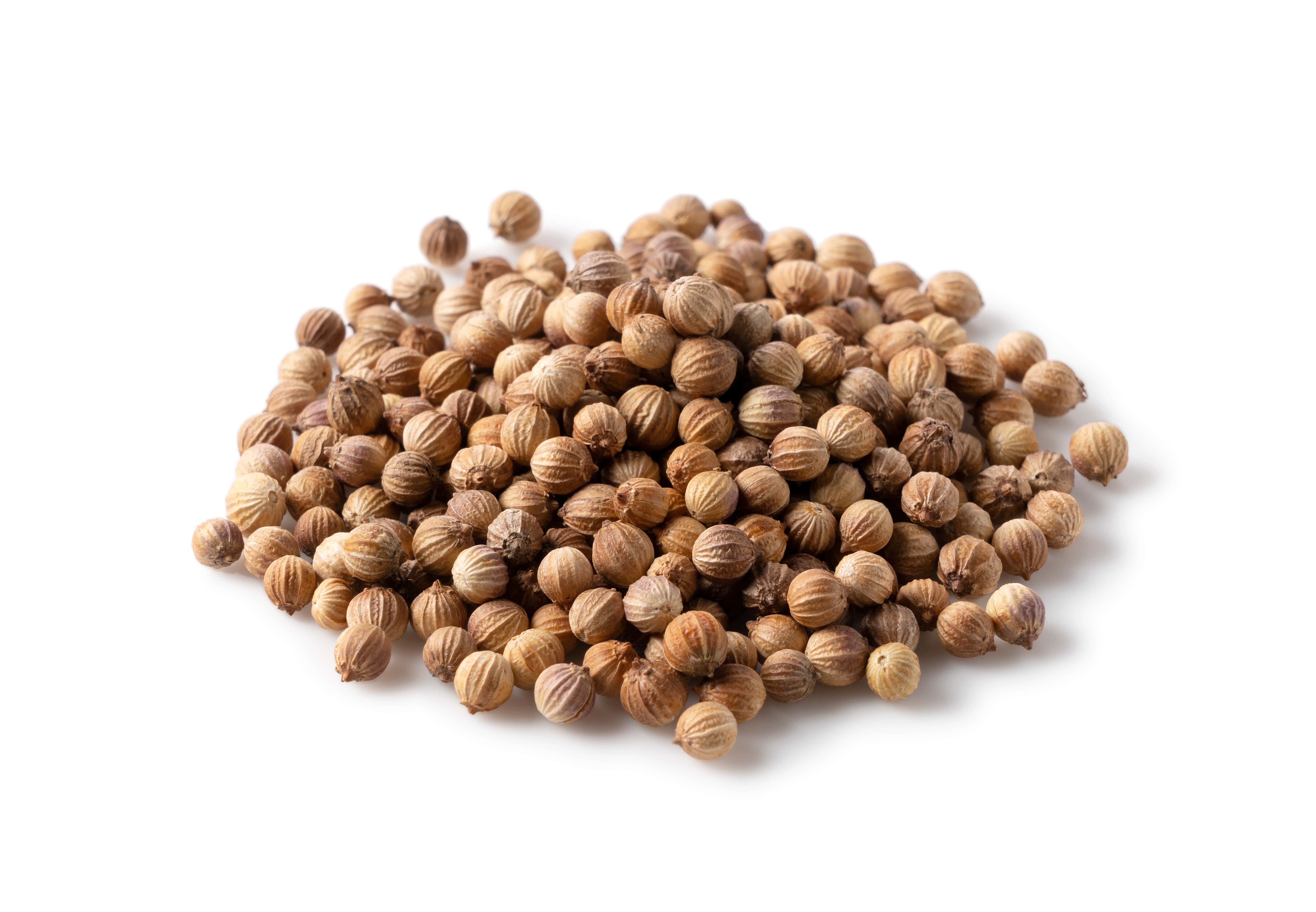
Coriander seed oil
Spicy > Cool Spices > Fresh Flowers > Agrestic
Coriandrum sativum L.
Synonyms : Apium leptophyllum auct. non (Pers.) F.Muell. ex Benth., // Selinum coriandrum E.H.L.Krause,


| Company | Ingredient Name | Learn more | Naturality | Certifications | MOQ | Latin name | Treated part | Origin |
|---|---|---|---|---|---|---|---|---|

|
CORIANDRE
F7165
|
Discover | Huile essentielle |

|
- | Coriandrum sativum L. | Graine | France, Moldavie, Russie |
|
|
CORIANDRE
B321
|
Discover | Huile essentielle |

|
- | Coriandrum sativum L. | Graine | Bulgarie |
|
|
CORIANDRE
F9330
|
Discover | Oléorésine |
|
- | Coriandrum sativum L. | Feuille | France |
|
CORIANDER EO
CORHE-1
|
Discover | Naturel | 10 grs | - | - | - | |

|
Huile essentielle de Coriandre (graines) - 30 gr | Discover | - | 30grs | - | - | - | |

|
CORIANDER OIL
4410000083
|
Discover | Naturel | - | - | - | - | |

|
Coriander Seed Oil | Discover | Essential Oil | - | Coriandrum sativum | - | - | |

|
Coriander Seed Oil | Discover | Essential Oils | - | - | - | - |
F7165

B321
F9330
CORHE-1
4410000083

General Presentation
-
CAS N° :
8008-52-4 -
EINECS number :
84775-50-8 -
FEMA number :
2334
-
Volatility :
Head/Heart -
Price Range :
€€
Physico-chemical properties
-
Appearance :
Colorless liquid -
Density :
0,862 - 0,878 @20°C -
Refractive Index @20°C :
1,462 - 1,470 @20°C -
Optical rotation :
+7° // +13° -
Vapor pressure :
Donnée indisponible. -
Flash Point :
79°C (174,2°F) -
Acid Value :
Botanical informations
Botanical name :
Coriandrum sativum L.
Synonyms : Apium leptophyllum auct. non (Pers.) F.Muell. ex Benth., // Selinum coriandrum E.H.L.Krause,
Botanical profile :
Coriander is a plant belonging to the Apiaceae family and the genus Coriandrum L.
The Apiaceae family includes a large number of spices, such as angelica, caraway, cumin, as well as dill, anise, and fennel.
Chemotypes :
There are two varieties of coriander:
Coriandrum sativum L. : Mainly cultivated specie The European variety is smaller, rounder and has a more powerful smell. The Indian variety is larger, oval and clear but has a less significant smell.
Coriandrum tordylium (Fenzl) Bornm. : Wid coriander, rarely used.
Extractions & Uses
Extraction process :
India produces coriander on about 600,000 hectares of land, in other words 400,000 tons every year. Exports of cilantro seed from India represents 35% of world exports. The seedlings are usually propagated by seed sowing in October-November, at a rate of 12 to 30 kg of seed per hectare cultivated, depending on climatic conditions (the more moist the soil is, the more seeds are planted). Seedlings are planted every one or several tens of centimetres. The cultivation of coriander is subject to the use of chemical or natural fertilizers depending on the crop. Finally, it needs a warm atmosphere and regular irrigation.
Seeds are usually collected by hand at their maturity (green to yellow in colour) and dried in the shade before steam distillation. At the end of the process, the essential oil is collected in an essencier by decantation.
The extraction yield of the essential oil oscillates between 0.1 and 0.8%.
The coriander leaves can also be distilled with a yield between 3 and 4%.
A supercritical CO2 extraction enables the collection of an extract about 10% richer in Linalool than a conventional distillation.
Uses in perfumery :
Used in floral-fresh notes, fougere, chypre and coniferous notes.
Stability :
The terpenes identified in this raw material can polymerize when they are oxidized
Major Components :
| Component | % min | % max |
|---|---|---|
| Linalool | 40 | 90 |
| Geranyl acetate | 2 | 40 |
| Gamma-Terpinene | 2 | 14 |
| Camphor | 3 | |
| Beta-pinene | 3 | |
| D-Limonene | 3 | |
| Citronellal | 2 |
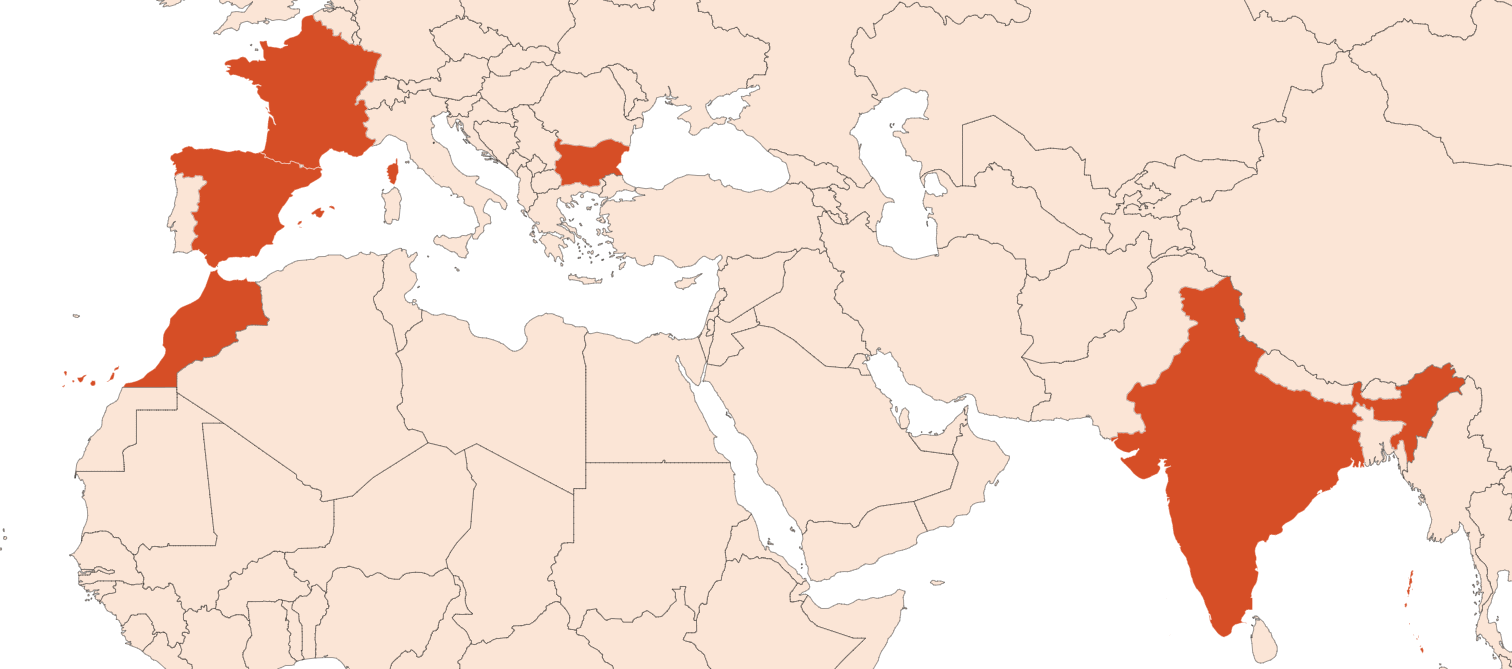
Photo credits: ScenTree SAS
Other comments :
Coriander is a spice that has been used for a long time. Indeed, the first mentions of this spice are dated -5000 B.C. Many mentions of coriander cultures are also present in the Bible.
This essential oil allows the isolation of Linalool up to 90% for a very little ripe coriander seed.
The composition of the essential oil of coriander depends greatly on the geographical origin of the plant and its maturity.
The quality of the seed can be damaged by insects, chemical (especially antioxidants) and microbial (Salmonella) agents. Standards of quality are shaped by the AFNOR (French Association of Standards), the ESA (European Spice Association) or the AGMARK (Spices Grading and Marking Rules) in India. These specifications concern the quality of the seed and the leaf, as well as the physicochemical properties of the essential oil.
Adulteration is possible with a diverse crops communal pot that contains seeds that are not ripe or overripe, or by adding synthetic Linalool.
Coriander is a spice that has been used for a long time. Indeed, the first mentions of this spice are dated -5000 B.C. Many mentions of coriander cultures are also present in the Bible.
This essential oil allows the isolation of Linalool up to 90% for a very little ripe coriander seed.
The composition of the essential oil of coriander depends greatly on the geographical origin of the plant and its maturity.
The quality of the seed can be damaged by insects, chemical (especially antioxidants) and microbial (Salmonella) agents. Standards of quality are shaped by the AFNOR (French Association of Standards), the ESA (European Spice Association) or the AGMARK (Spices Grading and Marking Rules) in India. These specifications concern the quality of the seed and the leaf, as well as the physicochemical properties of the essential oil.
Adulteration is possible with a diverse crops communal pot that contains seeds that are not ripe or overripe, or by adding synthetic Linalool.
Labelling
Signal word :
Danger
Hazard pictograms :
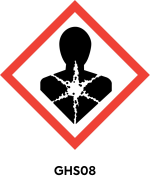
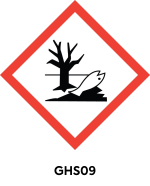
Precautionary statements :
| HAZARD | PRECAUTION |
|---|---|
| H227 Highly flammable liquid and vapour. H303 May be harmful if swallowed. H304 May be fatal if swallowed and enters airways. H315 Causes skin irritation. H317 May cause an allergic skin reaction. H319 Causes serious eye irritation. H411 Toxic to aquatic life with long lasting effects. |
P210 Keep away from heat, hot surfaces, sparks, open flames and other ignition sources. No smoking. P261 Avoid breathing dust/fume/gas/mist/vapours/spray. P264 Wash ... thoroughly after handling. P272 Contaminated work clothing should not be allowed out of the workplace. P273 Avoid release to the environment. P280 Wear protective gloves/protective clothing/eye protection/face protection. P301 + P310 IF SWALLOWED: Immediately call a POISON CENTER/doctor/… P302 + P352 IF ON SKIN: Wash with plenty of water/… P305 + P351 + P338 IF IN EYES: Rinse cautiously with water for several minutes. Remove contact lenses, if present and easy to do. Continue rinsing. P312 Call a POISON CENTER/doctor/… if you feel unwell. |
IFRA
IFRA 51th :
This ingredient is restricted by the 51th amendment
Annexe I :
Some regulated synthetic ingredients are found in nature and in certain proportions in natural ingredients. This presence in nature has to be taken into account when calculating limits of use recommended by the IFRA. In case you do not know these concentrations, you can use the ones estimated by the IFRA. Here they are :
| List of regulated compounds contained in this ingredient | ||
|---|---|---|
| Regulated ingredient name | CAS N° | Estimated Concentration |
| Geraniol | 106-24-1 | 0,8 |
| Geraniol | 106-24-1 | 1,6 |
| 2-Hexenal | 505-57-7 | 0,02 |
Disclaimer :
ScenTree is solely responsible for the information provided here.
To learn more about IFRA's standards : https://ifrafragrance.org/safe-use/library