







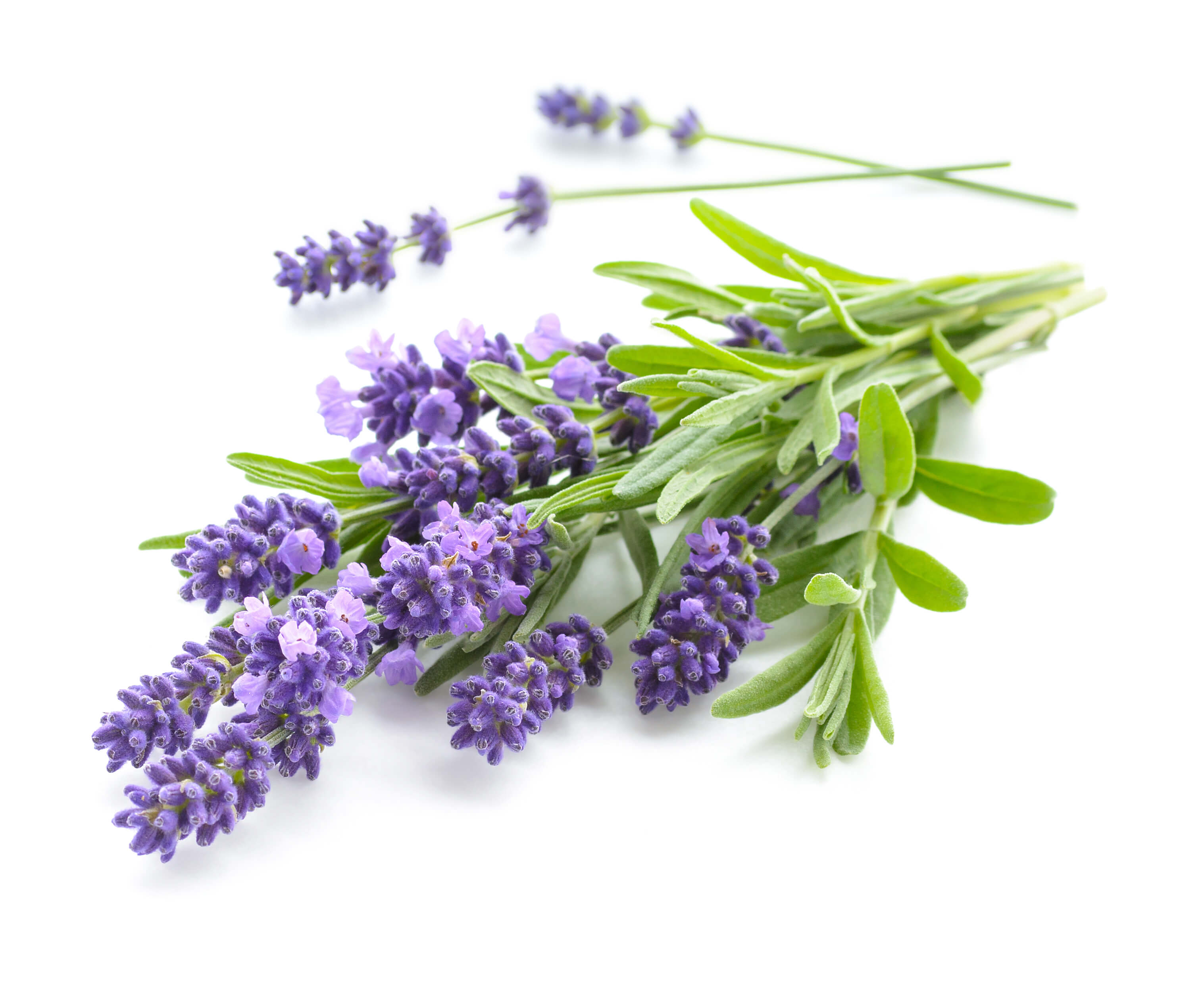
Lavender oil
Herbal > Lavender > Fresh Flowers
Lavandula angustifolia Mill.
Synonyms : Lavandula officinalis Chaix, // Lavandula fragrans Jord.


| Company | Ingredient Name | Learn more | Naturality | Certifications | MOQ | Latin name | Treated part | Origin |
|---|---|---|---|---|---|---|---|---|

|
LAVANDER OIL OIL ORGANIC
LAB
|
Discover | Pure & Natural Organic |


|
1 Kg | Lavandula angustifolia | Leaves & Flowers | Spain |
|
|
LAVANDER OIL OIL
LA
|
Discover | Pure & Natural |
|
1 Kg | Lavandula angustifolia | Leaves & Flowers | Spain |
|
LAVANDE FINE
B531P
|
Discover | Huile essentielle |
|
- | Lavandula angustifolia Miller | Sommité fleurie | France |
|
|
LAVANDE FINE
B531
|
Discover | Huile essentielle |
|
- | Lavandula angustifolia Miller | Sommité fleurie | France |
|
|
LAVANDE FINE AOP
B530
|
Discover | Huile essentielle |
|
- | Lavandula angustifolia Miller | Sommité fleurie | France |
|
|
LAVANDE OFFICINALE
B535P
|
Discover | Huile essentielle |
|
- | Lavandula angustifolia Miller | Sommité fleurie | France |
|
|
LAVANDE OFFICINALE
B537
|
Discover | Huile essentielle |
|
- | Lavandula angustifolia Miller | Sommité fleurie | Bulgarie |
|
|
LAVANDE OFFICINALE
HES50002
|
Discover | Huile essentielle |
|
- | Lavandula angustifolia Miller | Sommité fleurie | France |
|
|
LAVANDE OFFICINALE
B535
|
Discover | Huile essentielle |
|
- | Lavandula angustifolia Miller | Sommité fleurie | France |
|
|
LAVANDE OFFICINALE
536
|
Discover | Huile essentielle | - | Lavandula angustifolia Miller | Sommité fleurie | France | |
|
LAVANDER CLONAL EO
LAVD-1
|
Discover | Naturel | 10 grs | - | - | - | |

|
LAVENDER DIVA IG GRASSE ABS
954183
|
Discover | Naturals | - | LAVANDULA ANGUSTIFOLIA | - | - | |
|
|
LAVENDER PAYS ABS
954144
|
Discover | Naturals | - | LAVANDULA ANGUSTIFOLIA | - | - | |

|
Huile essentielle de Lavande Fine Pays - 30 gr | Discover | - | 30grs | - | - | - | |

|
LAVENDER Essential Oil
M_0057754
|
Discover | Naturel | - | - | - | - | |

|
Lavender Oil Bulgarian | Discover | Essential Oil | - | Lavandula angustifolia | - | - | |

|
Lavender Oil (Bulgarian/Chinese/French) | Discover | Essential Oils | - | - | - | - | |
|
|
Lavender Oil 40/42 | Discover | Essential Oils | - | - | - | - |
LAB

LA
B531P
B531
B530
B535P
B537
HES50002
B535
536
LAVD-1
954183
954144
M_0057754

General Presentation
-
CAS N° :
8000-28-0 -
EINECS number :
97722-12-8 -
FEMA number :
2622
-
Volatility :
Head/Heart -
Price Range :
€€€
Physico-chemical properties
-
Appearance :
Colorless liquid -
Density :
0,880 - 0,890 @20°C -
Refractive Index @20°C :
1,458 - 1,464 @20°C -
Optical rotation :
-
Vapor pressure :
Donnée indisponible. -
Flash Point :
Donnée indisponible. -
Acid Value :
Botanical informations
Botanical name :
Lavandula angustifolia Mill.
Synonyms : Lavandula officinalis Chaix, // Lavandula fragrans Jord.
Botanical profile :
Lavandin is a plant that, from a botanical perspective, belongs to the the family Lamiaceae, and the genus Lavandula L.
The Lamiaceae family is the most important family in perfumery. It notably includes lavenders, basils, mints, sages, rosemaries, patchoulys, and thymes.
The genus Lavandula L. alone comprises 39 species, such as Lavandula angustifolia and Lavandula aspic. Its name derives from the Latin word lavare, meaning to wash or purify.
Chemotypes :
There are several varieties of lavender: the population and the clonal. The difference comes mainly from genetics and historical crosses. The population lavender is the historical variety. It has never been crossed and is therefore recognizable by plants of various aspects and very heterogeneous fields as the reproduction is sexed and made from seeds. The clonal lavender comes from population lavender cuttings. Very homogeneous fields and similar plants are obtained with this method. It is mainly produced in Bulgaria, but it is possible to find some in France. Olfactively, the difference is notable. Clonal lavender is poorer, less varied. Among the clonals, there are three major species: the maillete, the matherone and the diva, differentiated by their Ocimene level. Among the populations, we distinguish the rapido, the sara and the carla, which contain an intermediate rate of Ocimene.
Overall, lavender has 32 different species linked to the genus Lavandula, not counting hybrids.
In perfumery, there are especially hybrid species such as Lavandin Grosso EO with a terpenic and camphorated smell, and the Aspic EO, even more camphorated (see Lavandin and Aspic).
Extractions & Uses
Extraction process :
Lavender is a 20 to 60 cm tall herbaceous sub-shrub with evergreen leaves and blue-purple flowers that bloom from July-August. The production of lavender requires a certain altitude, located between 600 and 1500 meters.
After declining between the 1960s and 2000s, production is now increasing thanks to the Bulgarian productions among others, twice as big as French productions.
Cultivation and extraction are done in August-September, using a traditional or a green ground process. The traditional process consists in leaving the plants to dry under the sun after cutting them. This technique allows to concentrate all the heavy olfactive compounds as the terpenes have time to evaporate. The resultant smell is hotter and more coumarin. The green ground process (ensilage) consists in extracting the plants directly after cutting them. Therefore, the smell is greener and cooler than if the plant was dried in the sun beforehand. In both cases, lavender essential oil is obtained by decantation at the distillation outlet.
The extraction yield of lavender is lower than the lavandin, because lavender contains fewer flower heads. Its extraction yield of 40 kg of essential oil per hectare does not equal the lavender, which has a yield of 120 kg of oil per hectare cultivated (Aspic has a yield of 50 kg / ha).
The essential oil can be ground to be obtained without terpene. It can also be acetylated to increase its level of Linalyl Acetate to be extracted later. The lavender absolute yield is between 1 and 2.2%, and it has a very green, herbaceous smell as well as a great tenacity.
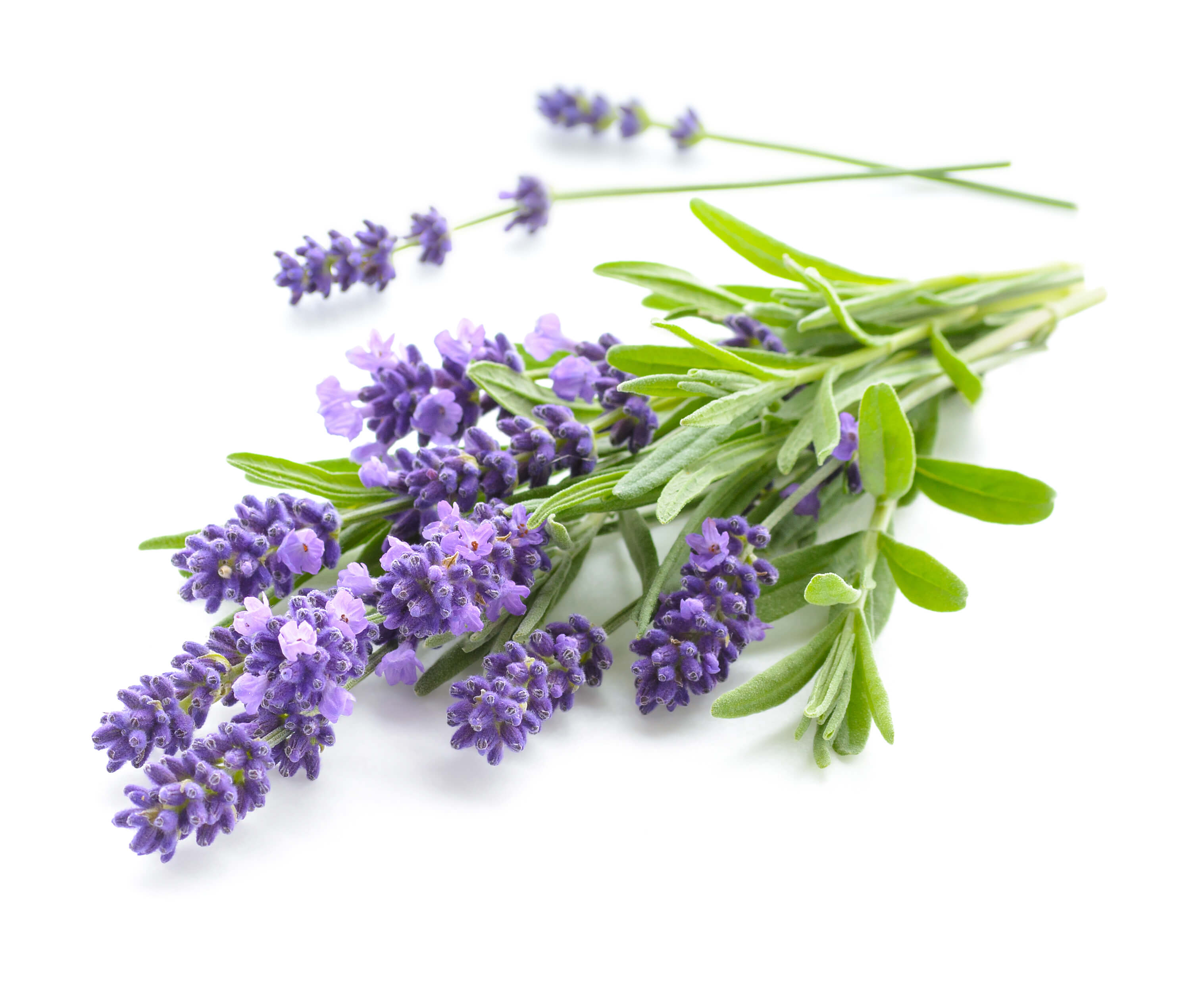
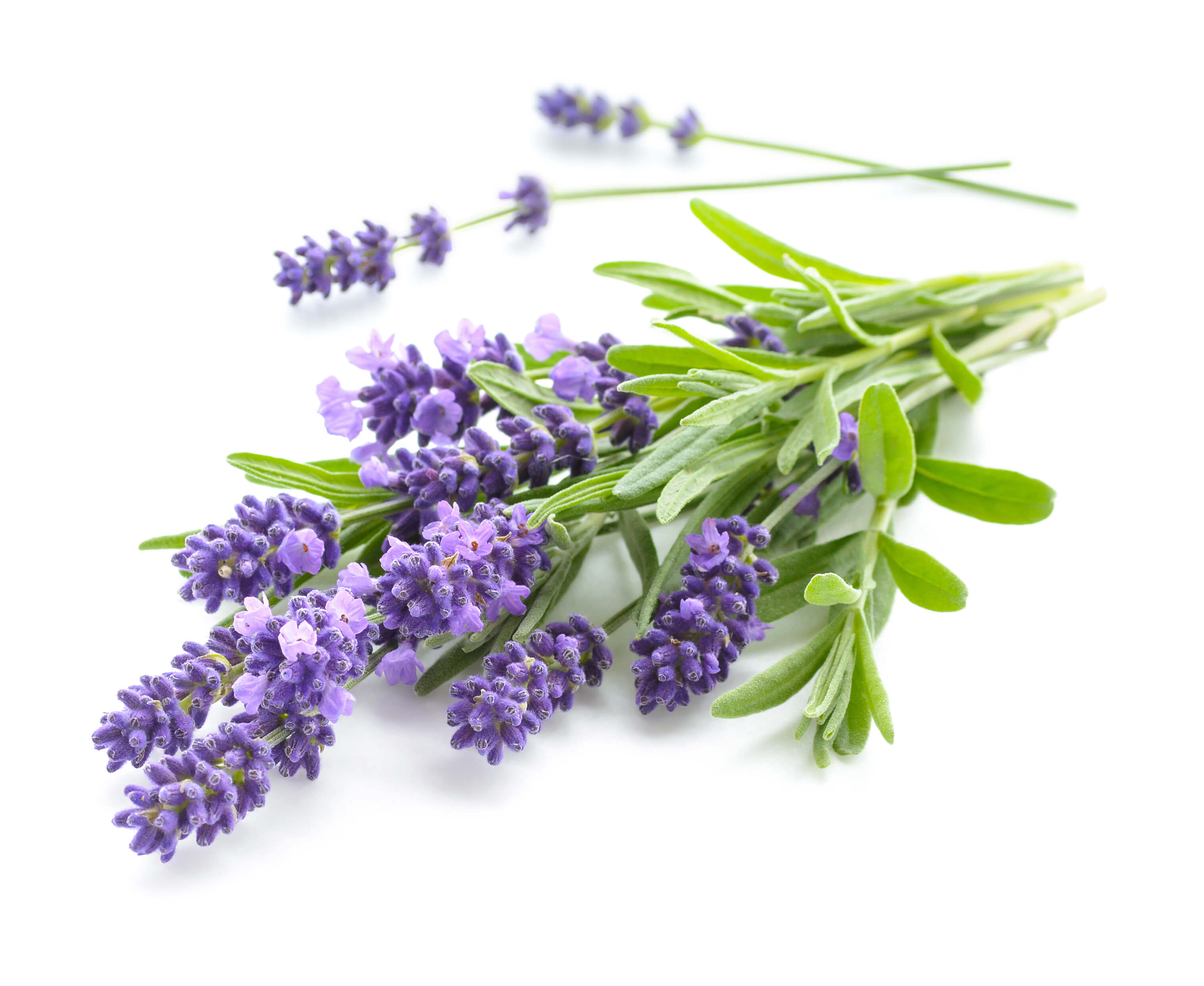
From the same botanical variety
Uses in perfumery :
Used in fougere perfumes, with Geranium EO, Coumarin and Oak Moss Absolute, in laundry and cosmetics for men to give a clean effect.
Stability :
Solubility issues in perfumes
The esters identified in this raw material can form their corresponding acid in stability tests
The terpenes identified in this raw material can polymerize when they are oxidized
Major Components :
| Component | % min | % max |
|---|---|---|
| Linalyl acetate | 42 | 52 |
| Linalool | 32 | 40 |
| Ocimene | 4 | |
| Terpinen-4-ol | 4 | |
| Lavandulyl acetate | 3 | |
| Lavandulol | 3 | |
| Eucalyptol | 2 | |
| Bornéol | 1 |
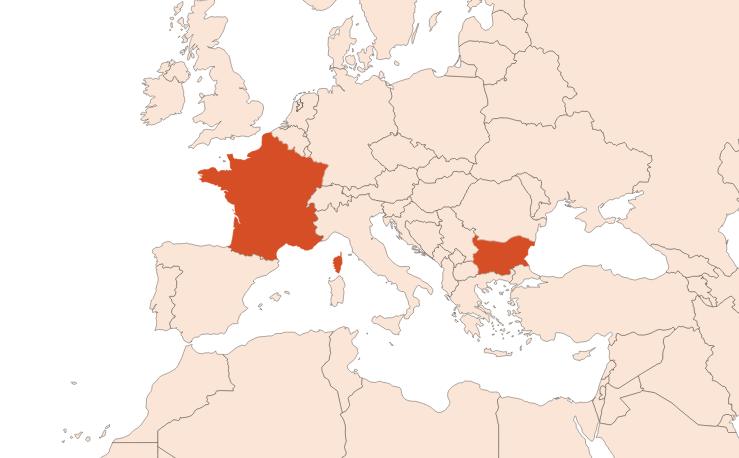
Photo credits: ScenTree SAS
Other comments :
Note that there is a French PDO designation, obtained for a lavender produced at 800 meters above the sea level, guaranteed 100% pure and natural, produced in a defined area and having specific chromatographic characteristics. The label is awarded by a jury of experts after an olfactory evaluation. Other labels such as the ECO-Cert, Qualité-France and SOCOTEC labels can be attributed to organic lavender absolute productions.
On the lavender plant population, the leafhopper, an insect feeding on plant sap, bites the plants causing their death. Kaolin is a pesticide used to control this insect, which does not attack clonal lavender plants.
Many adulterations can occur regarding the absolute lavender. It can be adulterated by other types of lavender with a lower cost, by a Lavandin Absolute, by addition of synthetic compounds such as Linalyl Acetate, Linalool, Coumarin, Ocimene or other terpenes. Compliance with production standards is validated by chromatographic analysis.
Each molecule must have a minimum and maximum rate in the produces absolute.
Note that there is a French PDO designation, obtained for a lavender produced at 800 meters above the sea level, guaranteed 100% pure and natural, produced in a defined area and having specific chromatographic characteristics. The label is awarded by a jury of experts after an olfactory evaluation. Other labels such as the ECO-Cert, Qualité-France and SOCOTEC labels can be attributed to organic lavender absolute productions.
On the lavender plant population, the leafhopper, an insect feeding on plant sap, bites the plants causing their death. Kaolin is a pesticide used to control this insect, which does not attack clonal lavender plants.
Many adulterations can occur regarding the absolute lavender. It can be adulterated by other types of lavender with a lower cost, by a Lavandin EO, by addition of synthetic compounds such as Linalyl Acetate, Linalool, Coumarin, Ocimene or other terpenes. Compliance with production standards is validated by chromatographic analysis.
Each molecule must have a minimum and maximum rate in the produced absolute. For example, for Lavandula angustifolia, Linalool should be present between 25 and 38% in the essential oil, Linalyl Acetate between 25 and 38% and cis-β-Ocimene between 4 and 10%. Physicochemical properties are also to be respected, such as the ester level (between 38 and 58%) or the optical rotation for example.
Labelling
Allergens :
This ingredient is classified as an allergen under European Regulation 2023/1545, dated August 26, 2023.
Its presence must therefore be declared on product labels when it exceeds 0.001% in leave-on products and 0.01% in rinse-off products.
Signal word :
Danger
Hazard pictograms :

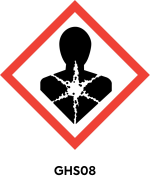
Precautionary statements :
| HAZARD | PRECAUTION |
|---|---|
| H304 May be fatal if swallowed and enters airways.
H315 Causes skin irritation. H317 May cause an allergic skin reaction. H412 Harmful to aquatic life with long lasting effects. |
IFRA
IFRA 51th :
This ingredient is not restricted for the 51th amendment