








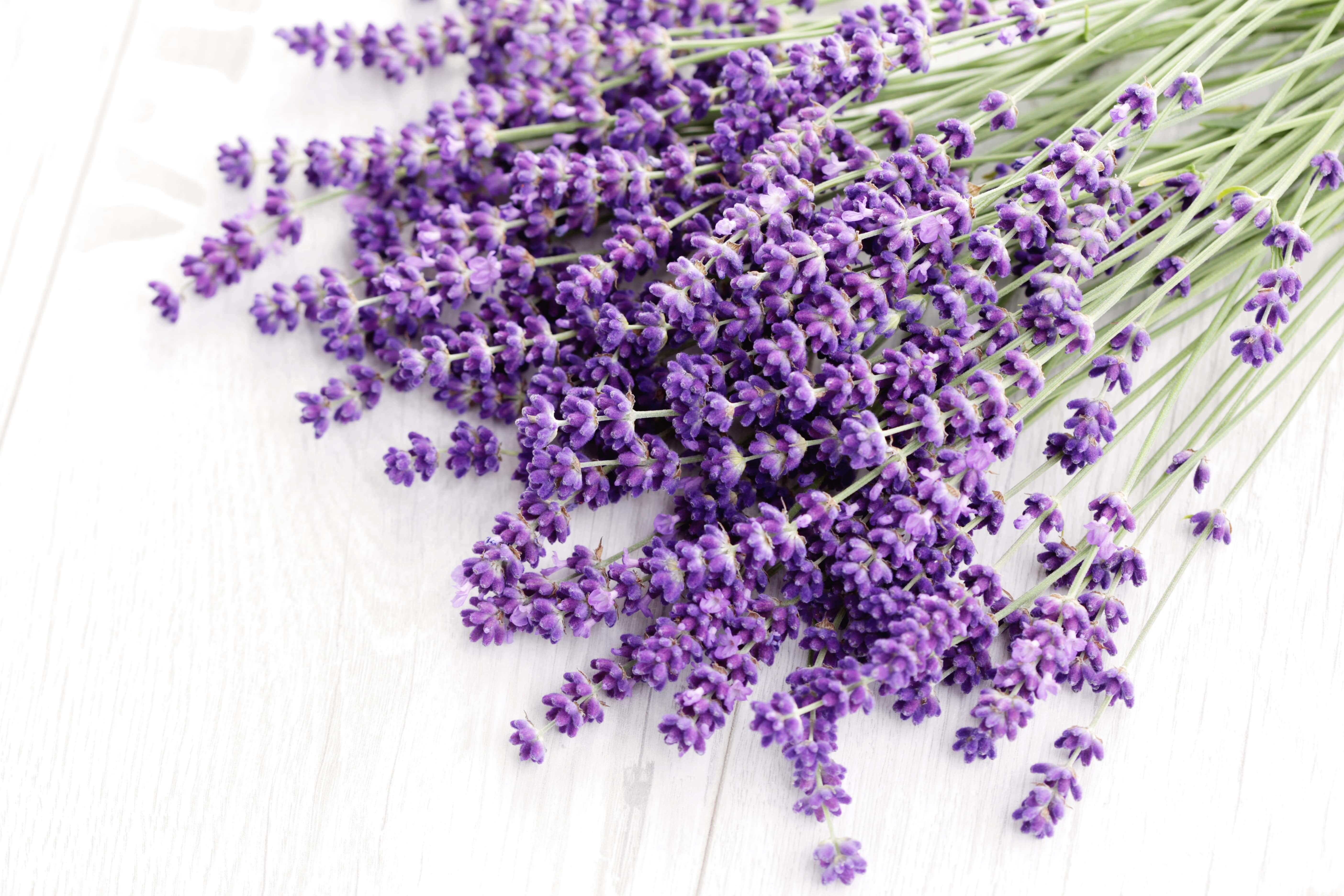
Lavandin grosso oil
Herbal > Lavender > Fresh Flowers > Camphoric


| Company | Ingredient Name | Learn more | Naturality | Certifications | MOQ | Latin name | Treated part | Origin |
|---|---|---|---|---|---|---|---|---|

|
LAVANDIN GROSSO OIL ORGANIC
LGB
|
Discover | Pure & Natural Organic |


|
1 Kg | Lavandula hybrida var. grosso | Leaves & Flowers | Spain |
|
|
LAVANDIN GROSSO OIL
LG
|
Discover | Pure & Natural |
|
1 Kg | Lavandula hybrida var. grosso | Leaves & Flowers | Spain |
|
LAVANDIN GROSSO
B546P
|
Discover | Huile essentielle |
|
- | Lavandula × intermedia Emeric ex Loisel. clone Grosso | Sommité fleurie | France |
|
|
LAVANDIN GROSSO
B546
|
Discover | Huile essentielle |
|
- | Lavandula × intermedia Emeric ex Loisel. clone Grosso | Sommité fleurie | France |
|
|
LAVANDIN GROSSO PAYS
F7555
|
Discover | Huile essentielle |
|
- | Lavandula × intermedia Emeric ex Loisel. clone Grosso | Sommité fleurie | France |
|
|
LAVANDIN GROSSO PAYS
B7555
|
Discover | Huile essentielle |
|
- | Lavandula × intermedia Emeric ex Loisel. clone Grosso | Sommité fleurie | France |
|
|
LAVANDIN GROSSO
546
|
Discover | Huile essentielle | - | Lavandula × intermedia Emeric ex Loisel. clone Grosso | Sommité fleurie | France | |
|
LAVANDIN GROSSO EO
LG100%-1
|
Discover | Naturel | 10 grs | - | - | - | |

|
Huile essentielle de Lavandin Grosso - 30 gr | Discover | - | 30grs | - | - | - | |

|
LAVANDIN Essential Oil
M_0020281
|
Discover | Naturel | - | - | - | - | |

|
Lavandin Oil Grosso | Discover | Essential Oil | - | Lavandula hybrida grosso | - | - | |

|
Lavandin Grosso Oil | Discover | Essential Oils | - | - | - | - |
LGB

LG
B546P
B546
F7555
B7555
546
LG100%-1
M_0020281

General Presentation
-
CAS N° :
8022-15-9 // 91722-69-9 -
EINECS number :
294-470-6 -
FEMA number :
2618
-
Volatility :
Head/Heart -
Price Range :
€€
Physico-chemical properties
-
Appearance :
Colorless liquid -
Density :
0,891 - 0,899 @20°C -
Refractive Index @20°C :
1,458 - 1,462 @20°C -
Optical rotation :
-7° // -3,5° -
Vapor pressure :
Donnée indisponible. -
Flash Point :
Donnée indisponible. -
Acid Value :
<= 1
Botanical informations
Botanical name :
Botanical profile :
Lavandin is a plant that, from a botanical perspective, belongs to the the family Lamiaceae, and the genus Lavandula L.
The Lamiaceae family is the most important family in perfumery. It notably includes lavenders, basils, mints, sages, rosemaries, patchoulys, and thymes.
The genus Lavandula L. alone comprises 39 species, such as Lavandula angustifolia and Lavandula aspic. Its name derives from the Latin word lavare, meaning to wash or purify.
Chemotypes :
It is a hybrid between lavender (Lavandula angustifolia) and aspic (Lavandula latifolia). Depending on the degree of hybridization of the two lavenders, four different lavenders result: Grosso, Abrialis, Sumian and Super. These varieties are differentiated by their rate of Camphor and Eucalyptol (in ascending order: Super, Grosso, Abrialis, Sumian) and their ester ratio (reverse order). Lavandin Grosso is the most produced because it grows much faster than the other varieties. The smell of lavandin is more camphorated than Lavender EO, but less than the aspic.
Extractions & Uses
Extraction process :
Introduced in France in the 1920s, lavandin is a herbaceous sub-shrub, slightly higher than lavender, with evergreen leaves and flowers with three blue-purple spikes that blooms from July-August. The production of lavandin requires a certain altitude, located between 600 and 1500 meters.
The cultivation and extraction are done in August-September. The Lavandin extraction process is called "ground green" which means that it is done directly after cutting. Once they are ground, the plants are grouped in the distillation tank. The smell of the absolute is greener and cooler than if the plant was dried in the sun before the hydrodistillation. The essential oil is collected at the end of the steam distillation, by decantation.
The extraction yield is better for lavandin than for lavender because it contains more flower heads. Its extraction yield is 120 kg of essential oil per hectare, against 40 kg of oil per hectare of cultivated lavender (Aspic has a yield of 50 kg / ha).
The annual production of lavandin grosso essential oil reaches 1200 kg. The essential oil can be rectified to be obtained without terpene. It can also be acetylated to increase its level of Linalyl Acetate if it has to be extracted later.
Uses in perfumery :
Useful in lavender reconstitutions, fougere, colognes and amber perfumes and for detergents and soaps.
Stability :
Solubility issues in perfumes
The esters identified in this raw material can form their corresponding acid in stability tests
The terpenes identified in this raw material can polymerize when they are oxidized
Major Components :
| Component | % min | % max |
|---|---|---|
| Linalyl acetate | 28 | 38 |
| Linalool | 25 | 35 |
| Camphor | 6 | 8 |
| Eucalyptol | 4 | 7 |
| 4-Alpha-terpineol | 2 | 4 |
| Beta-caryophyllene | 1 | 5 |
| (E)-Beta-farnesene | 1 | 5 |
| D-Limonene | 1 | 5 |
| (Z)-Beta-ocimene | 1 | 5 |
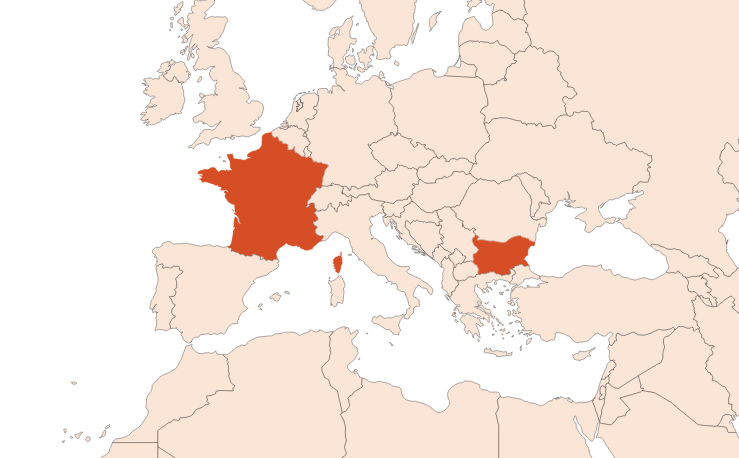
Photo credits: ScenTree SAS
Other comments :
Several markers of quality exist for lavandins. The ester level is one of them, and varies according to the lavandin varieties. The rate of eucalyptol and camphor is also a marker (for the Grosso, it is intermediate compared to other varieties).
Although it is more recent, Lavandin Grosso is the most produced.
Several markers of quality exist for lavandins. The ester level is one of them, and varies according to the lavandin varieties. The rate of eucalyptol and camphor is also a marker (for the Grosso, it is intermediate compared to other varieties).
Although it is more recent, Lavandin Grosso is the most produced.
Labelling
Allergens :
This ingredient is classified as an allergen under European Regulation 2023/1545, dated August 26, 2023.
Its presence must therefore be declared on product labels when it exceeds 0.001% in leave-on products and 0.01% in rinse-off products.
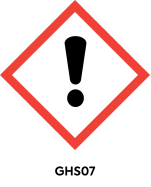
Signal word :
Warning
Hazard pictograms :
Precautionary statements :
| HAZARD | PRECAUTION |
|---|---|
| H315 Causes skin irritation.
H317 May cause an allergic skin reaction. H319 Causes serious eye irritation. H332 Harmful if inhaled. H412 Harmful to aquatic life with long lasting effects. |
P261 Avoid breathing dust/fume/gas/mist/vapours/spray. P264 Wash ... thoroughly after handling. P271 Use only outdoors or in a well-ventilated area. P272 Contaminated work clothing should not be allowed out of the workplace. P302 + P352 IF ON SKIN: Wash with plenty of water/… P501 Dispose of contents/container to… |
IFRA
IFRA 51th :
This ingredient is not restricted for the 51th amendment