








Cardamom seed oil
Spicy > Cool Spices > Agrestic > Camphoric
Elettaria cardamomum (L.) Maton
Synonyms : Alpinia cardamomum (L.) Roxb. // Amomum cardamomum L.


| Company | Ingredient Name | Learn more | Naturality | Certifications | MOQ | Latin name | Treated part | Origin |
|---|---|---|---|---|---|---|---|---|

|
CARDAMOM EO SP.
4410000001
|
Discover | Naturel | - | Elettaria cardamomum Maton | Seeds | Kerala India | |

|
CARDAMOME
B232
|
Discover | Huile essentielle |

|
- | Elettaria cardamomum (L.) Maton | Graine | Guatemala |
|
|
CARDAMOME
F0467
|
Discover | Huile essentielle | - | Elettaria cardamomum (L.) Maton | Cosse | Inde | |

|
Absolue de Cardamome - 30 gr | Discover | - | 30grs | - | - | - | |

|
CARDAMOM Essential Oil
M_0020539
|
Discover | Naturel | - | - | - | - | |

|
Cardamom Oil Guatemalan | Discover | Essential Oil | - | Elettaria cardamomum | - | - | |

|
Cardamom Oil | Discover | Essential Oils | - | - | - | - |
4410000001

B232
F0467
M_0020539

General Presentation
-
CAS N° :
8000-66-6 -
EINECS number :
96507-91-4 -
FEMA number :
2241
-
Volatility :
Head/Heart -
Price Range :
€€€€
Physico-chemical properties
-
Appearance :
Green liquid -
Density :
0,919 - 0,936 @20°C -
Refractive Index @20°C :
1,462 - 1,468 @20°C -
Optical rotation :
+22° // +41° -
Vapor pressure :
Donnée indisponible. -
Flash Point :
Donnée indisponible. -
Acid Value :
Botanical informations
Botanical name :
Elettaria cardamomum (L.) Maton
Synonyms : Alpinia cardamomum (L.) Roxb. // Amomum cardamomum L.
Botanical profile :
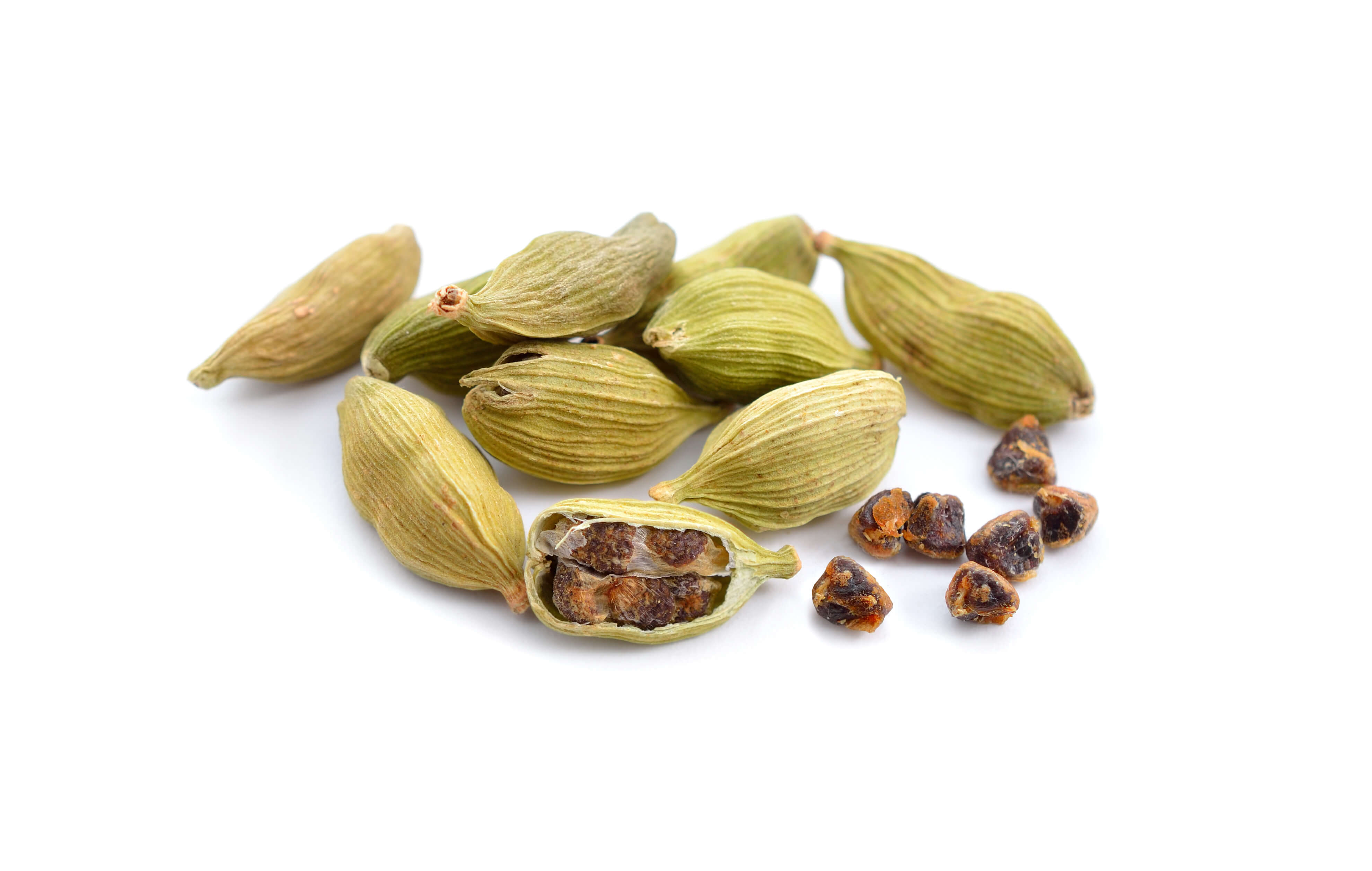
Cardamom comes from various species of the Zingiberaceae family and the genus Elettaria Maton.
Chemotypes :
There are two main varieties of Elettaria cardamomum:
Elettaria cardamomum var major.
Elettaria cardamomum var minor.
These varieties are mainly distinguished by the size of their fruits. However, these two varieties are interfertile, time and conditions of culture allowed the multiplication of cardamom varieties (to the detriment of fruit production yield).
The name "cardamom" is also attributed to many varieties of the genus Amomum, although this appellation is not correct from a botanical point of view.
Guatemalan cardamom is more minty and peppery while the Sri Lanka cardamom is more citral-citronella.
Extractions & Uses
Extraction process :
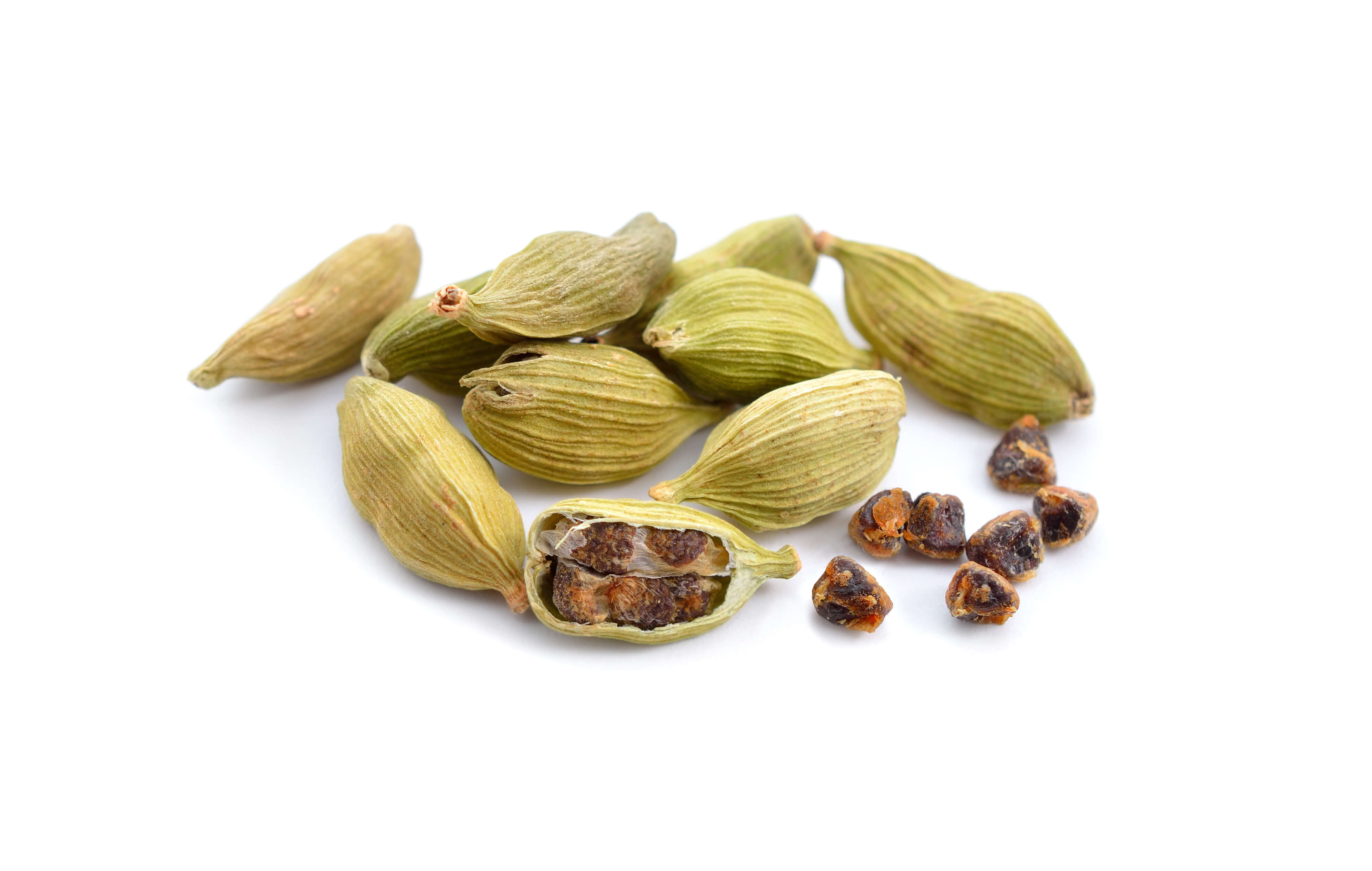
Cardamom is an herbaceous plant with rhizomes. It is cultivated between 600 and 1200m of altitude and generally prefers temperate climates. The plantation is made in July for a harvest in winter, at the beginning of spring, when the capsules are very green and the fruits are black. The harvest is done manually before letting the capsules dry. This drying stage is complex because it allows the development of several aromatic compounds, but it also allows the evaporation of some of the most volatile compounds. It is therefore necessary to be very careful.
Once dried the capsules are husked to preserve only the seeds. These are then crushed to facilitate the various processes leading to the different by-products obtained from cardamom.
In perfumery it is possible to obtain several types of product: a Cardamom EO; a Cardamom Absolute; an Cardamom oleoresin as well as a Cardamom CO2 extract.
Cardamom EO, is carried out by hydrodistillation (during approx. 6 hours) of the crushed seeds. Yields between 8 and 10% depending on the varieties used. It should be noted that the longer the distillation process, the higher the level of Eucalyptol and, in reverse, the lower is the level of Terpinyl acetate.
The other types of extraction are explained in the corresponding ingredients page.
From the same botanical variety
Uses in perfumery :
Useful in spicy, warm and zesty accords.
Stability :
Solubility issues in perfumes
The esters identified in this raw material can form their corresponding acid in stability tests
The terpenes identified in this raw material can polymerize when they are oxidized
Major Components :
| Component | % min | % max |
|---|---|---|
| Eucalyptol | 35 | 40 |
| Terpinyl acetate | 20 | 25 |
| Alpha-pinene | 6 | |
| Linalool | 6 | |
| Sabinene | 4 |
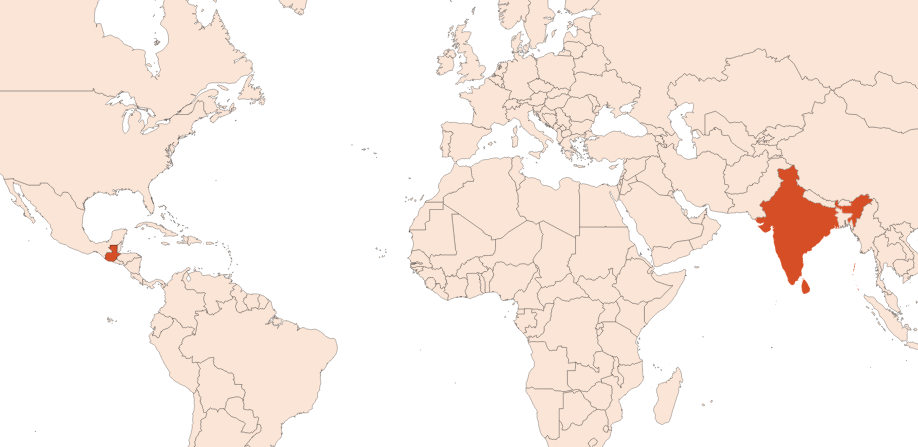
Photo credits: ScenTree SAS
Other comments :
Cardamom is a spice used since ancient times by Indians and Arab people. Many ancient writings relate the presence of this spice in cooking recipes and in ancient religious rites. Cardamom is on the podium of the most expensive spices in the world, after saffron and vanilla.
Its export from Guatemala is the largest source of agricultural exports in the country, especially since in the early 2000s, this country was producing about 90% of the world market.
A possible adulteration with Terpinyl Acetate can be made as it is the marker compound for the quality of the EO, with the Eucalyptol. Adulteration can also be done with Amomum fruits introduced before the extraction.
In 2018, floods in India caused the loss of part of the crop, contributing to the increase in the price of the essential oil.
Cardamom is a spice used since ancient times by Indians and Arab people. Many ancient writings relate the presence of this spice in cooking recipes and in ancient religious rites. Cardamom is on the podium of the most expensive spices in the world, after saffron and vanilla.
Its export from Guatemala is the largest source of agricultural exports in the country, especially since in the early 2000s, this country was producing about 90% of the world market.
A possible adulteration with Terpinyl Acetate can be made as it is the marker compound for the quality of the EO, with the Eucalyptol. Adulteration can also be done with Amomum fruits introduced before the extraction.
In 2018, floods in India caused the loss of part of the crop, contributing to the increase in the price of the essential oil.
Labelling
Allergens :
Signal word :
Warning
Hazard pictograms :
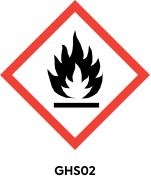
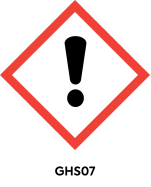
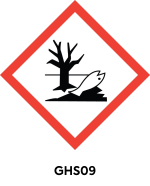
Precautionary statements :
| HAZARD | PRECAUTION |
|---|---|
| H226 Flammable liquid and vapour.
H315 Causes skin irritation. H317 May cause an allergic skin reaction. H319 Causes serious eye irritation. H411 Toxic to aquatic life with long lasting effects. |
P210 Keep away from heat, hot surfaces, sparks, open flames and other ignition sources. No smoking. P233 Keep container tightly closed. P240 Ground and bond container and receiving equipment. P241 Use explosion-proof [electrical/ventilating/lighting/…] equipment. P242 Use non-sparking tools. P243 Take action to prevent static discharges. P261 Avoid breathing dust/fume/gas/mist/vapours/spray. P264 Wash ... thoroughly after handling. P272 Contaminated work clothing should not be allowed out of the workplace. P273 Avoid release to the environment. P280 Wear protective gloves/protective clothing/eye protection/face protection. P302 + P352 IF ON SKIN: Wash with plenty of water/… P303 + P361 + P353 IF ON SKIN (or hair): Take off immediately all contaminated clothing. Rinse skin with water [or shower]. P305 + P351 + P338 IF IN EYES: Rinse cautiously with water for several minutes. Remove contact lenses, if present and easy to do. Continue rinsing. P321 Specific treatment (see ... on this label). P332 + P313 If skin irritation occurs: Get medical advice/attention. P333 + P313 If skin irritation or rash occurs: Get medical advice/attention. P337 + P313 If eye irritation persists: Get medical advice/attention. P362 Take off contaminated clothing. P363 Wash contaminated clothing before reuse. P370 + P378 In case of fire: Use… to extinguish. P391 Collect spillage. P403 + P235 Store in a well-ventilated place. Keep cool. P501 Dispose of contents/container to… |
IFRA
IFRA 51th :
This ingredient is not restricted for the 51th amendment