











Cinnamon bark oil
Spicy > Warm Spices > Cinnamic > Eugenol > Zesty
Cinnamomum verum J.Presl
Synonyms : Cinnamomum verum J.Presl // Laurus cinnamomum L.


| Company | Ingredient Name | Learn more | Naturality | Certifications | MOQ | Latin name | Treated part | Origin |
|---|---|---|---|---|---|---|---|---|

|
CANNELLE
B220F
|
Discover | Huile essentielle |

|
- | Cinnamomum verum J.Presl | Ecorce | Madagascar |
|
|
CANNELLE
B220
|
Discover | Huile essentielle |
|
- | Cinnamomum verum J.Presl | Ecorce | Madagascar |
|
|
CANNELLE
F9250
|
Discover | Absolue | - | Cinnamomum verum J.Presl | Ecorce | Madagascar | |
|
CINNAMON EO CEYLAN
CANC-1
|
Discover | Naturel | 10 grs | - | - | - | |

|
Huile essentielle de Cannelle Ecorces - 30 gr | Discover | - | 30grs | - | - | - | |

|
CINNAMON BARK EO
4410000039
|
Discover | Naturel | - | - | - | - | |

|
Cinnamon Bark Oil | Discover | Essential Oil | - | - | - | - |
B220F

B220
F9250
CANC-1
4410000039

General Presentation
-
CAS N° :
8015-91-6 -
EINECS number :
84649-98-9 -
FEMA number :
2291
-
Volatility :
Heart/Base -
Price Range :
€€€
Physico-chemical properties
-
Appearance :
Pale yellow liquid -
Density :
1,009 - 1,0215 @20°C -
Refractive Index @20°C :
Donnée indisponible. -
Optical rotation :
-
Vapor pressure :
0,097 mmHg @20°C -
Flash Point :
75°C (167°F) -
Acid Value :
Botanical informations
Botanical name :
Cinnamomum verum J.Presl
Synonyms : Cinnamomum verum J.Presl // Laurus cinnamomum L.
Botanical profile :
The cinnamon tree is a tree of the Lauraceae family and the Cinnamomum Schaeff. genus.
Chemotypes :
There are more than 400 species in the Cinnamomum Schaeff. genus.
Cinnamomum verum J.Presl : Ceylon cinnamon EO. Leaves are extracted.
Cinnamomum cassia (L.) J.Presl :Chinese cinnamon or Cassia EO. Leaves from this tree are not extracted for perfumery.
We can also distinguish :
Cinnamomum burmanni (Nees & T.Nees) Blume : Korintje cassia SFE and Cinnamomum tamala : Indian cinnamon, much less cultivated.
Cinnamomum camphora (L.) J.Presl CT Linalol: Hô wood EO - This chemotype contains more than 80% linalool. The natural Linalol is mainly extracted from it.
Cinnamomum camphora (L.) J.Presl CT Cineol: Ravintsara EO - This is the chemotype we are studying here.
Cinnamomum camphora (L.) J.Presl CT Camphor: Camphor tree EO - This chemotype contains between 50% and 70% Camphor.
Cinnamomum tamala (Buch.-Ham.) T.Nees & Eberm : From India, very low volume.
Cinnamomum parthenoxylon (Jack) Meisn. : Siam wood oil
Extractions & Uses
Extraction process :
In Sri Lanka, 24,000 hectares of forest are planted with Ceylon cinnamon. In 2006, Sri Lanka produced 90% of Ceylon cinnamon worldwide.
The leaves and the bark are mature 12 to 18 months after the preceding harvest. From red to dark green, the colour of the leaves indicates the cinnamon maturity. The culture often takes place in May and November. The bark of the cinnamon tree is very friable and can easily be detached from the trunk by sliding a knife between the two parts. The older the tree, the greater the bark yield per hectare is important. After separating the trunk, the pieces of bark are stacked, pressed and dried overnight in the shade to avoid sunburns, for four to five days. In wet weather, the use of a desiccator may be necessary. The bark shrinks, browns and develops its olfactory potential. This is when cinnamon can be extracted by steaming. The extraction is practiced on the strips of bark as such or slightly crushed. After distillation, the essential oil is collected by decantation in a florentine vase. The quality of the essential oil depends on the part of the extracted trunk. Its quality is better if it is the center of the trunk. Corrections are made to standardize the quality of the essential oil.
The distillation can be done on site, or directly by the companies that produces the essential oil, in Western Europe or in North America. France is the largest importer of Sri Lanka cinnamon essential oil, followed by the United States.
Many olfactory variations can occur depending on crops, forests and even between trees in the same forest.
Cinnamon oleoresin can be obtained from the extraction of the bark with a volatile solvent. Using ethanol gives a yield of 10 to 12%, while using benzene leads to a yield of 2 to 4%.
Uses in perfumery :
Used in spicy, floral-carnation, cola and fruity notes for a fresh touch. Gives support to warm woody and amber notes. Very useful in Christmas fragrance collections.
Stability :
Aldehydes can form diethylacetals in stability tests, without modifying the raw material’s smell
Major Components :
| Component | % min | % max |
|---|---|---|
| Cinnamaldehyde | 70 | 80 |
| Cinnamyl acetate | 5 | |
| Eugenol | 2 | |
| Coumarin | 2 | |
| Benzoic aldehyde | 1 |
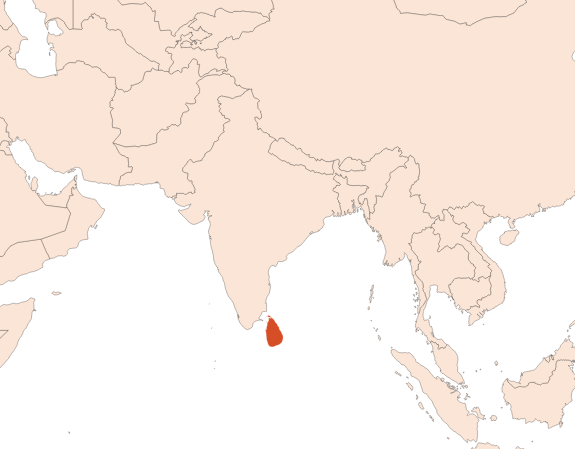
Photo credits: ScenTree SAS
Other comments :
The name "Ceylon" comes from the old name of the island located in the South of India, on which this cinnamon is cultivated: Sri Lanka.
The quality of a cinnamon bark is measured by its appearance, the constitution of its essential oil and the fineness of its chips.
A quality cinnamon contains 0.9 to 2.3% of essential oil in its bark.
Several adulterations are made adding essential oil of Chinese cinnamon to the essential oil of Ceylon cinnamon to lower the production price of the essential oil. It is also possible to add a mixture of 96% Cinnamaldehyde and 4% Eugenol. To be accepted, an essential oil of cinnamon must not contain more than 14% of Eugenol and its share of Cinnamaldehyde must not be inferior to 60%.
The essential oil of cinnamon is a major precursor to the extraction of natural Cinnamaldehyde, although it is extracted preferentially from the essential oil of Chinese cinnamon, which contains more with a more reasonable price.
The smell of cinnamon roots is more camphoric, earthy and floral than the bark.
The name "Ceylon" comes from the old name of the island located in the South of India, on which this cinnamon is cultivated: Sri Lanka.
The quality of a cinnamon bark is measured by its appearance, the constitution of its essential oil and the fineness of its chips.
A quality cinnamon contains 0.9 to 2.3% of essential oil in its bark.
Several adulterations are made adding essential oil of Chinese cinnamon to the essential oil of Ceylon cinnamon to lower the production price of the essential oil. It is also possible to add a mixture of 96% Cinnamaldehyde and 4% Eugenol. To be accepted, an essential oil of cinnamon must not contain more than 14% of Eugenol and its share of Cinnamaldehyde must not be inferior to 60%.
The essential oil of cinnamon is a major precursor to the extraction of natural Cinnamaldehyde, although it is extracted preferentially from the essential oil of Chinese cinnamon, which contains more with a more reasonable price.
The smell of cinnamon roots is more camphoric, earthy and floral than the bark.
Labelling
Allergens :
This ingredient is classified as an allergen under European Regulation 2023/1545, dated August 26, 2023.
Its presence must therefore be declared on product labels when it exceeds 0.001% in leave-on products and 0.01% in rinse-off products.
Signal word :
Danger
Hazard pictograms :
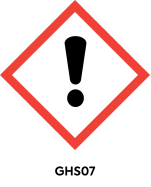
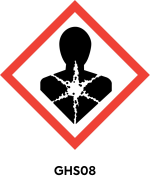
Precautionary statements :
| HAZARD | PRECAUTION |
|---|---|
| H315 Causes skin irritation.
H317 May cause an allergic skin reaction. H319 Causes serious eye irritation. H350 May cause cancer. H412 Harmful to aquatic life with long lasting effects. |
P201 Obtain special instructions before use. P261 Avoid breathing dust/fume/gas/mist/vapours/spray. P273 Avoid release to the environment. P280 Wear protective gloves/protective clothing/eye protection/face protection. P281 Use personal protective equipment as required. P308 + P313 IF exposed or concerned: Get medical advice/attention. |
IFRA
IFRA 51th :
This ingredient is not restricted for the 51th amendment