






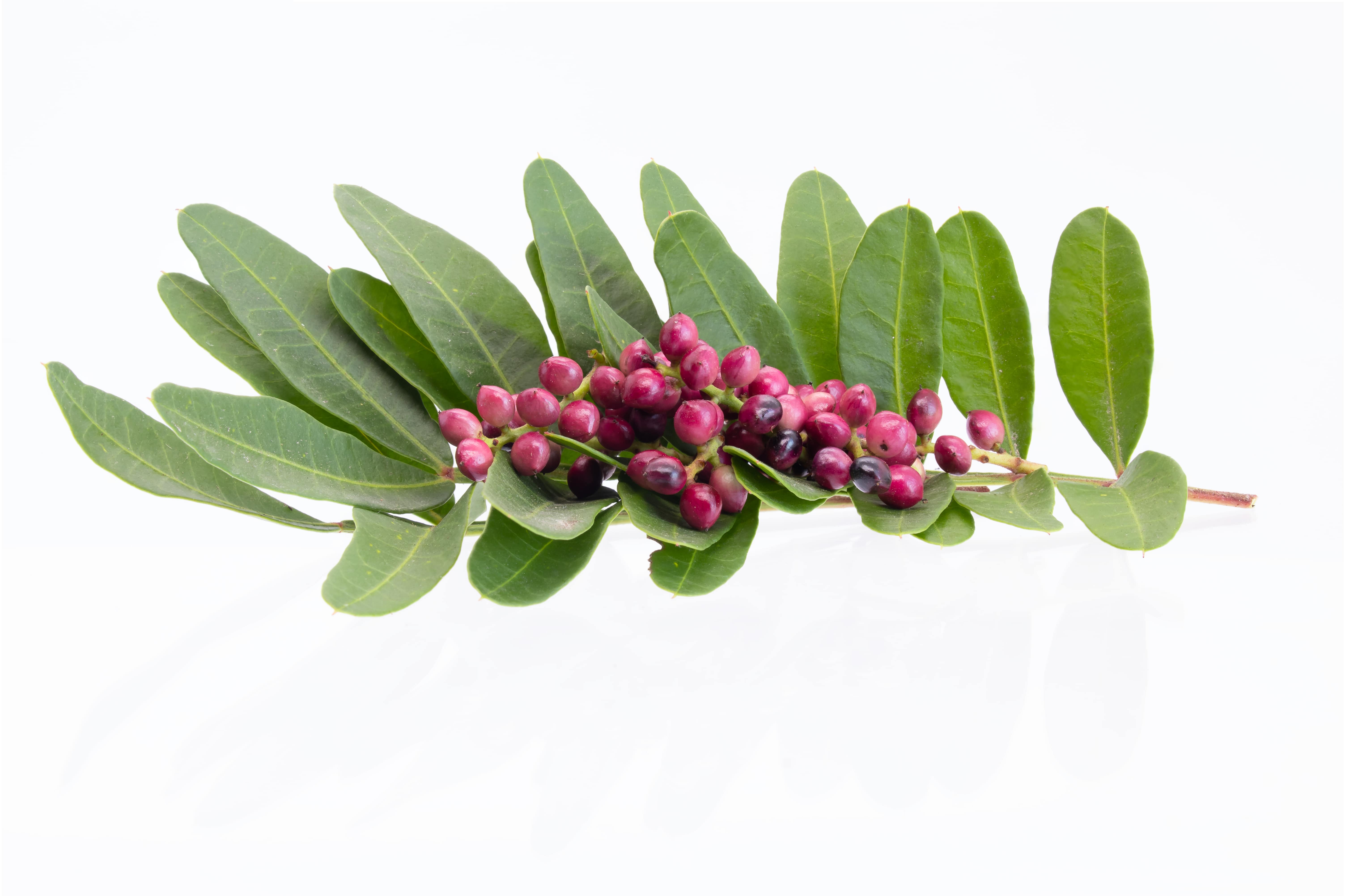
Mastic absolute
Green > Crisp Green > Grassy > Spicy
Pistacia lentiscus L.
Synonyms : Lentiscus vulgaris Fourr. // Terebinthus vulgaris Fourr.


| Company | Ingredient Name | Learn more | Naturality | Certifications | MOQ | Latin name | Treated part | Origin |
|---|---|---|---|---|---|---|---|---|
|
LENTISQUE
N0770
|
Discover | Huile essentielle |

|
- | Pistacia lentiscus L. | Branche, Feuille | Maroc |
|
|
LENTISQUE
P00549011000
|
Discover | Absolue | - | Pistacia lentiscus L. | Branche, Feuille | Maroc | |
|
|
LENTISQUE
B566
|
Discover | Huile essentielle | - | Pistacia lentiscus L. | Rameau | Maroc | |
|
MASTIC ABS 100% P&N
LEAB-1
|
Discover | Naturel | 10 grs | - | - | - | |
|
LENTISCUS ABS TYPE
954740
|
Discover | Naturals | - | - | - | - |
N0770

P00549011000
B566
LEAB-1
954740

General Presentation
-
CAS N° :
61789-92-2 -
EINECS number :
263-098-6 -
FEMA number :
Donnée indisponible.
-
Volatility :
Heart/Base -
Price Range :
€€€€€
Physico-chemical properties
-
Appearance :
Green paste -
Density :
-
Refractive Index @20°C :
Donnée indisponible. -
Optical rotation :
-
Vapor pressure :
Donnée indisponible. -
Flash Point :
Donnée indisponible. -
Acid Value :
Botanical informations
Botanical name :
Pistacia lentiscus L.
Synonyms : Lentiscus vulgaris Fourr. // Terebinthus vulgaris Fourr.
Botanical profile :
The pistachio lentiscus, or mastic tree, is a shrub of the Anacardiaceae family and the genus Pistacia L.
Chemotypes :
There are several other pistachio trees belonging to the genus Pistacia L. Although, they are not used for their secretion of mastic.
Extractions & Uses
Extraction process :
The pistachio tree destined to perfumery is grown under organic conditions, guaranteed by local governments (Morocco in particular).
The cultivation takes place between the months of June and September, when the essential oil secretion of the tree is at its best. During the rest of the year, it resists the coldness of winter.
The tree exudes a resin called mastic that partially covers the branches and the leaves and has an olfactory interest. The branches are cut and crushed, disposed on grids to be directly extracted in an extraction tank filled with hexane. Once the extraction is done, the branches are removed and the hexane is evaporated and recycled. The resulting paste is mastic concrete. After filtrating the concrete waxes and evaporating the alcohol, a dilution of this paste in alcohol, followed by a glazing process (temperature gradient from 140 °F to 32 °F) allows to obtain the pistachio mastic absolute.
Uses in perfumery :
Used in fine fragrance in green, spicy, tobacco, fig, lime and in fougere, chypre and woody flavours. Used to modernize a green note of Galbanum EO for example.
Stability :
Solubility issues in perfumes
The terpenes identified in this raw material can polymerize when they are oxidized
Major Components :
| Component | % min | % max |
|---|---|---|
| Alpha-pinene | 7 | 20 |
| Myrcene | 4 | 15 |
| Sabinene | 2 | 15 |
| Muurolène | ||
| Terpinen-4-ol |
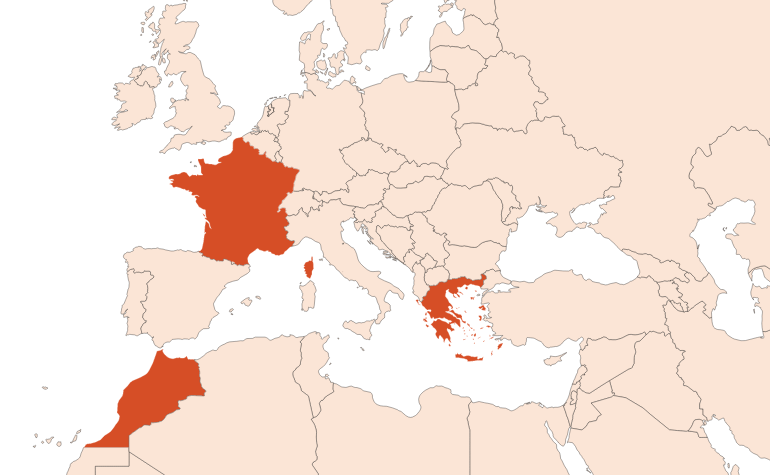
Photo credits: ScenTree SAS
Other comments :
This shrub is not to be confused with the true pistachio (Pistacia vera), whose pistachio is the fruit.
The fruits of the pistachio mastic tree are red at first, then black when ripe and are extracted from December to January in order to obtain the oil.
This shrub is not to be confused with the true pistachio (Pistacia vera), whose pistachio is the fruit.
The fruits of the pistachio mastic tree are red at first, then black when ripe and are extracted from December to January in order to obtain the oil.
Labelling
Allergens :
Signal word :
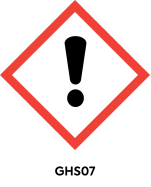
Warning
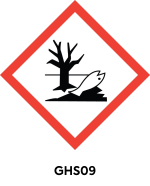
Hazard pictograms :
Precautionary statements :
| HAZARD | PRECAUTION |
|---|---|
| H317 May cause an allergic skin reaction.
H411 Toxic to aquatic life with long lasting effects. |
P261 Avoid breathing dust/fume/gas/mist/vapours/spray. P272 Contaminated work clothing should not be allowed out of the workplace. P273 Avoid release to the environment. P280 Wear protective gloves/protective clothing/eye protection/face protection. P302 + P352 IF ON SKIN: Wash with plenty of water/… P333 + P313 If skin irritation or rash occurs: Get medical advice/attention. |
IFRA
IFRA 51th :
This ingredient is restricted by the 51th amendment
Annexe I :
Some regulated synthetic ingredients are found in nature and in certain proportions in natural ingredients. This presence in nature has to be taken into account when calculating limits of use recommended by the IFRA. In case you do not know these concentrations, you can use the ones estimated by the IFRA. Here they are :
| List of regulated compounds contained in this ingredient | ||
|---|---|---|
| Regulated ingredient name | CAS N° | Estimated Concentration |
| Geraniol | 106-24-1 | 0,05 |
| Methyl eugenol | 93-15-2 | 0,01 |
| Methyl eugenol | 93-15-2 | 0,02 |
| alpha-Bisabolol | 515-69-5 | 0,08 |
Disclaimer :
ScenTree is solely responsible for the information provided here.
To learn more about IFRA's standards : https://ifrafragrance.org/safe-use/library