










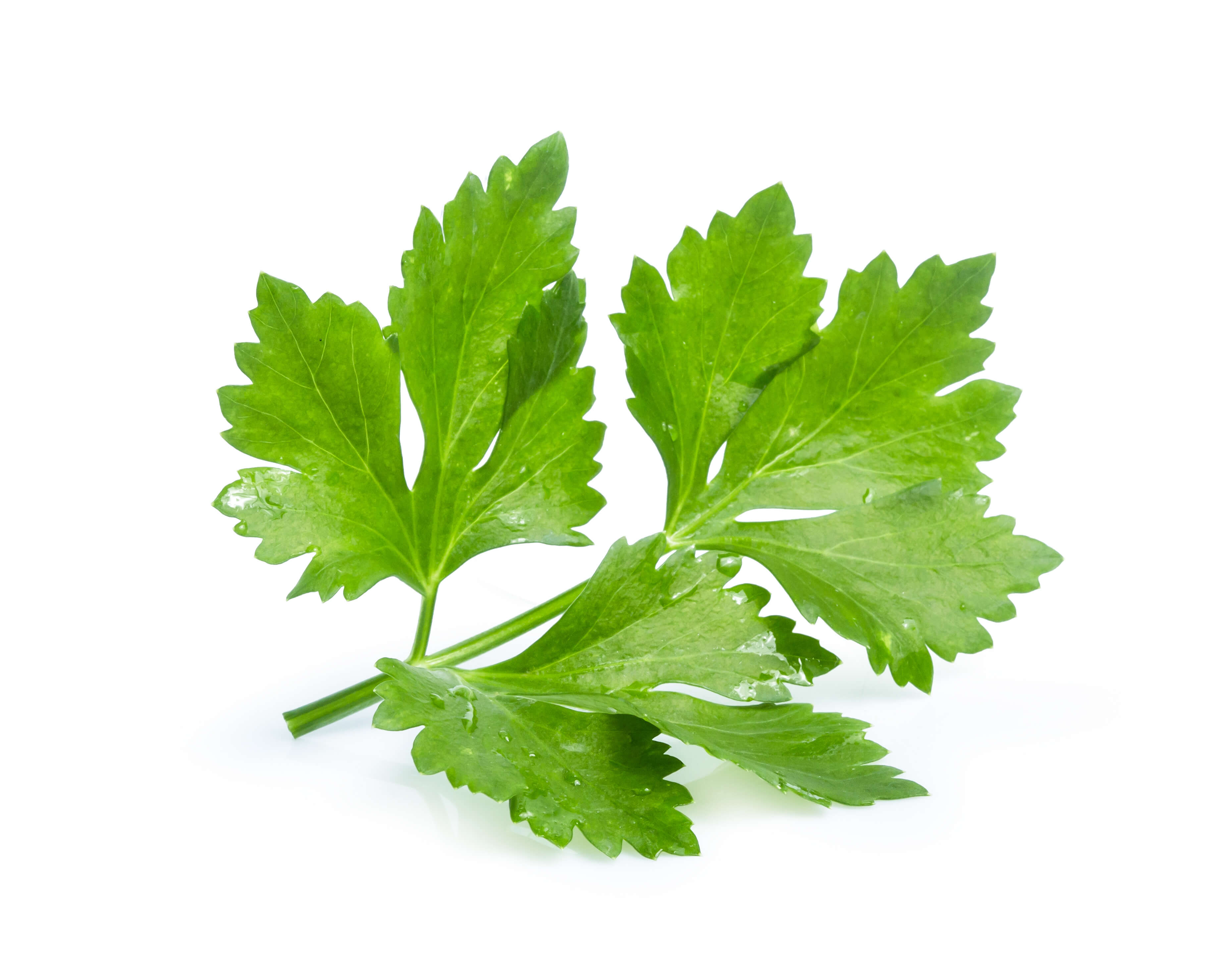
Coriander herb oil
Aldehydes > Zesty > Orange > Agrestic
Coriandrum sativum L.
Synonyms : Apium leptophyllum auct. non (Pers.) F.Muell. ex Benth., // Selinum coriandrum E.H.L.Krause,


| Company | Ingredient Name | Learn more | Naturality | Certifications | MOQ | Latin name | Treated part | Origin |
|---|---|---|---|---|---|---|---|---|

|
CORIANDER SEED EO
928143
|
Discover | Naturals | - | CORIANDRUM SATIVUM | - | - | |

|
Huile essentielle de Coriandre feuilles - 30gr | Discover | - | 30grs | - | - | - | |

|
CORIANDER Essential Oil
M_0020596
|
Discover | Naturel | - | - | - | - | |
|
|
CORIANDER Rectified Essential Oil
M_0062897
|
Discover | Naturel | - | - | - | - | |

|
Coriander Herb Oil | Discover | Essential Oils | - | - | - | - |
928143

M_0020596
M_0062897

General Presentation
-
CAS N° :
8008-52-4 -
EINECS number :
84775-50-8 -
FEMA number :
2334
-
Volatility :
Head -
Price Range :
€€€
Physico-chemical properties
-
Appearance :
Yellow to orange liquid -
Density :
0,852 - 0,872 @20°C -
Refractive Index @20°C :
Donnée indisponible. -
Optical rotation :
-
Vapor pressure :
Donnée indisponible. -
Flash Point :
80°C (176°F) -
Acid Value :
Botanical informations
Botanical name :
Coriandrum sativum L.
Synonyms : Apium leptophyllum auct. non (Pers.) F.Muell. ex Benth., // Selinum coriandrum E.H.L.Krause,
Botanical profile :
Coriander is a plant belonging to the Apiaceae family and the genus Coriandrum L.
The Apiaceae family includes a wide range of spices, such as angelica, caraway, cumin, dill, anise, and fennel.
Chemotypes :
There are two varieties of coriander:
Coriandrum sativum L. : Mainly cultivated specie The European variety is smaller, rounder and has a more powerful smell. The Indian variety is larger, oval and clear but has a less significant smell.
Coriandrum tordylium (Fenzl) Bornm. : Wid coriander, rarely used.
Extractions & Uses
Extraction process :
India produces coriander on about 600,000 hectares of land, in other words 400,000 tons every year. Exports of cilantro seed from India represents 35% of world exports. The seedlings are usually propagated by seed sowing in October-November, at a rate of 12 to 30 kg of seed per hectare cultivated, depending on climatic conditions (the more moist the soil, the more seeds are planted). Seedlings are planted every one or several tens of centimetres. The cultivation of coriander is subject to the use of chemical or natural fertilizers depending on the crop. Finally, it needs a warm atmosphere and regular irrigation.
Seeds are usually collected by hand at their maturity (green to yellow in colour). Leaves are cut manually, gathering the stems and cutting them a few centimeters above the ground, and dried in the shade before steam distillation. At the end of the process, the essential oil is collected in an essencier by decantation.
The extraction yield of the essential oil oscillates between 3 and 4%.
Seeds are also extracted to recover Coriander Seeds EO, and whose supercritical CO2 extraction enables the collection of an extract about 10% richer in Linalool than a conventional distillation.
Uses in perfumery :
Coriander Leaf EO is a natural reference for aldehydic materials. It is commonly used in 100% natural perfumery to bring a aldehydic note, in floral or citrus notes for example.
Stability :
Aldehydes of this essential oil may react with Methyl Anthranilate or Indole to form Schiff bases. They also can form diethylacetals with no big impact on their smell.
Major Components :
| Component | % min | % max |
|---|---|---|
| 7-Dodecenal | 20 | 25 |
| Aldehyde C-12 Lauric | 15 | 20 |
| Aldehyde C-10 | 10 | |
| 9-Tetradecanal | 9 | |
| 5,8-Tridecadienal | 6 | |
| Aldehyde C-8 | 5 | |
| Tridecanal | 4 | |
| 3,6-Undecadienal | 4 | |
| Aldehyde C-11 Undecylic | 3 |
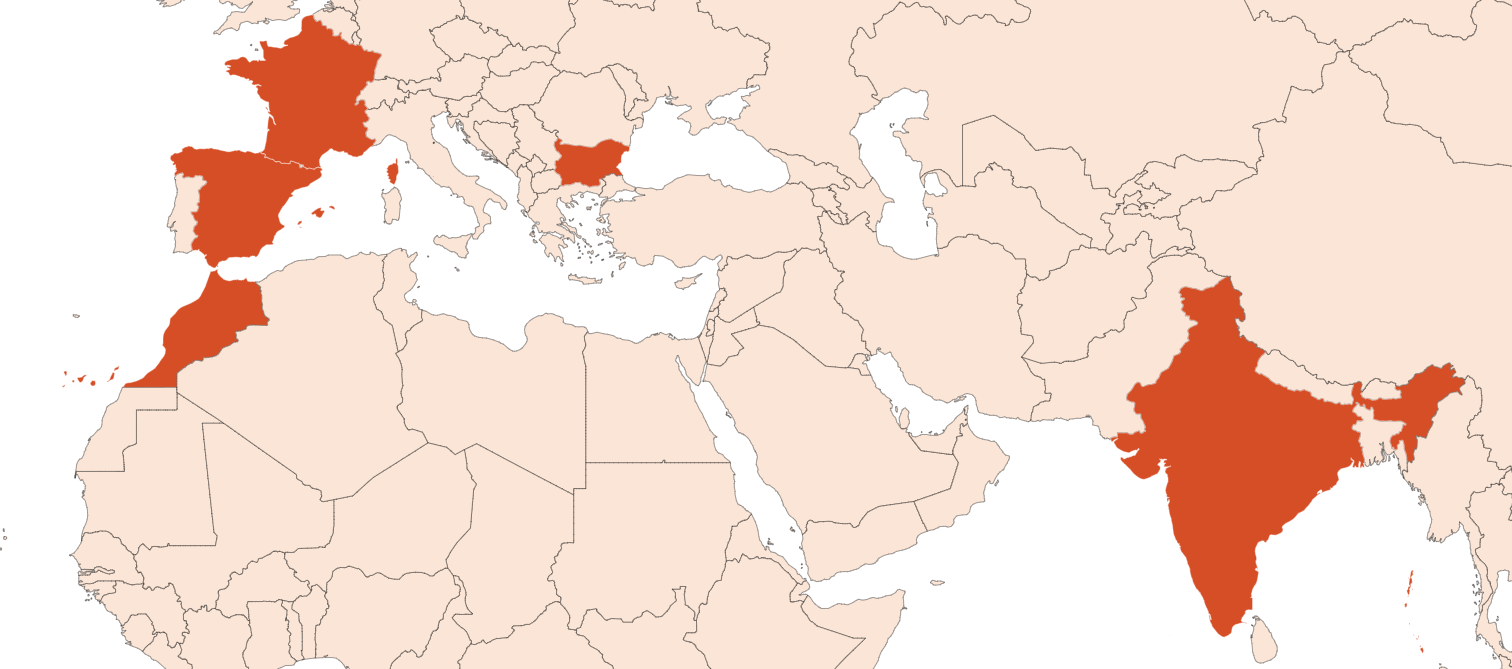
Photo credits: ScenTree SAS
Other comments :
Coriander is a spice that has been used for a long time. Indeed, the first mentions of this spice are dated -5000 B.C. Many mentions of coriander cultures are also present in the Bible.
Coriander is a spice that has been used for a long time. Indeed, the first mentions of this spice are dated -5000 B.C. Many mentions of coriander cultures are also present in the Bible.
Labelling
Allergens :
This ingredient does not contain any allergen.
Signal word :
Danger
Hazard pictograms :
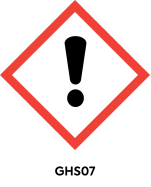
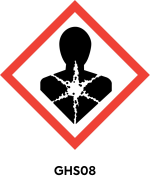
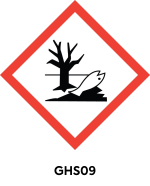
Precautionary statements :
| HAZARD | PRECAUTION |
|---|---|
| H304 May be fatal if swallowed and enters airways.
H315 Causes skin irritation. H317 May cause an allergic skin reaction. H319 Causes serious eye irritation. H411 Toxic to aquatic life with long lasting effects. |
P261 Avoid breathing dust/fume/gas/mist/vapours/spray. P264 Wash ... thoroughly after handling. P272 Contaminated work clothing should not be allowed out of the workplace. P273 Avoid release to the environment. P301 + P310 IF SWALLOWED: Immediately call a POISON CENTER/doctor/… P501 Dispose of contents/container to… |
IFRA
IFRA 51th :
This ingredient is not restricted for the 51th amendment