










Celery seed oil
Spicy > Cool Spices > Zesty
Apium graveolens L.
Synonyms : Anethum segetum L. // Apium celleri Gaertn.


| Company | Ingredient Name | Learn more | Naturality | Certifications | MOQ | Latin name | Treated part | Origin |
|---|---|---|---|---|---|---|---|---|

|
CELERY SEED EO SUPERIOR.
4410000002
|
Discover | Naturel | - | Apium graveolens L | Seeds | Punjab India | |

|
CELERI
F7151
|
Discover | Huile essentielle |

|
- | Apium graveolens L. | Graine | Inde |
|
|
CELERI
265
|
Discover | Huile essentielle | - | Apium graveolens L. | Graine | France | |

|
CELERY EO
CES-1
|
Discover | Naturel | 10 grs | - | - | - | |

|
Huile essentielle de Céleri - 30 gr | Discover | - | 30grs | - | - | - | |

|
CELERY Essential Oil
M_0051055
|
Discover | Naturel | - | - | - | - | |

|
Celery Seed Oil | Discover | Essential Oils | - | - | - | - |
4410000002

F7151
265
CES-1
M_0051055

General Presentation
-
CAS N° :
8015-90-5 -
EINECS number :
89997-35-3 -
FEMA number :
2271
-
Volatility :
Heart -
Price Range :
€€€
Physico-chemical properties
-
Appearance :
Colorless liquid -
Density :
0,867 - 0,908 @20°C -
Refractive Index @20°C :
1,478 - 1,488 @20°C -
Optical rotation :
+48° // +78° -
Vapor pressure :
Donnée indisponible. -
Flash Point :
Donnée indisponible. -
Acid Value :
Max 6
Botanical informations
Botanical name :
Apium graveolens L.
Synonyms : Anethum segetum L. // Apium celleri Gaertn.
Botanical profile :
Celery is a plant belonging to the Apiaceae family and the genus Apium L.
The Apiaceae family includes many spices, such as angelica, coriander, cumin, as well as dill, anise, and fennel.
Chemotypes :
Celery is a derivative of the celery leaf. There are a great number of varieties of which the best known are:
Apium graveolens var. secalinum. (the most used)
Apium graveolens var. rapaceum.
Apium graveolens var. dulce.
Extractions & Uses
Extraction process :
The first year of growth, celery forms a bouquet of leaves close to the ground. Flowers bloom during the following year. In June and July, stalks of celery are cut with a sickle in the morning and dried for a few hours. The plant is beaten to extract the seeds and separate the different elements. The celery seeds and roots are the most important sources of the EO. It is also possible to find it in the leaves and stems with a lower quality and yields.
Commercially, the seeds are therefore the most used in perfumery. They are dried and crushed before they are extracted by steam distillation for 10 to 12 hours. After the extraction, the essential oil is collected in an essencier by decantation. Yields are about 2 to 3%, which equates to 20 to 30 kg of EO per hectare. The collected water is usually distilled again afterwards.
Note that it is also possible to obtain a celery absolute by extracting the seeds with a volatile solvent.
Uses in perfumery :
Used to nuance fresh waters and white flower notes. Used in spicy, tobacco, leather and amber notes.
Stability :
Solubility issues in perfumes
The terpenes identified in this raw material can polymerize when they are oxidized
Major Components :
| Component | % min | % max |
|---|---|---|
| D-Limonene | 58 | 79 |
| Béta-sélinène | 5 | 20 |
| Sédanolide | 1.50 | 11 |
| Beta-pinene | 0.50 | 2 |
| Myrcene | 0.30 | 1.40 |
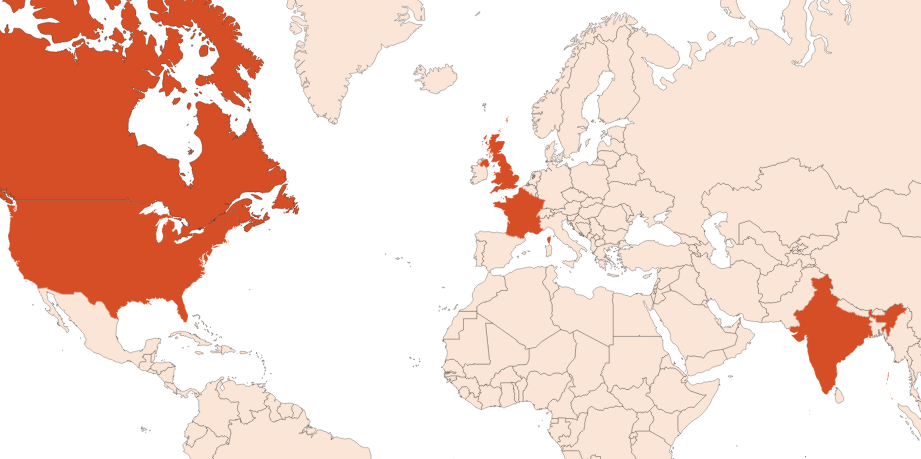
Photo credits: ScenTree SAS
Other comments :
Celery is mainly grown for its roots and seeds which are very popular in cooking and for their many medicinal properties.
Not to be confused with lovage which is a perennial celery of the same botanical family but of the genus Levisticum.
The concentration of β-Selinene is a quality marker of the essential oil of celery seed. Its content must be between 7 and 7.5%.
Celery is mainly grown for its roots and seeds which are very popular in cooking and for their many medicinal properties.
Not to be confused with lovage which is a perennial celery of the same botanical family but of the genus Levisticum.
The concentration of β-Selinene is a quality marker of the essential oil of celery seed. Its content must be between 7 and 7.5%.
Labelling
Allergens :
Signal word :
Warning
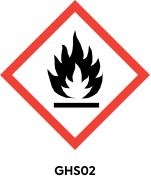
Hazard pictograms :
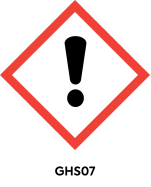
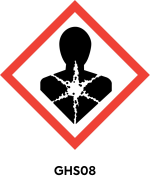
Precautionary statements :
| HAZARD | PRECAUTION |
|---|---|
| H226 Flammable liquid and vapour.
H315 Causes skin irritation. H317 May cause an allergic skin reaction. H410 Very toxic to aquatic life with long lasting effects. |
P210 Keep away from heat, hot surfaces, sparks, open flames and other ignition sources. No smoking. P233 Keep container tightly closed. P240 Ground and bond container and receiving equipment. P241 Use explosion-proof [electrical/ventilating/lighting/…] equipment. P242 Use non-sparking tools. P243 Take action to prevent static discharges. P261 Avoid breathing dust/fume/gas/mist/vapours/spray. P264 Wash ... thoroughly after handling. P272 Contaminated work clothing should not be allowed out of the workplace. P273 Avoid release to the environment. P280 Wear protective gloves/protective clothing/eye protection/face protection. P302 + P352 IF ON SKIN: Wash with plenty of water/… P303 + P361 + P353 IF ON SKIN (or hair): Take off immediately all contaminated clothing. Rinse skin with water [or shower]. P321 Specific treatment (see ... on this label). P332 + P313 If skin irritation occurs: Get medical advice/attention. P333 + P313 If skin irritation or rash occurs: Get medical advice/attention. P370 + P378 In case of fire: Use… to extinguish. P362 Take off contaminated clothing. P363 Wash contaminated clothing before reuse. P391 Collect spillage. P403 + P235 Store in a well-ventilated place. Keep cool. P501 Dispose of contents/container to… |
IFRA
IFRA 51th :
This ingredient is not restricted for the 51th amendment