













| Company | Ingredient Name | ID | Comments | Naturality | Certifications | MOQ | Latin name | Treated part | Geographical origin |
|---|---|---|---|---|---|---|---|---|---|

|
ANGELICA ROOTS OIL | 115504P-1 |
Visit website

|
Naturel | 10 grs | - | - | - | |

|
Huile essentielle d'Angélique - 30 gr | - |
Visit website
|
- | - | - | - | - |


General Presentation
-
CAS N° :
8015-64-3 -
EINECS number :
84775-71-7 -
FEMA number :
2088
-
Volatility :
Heart -
Price Range :
€€€€€
Physico-chemical properties
-
Appearance :
Pale yellow to brown liquid -
Density :
0,840 - 0,890 -
Refractive Index @20°C :
Donnée indisponible. -
Optical rotation :
-
Vapor pressure :
0,1 mmHg @20°C -
Flash Point :
46°C (114,8°F) -
Acid Value :
Botanical informations
Botanical name :
Angelica archangelica L.
Synonyms : Angelica commutata (C.A.Mey. ex Rupr.) M.Hiroe // Angelica officinalis (Hoffm.) Ahlfv.
Botanical profile :
Angelica is an herbaceous plant belonging to the Apiaceae family and the Angelica L. genus.
This botanical family includes many spice plants widely used in perfumery, such as celery, coriander, cumin, dill, anise, and fennel.
Chemotypes :
There are more than 100 species of Angelica:
Angelica archangelica L. : mainly from Northern Europe.
Angelica sylvestris L. : wild variety of Central and Northern Europe.
Angelica glauca Edgew. : a variety from the western Himalayas, with a close smell of celery.
Extractions & Uses
Extraction process :
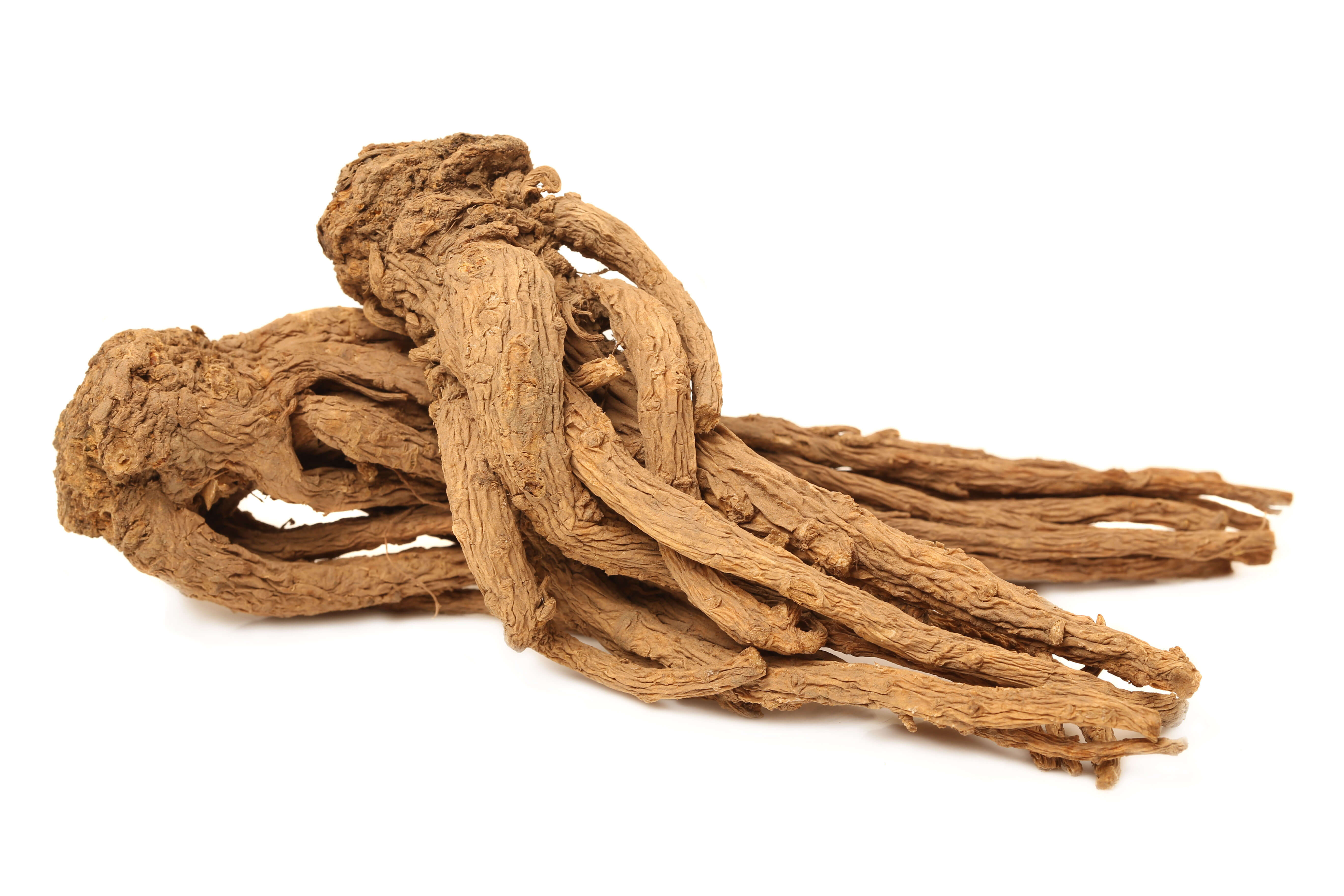
It is possible to extract an essential oil from all parts of the plant (fruits, leaves, stems, roots). In July, flowers appear at the top of the stems, as well as long and flattened fruits, allowing to collect the seeds.
The resulting essential oil is extracted after at least 2 years of growth and is more expensive than the essential oil collected using the roots. Roots are collected, milled and dried at room temperature to maintain the quality of the EO. Oven drying is not recommended. Then, the steam distillation takes place with an optimal distillation ratio of 1 volume roots for 4 volumes water. The essential oil is collected at the end of the process by decantation in a florentine vase.
Uses in perfumery :
Used in fine fragrance for floral notes such as rose, carnation or chypre accords
Stability :
Solubility issues in perfumes
The terpenes identified in this raw material can polymerize when they are oxidized
Major Components :
- Alpha-pinene (25 - 30%)
- Delta-3-carene (15 - 20%)
- D-Limonene (10 - 15%)
- p-Cymene (≈6%)
- Myrcene (≈5%)
- Coumarin (≈2%)
- Can contain Beta-phellandrene according to the varieties (30% min.)
Photo credits: ScenTree SAS
Other comments :
The essential oil naturally contains several musks, including Exaltolide® and Muscolide®, an oxidation product of Muscone®.
Potential adulteration: addition of Angelica Stem EO in order to increase production volumes. More rarely, it is possible to find Elemi EO because it readjusts the optical rotation of the EO. The EO smell is very different depending on the part of the plant that is used to obtain it.
The name "Angelica" comes from Latin "Angelus" which means "Angel".
The essential oil naturally contains several musks, including Exaltolide® and Muscolide®, an oxidation product of Muscone®.
Potential adulteration: addition of Angelica Stem EO in order to increase production volumes. More rarely, it is possible to find Elemi EO because it readjusts the optical rotation of the EO. The EO smell is very different depending on the part of the plant that is used to obtain it.
The name "Angelica" comes from Latin "Angelus" which means "Angel".
Labelling
Allergens :
IFRA
IFRA 51th :
This ingredient is restricted by the 51th amendment
-
Restriction type :
RESTRICTION -
Cause of restriction :
PHOTOTOXICITY -
Amendment :
49

- Quantitative limit on the use :
-
Cat.1 Cat.2 Cat.3 Cat.4 Cat.5A B C DCat.6 0,8 % 0,8 % 0,8 % 0,8 % 0,8 % 0,8 % 0,8 % 0,8 %Cat.5A B C DCat.6 0,8 % 0,8 % 0,8 % 0,8 %0,8 % Cat.7A BCat.8 Cat.9 Cat.10A BCat.11A BCat.12 No Restriction 0,8 %0,8 % No Restriction No Restriction 0,8 %No Restriction 0,8 %Cat.10A BCat.11A BCat.12 No Restriction 0,8 %No Restriction 0,8 %No Restriction
-
Restricted ingredients due to phototoxicity considerations: notes
The Standard is set due to the phototoxic effects of Angelica root oil. For more detailed information on the application of this Standard, please refer to the note on phototoxic ingredients in chapter 1 of the Guidance for the use of IFRA Standards. If the level of furocoumarins is unknown, the restriction level specified in this IFRA Standard applies. Combination effects of phototoxic ingredients are only taken into consideration for the furocoumarin-containing fragrance ingredients (extracts) listed in the IFRA Standard of Citrus oils and other furocoumarins containing essential oils. If combinations of furocoumarin-containing phototoxic fragrance ingredients (extracts) are used, the use levels must be reduced accordingly. The sum of the concentrations of all furocoumarin-containing phototoxic fragrance ingredients (extracts), expressed in of their recommended upper concentration level in the consumer product shall not exceed 100.