






Tonka bean absolute
Balsamic Ambery > Coumarinic > Balsamic > Honeyed > Vanillic
Dipteryx odorata (Aubl.) Forsyth
Synonyms : Baryosma tongo Gaertn. // Coumarouna odora Aubl.


| Company | Ingredient Name | Learn more | Naturality | Certifications | MOQ | Latin name | Treated part | Origin |
|---|---|---|---|---|---|---|---|---|
|
TONKA
P00543838000
|
Discover | Absolue |

|
- | Dipteryx odorata (Aubl.) Willd. | Fève | Brésil |
|
|
TONKA
B2965
|
Discover | Beurre |

|
- | Dipteryx odorata (Aubl.) Willd. | Fève | Vénézuela |
|
|
TONKA 30%/ETH
B2970
|
Discover | Absolue |
|
- | Dipteryx odorata (Aubl.) Willd. | Fève | Vénézuela |
|
|
TONKA LAVE
F2970
|
Discover | Résinoide |
|
- | Dipteryx odorata (Aubl.) Willd. | Fève | Brésil |
|
TONKA BEAN ABS
TFA-1
|
Discover | Naturel | 10 grs | - | - | - | |
|
TONKA BEAN ABS
988195
|
Discover | Naturals | - | DIPTERYX ODORATA | - | - | |

|
Absolue de Fève Tonka - 30 gr | Discover | - | 30grs | - | - | - | |
|
TONKA BEAN Absolute
M_0040097
|
Discover | Naturel | - | - | - | - | |

|
Tonka Absolute | Discover | Absolute | - | Dipteryx odorata | - | - | |
|
Tonka Bean Absolute | Discover | Absolutes, Extracts, Oleoresins, Vegetable Oils | - | - | - | - |
P00543838000

B2965
B2970
F2970
TFA-1
988195
M_0040097

General Presentation
-
CAS N° :
8024-04-2 -
EINECS number :
232-460-5 -
FEMA number :
Donnée indisponible.
-
Volatility :
Heart/Base -
Price Range :
€€€€€
Physico-chemical properties
-
Appearance :
Brown paste -
Density :
N/A -
Refractive Index @20°C :
Donnée indisponible. -
Optical rotation :
-
Vapor pressure :
Donnée indisponible. -
Flash Point :
Donnée indisponible. -
Acid Value :
Botanical informations
Botanical name :
Dipteryx odorata (Aubl.) Forsyth
Synonyms : Baryosma tongo Gaertn. // Coumarouna odora Aubl.
Botanical profile :
Coumarou is a tree belonging to the Fabaceae family (which includes plants such as broom, mimosa, fenugreek, as well as Peruvian and Tolu balsams) and the genus Dipteryx Schreb.
Chemotypes :
There are several species belonging to the genus Dipterix Schreb.
Nevertheless, the only specie used in perfumery is the coumarou Dipterix odorata (Aubl.) Forsyth, for its fruits and its bean.
It includes the Dipterix alata Vogel. tree for the cultivation of almonds in Peru and Brazil among others. This tree is also called barou.
Extractions & Uses
Extraction process :
The tree called coumarou grows mainly in the dense and humid forests of Central America (Amazonia). It gives an ovoid fruit that contains a bean. The fruits of the coumarou are collected between February and April by the local producers and the indigenous populations. They are opened by hand with a knife or by tapping them with a hammer against a stone to remove the bean. The beans are dried in the shade first, then in the sun, to make them reach a darker colour.
At the extraction plant, a maceration in alcohol is performed. Once the alcohol has evaporated, coumarin crystals appear on the surface of the beans: it is called glazing. This glazing step is essential because it gives all the olfactory characteristics to the absolute. After an extraction with hexane by maceration, a resinoid is obtained with a yield of 30 to 50%. The resinoid is very little used as is. A dilution of the resinoid is made in alcohol in order to obtain the absolute (yield of 15% in comparison to the bean), by precipitating the resinoid waxes with a glazing process (temperature gradient from 140 °F to 32 °F). After filtration and evaporation of the solvent, the absolute is collected. Sometimes, the tonka bean absolute can be distilled to be bleached, without a great olfactory impact.
Uses in perfumery :
Used in fougere, amber, oriental notes for a natural effect.
Stability :
Solubility issues in perfumes
Stable oil in perfumes and in diverse functional bases
Major Components :
- Coumarin (50 - 70%)
- Fatty Acids
- Plotter(s) : Phenolide
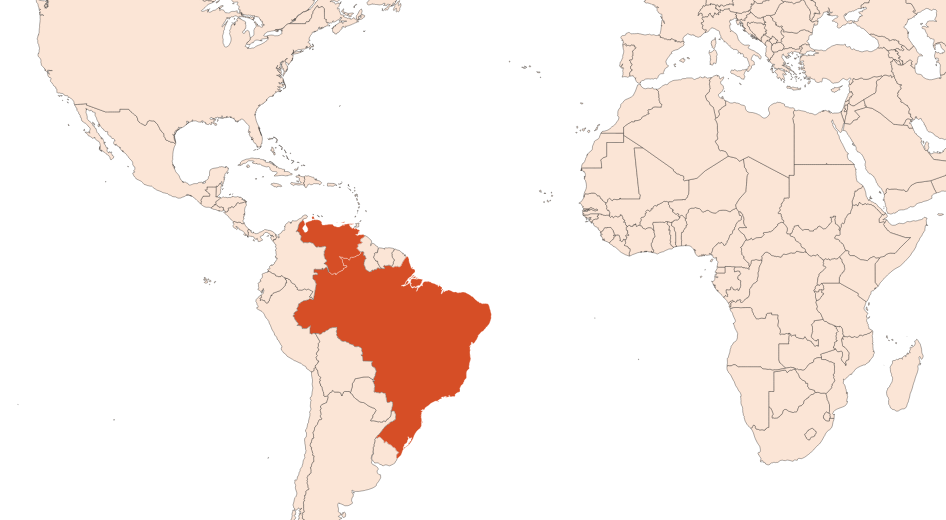
Photo credits: ScenTree SAS
Other comments :
The tonka bean is a seed of the Dipterix odorata (Dipterix means "two wings": the flowers of the tree are winged), also called coumarou.
All fruits do not necessarily contain a bean. It depends on the maturity of the tree. Each tree is tested before cultivation to check the maturity of the fruits and therefore the beans. This process is done by a visual verification, opening some fruits and noticing how dark the beans are. The darker it is, the riper the tree is.
The tonka bean is a seed of the Dipterix odorata (Dipterix means "two wings": the flowers of the tree are winged), also called coumarou.
All fruits do not necessarily contain a bean. It depends on the maturity of the tree. Each tree is tested before cultivation to check the maturity of the fruits and therefore the beans. This process is done by a visual verification, opening some fruits and noticing how dark the beans are. The darker it is, the riper the tree is.
Labelling
Allergens :
Signal word :
Warning
Hazard pictograms :
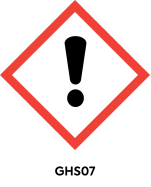
Precautionary statements :
| HAZARD | PRECAUTION |
|---|---|
| H302 Harmful if swallowed.
H312 Harmful in contact with skin. H317 May cause an allergic skin reaction. |
P261 Avoid breathing dust/fume/gas/mist/vapours/spray. P264 Wash ... thoroughly after handling. P270 Do no eat, drink or smoke when using this product. P272 Contaminated work clothing should not be allowed out of the workplace. P301 + P312 IF SWALLOWED: Call a POISON CENTER/doctor/… if you feel unwell. P501 Dispose of contents/container to… |
IFRA
IFRA 51th :
This ingredient is restricted by the 51th amendment
Annexe I :
Some regulated synthetic ingredients are found in nature and in certain proportions in natural ingredients. This presence in nature has to be taken into account when calculating limits of use recommended by the IFRA. In case you do not know these concentrations, you can use the ones estimated by the IFRA. Here they are :
| List of regulated compounds contained in this ingredient | ||
|---|---|---|
| Regulated ingredient name | CAS N° | Estimated Concentration |
| Coumarin | 91-64-5 | 56,77 |
| Dihydrocoumarin | 119-84-6 | 1,85 |
Disclaimer :
ScenTree is solely responsible for the information provided here.
To learn more about IFRA's standards : https://ifrafragrance.org/safe-use/library