










Schinus terebinthifolius oil
Spicy > Cool Spices > Terpenic > Zesty
Schinus terebinthifolia Raddi
Synonyms : Rhus heptaphylla Hiern // Rhus schinoides Willd.


| Company | Ingredient Name | Learn more | Naturality | Certifications | MOQ | Latin name | Treated part | Origin |
|---|---|---|---|---|---|---|---|---|

|
BAIES ROSE
N085F
|
Discover | Huile essentielle |

|
- | Schinus terebinthifolia Raddi | Baie | Madagascar |
|
|
BAIES ROSE
B085F
|
Discover | Huile essentielle |
|
- | Schinus terebinthifolia Raddi | Baie | Madagascar |

|
PINK PEPPER MADAGASCAR EO
911612
|
Discover | Naturals | - | SCHINUS TEREBINTHIFOLIA | - | - | |
|
|
PINK PEPPER WW SFE
911579
|
Discover | Naturals | - | SCHINUS TEREBINTHIFOLIA | - | - | |

|
Extrait CO2 de Baies Roses - 30 gr | Discover | - | 30grs | - | - | - | |
|
|
PINK PEPPER EO
974606
|
Discover | Naturals | - | - | - | - | |

|
Pink Pepper Oil | Discover | Essential Oil | - | - | - | - |
N085F

B085F
911612
911579
974606

General Presentation
-
CAS N° :
68917-52-2 -
EINECS number :
305-104-2 -
FEMA number :
3018
-
Volatility :
Head -
Price Range :
€€€€
Physico-chemical properties
-
Appearance :
Colorless liquid -
Density :
0,85 - 0,885 -
Refractive Index @20°C :
1,475 - 1,488 @20°C -
Optical rotation :
+30° // 75° @20°C -
Vapor pressure :
2 mmHg @20°C -
Flash Point :
47°C (116,6°F) -
Acid Value :
Botanical informations
Botanical name :
Schinus terebinthifolia Raddi
Synonyms : Rhus heptaphylla Hiern // Rhus schinoides Willd.
Botanical profile :
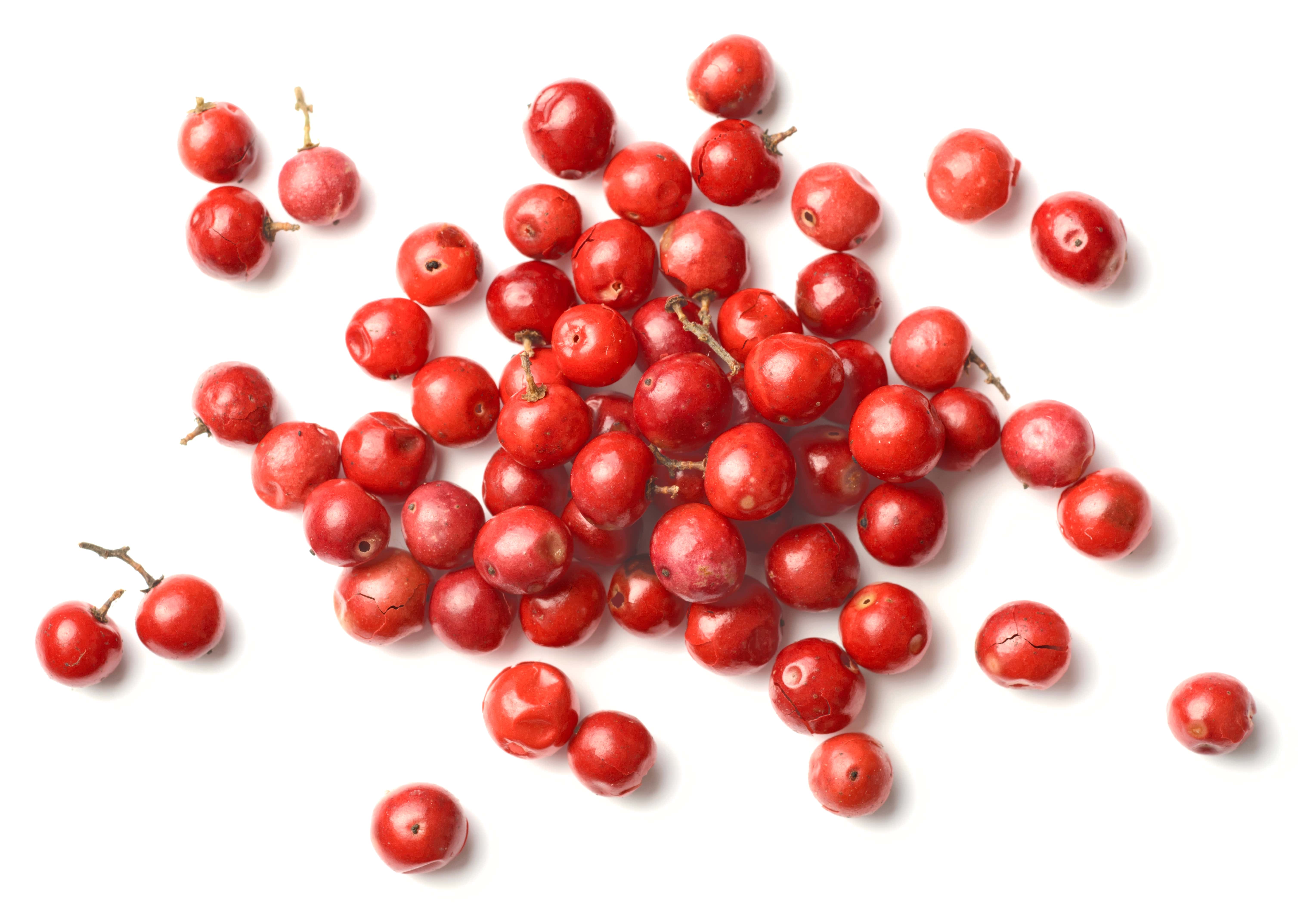
Pink peppercorn is the berry of a false pepper tree commonly known as "Pink Pepper".
It belongs to the Anacardiaceae family (like mastic) and the Schinus L. genus.
Chemotypes :
There are different varieties of pink pepper, and therefore Pink Peppercorn EO:
Schinus terebinthifolia Raddi, native to South America.
Schinus molle L., native to California.
The two species are easily recognizable by their size difference, the Schinus molle L. being larger, as well as by their rate of Delta-Cadinene (Schinus molle L. contains only a trace of this compound, for more about 10% in Schinus terebinthifolia Raddi.)
Extractions & Uses
Extraction process :
Introduced to the USA from South America, this specie of pepper was originally growing in the wild. Its invasiveness made it spread over large areas of the country and lead to its culture. Very quickly, its quality matched the one obtained in South America. Male trees are grown separately from female trees.
In May and June, before extraction, the fresh berries are collected by hand and dried. Afterwards, they become darker in colour and they crumple.
Hydrodistillation is used to obtain the essential oil with a 5% yield and a 90% terpenes in its composition. A supercritical CO2 extraction is also doable to obtain a better olfactory quality extract, even though the cost is higher.
Uses in perfumery :
Used in spicy notes, eaux fraîches, floral-carnation, hyacinth, rose and woody notes. Used mainly in fine fragrance, because of its cost.
Stability :
Solubility issues in perfumes
The terpenes identified in this raw material can polymerize when they are oxidized
Major Components :
| Component | % min | % max |
|---|---|---|
| Alpha-pinene | 25 | |
| Myrcene | 20 | 25 |
| Alpha-phellandrene | 15 | 20 |
| Delta-cadinène | 9 | |
| D-Limonene | 15 | |
| Cadinol | 7 |
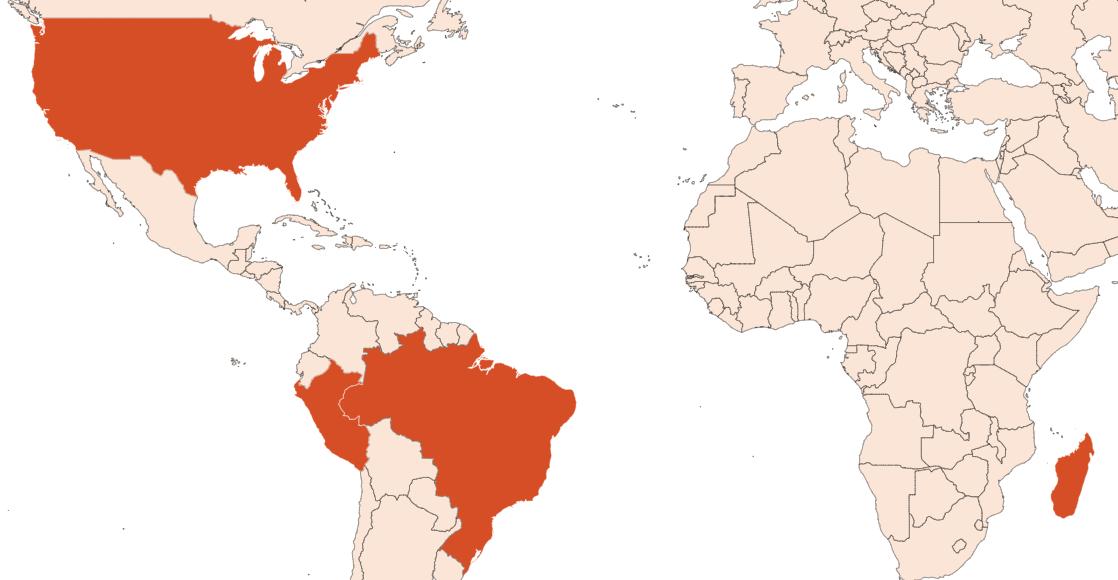
Photo credits: ScenTree SAS
Other comments :
The pink berries are drupes that appears on the flowers of this tree.
The pink berries are drupes that appears on the flowers of this tree.
Labelling
Allergens :
Signal word :
Danger
Hazard pictograms :
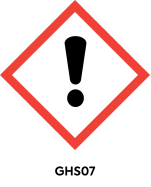
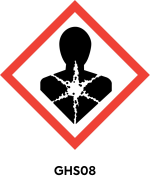
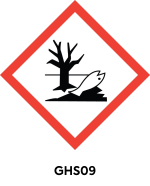
Precautionary statements :
| HAZARD | PRECAUTION |
|---|---|
| H226 Flammable liquid and vapour.
H304 May be fatal if swallowed and enters airways. H315 Causes skin irritation. H317 May cause an allergic skin reaction. H319 Causes serious eye irritation. H411 Toxic to aquatic life with long lasting effects. |
P210 Keep away from heat, hot surfaces, sparks, open flames and other ignition sources. No smoking. P233 Keep container tightly closed. P240 Ground and bond container and receiving equipment. P241 Use explosion-proof [electrical/ventilating/lighting/…] equipment. P242 Use non-sparking tools. P243 Take action to prevent static discharges. P261 Avoid breathing dust/fume/gas/mist/vapours/spray. P264 Wash ... thoroughly after handling. P272 Contaminated work clothing should not be allowed out of the workplace. P273 Avoid release to the environment. P280 Wear protective gloves/protective clothing/eye protection/face protection. P301 + P310 IF SWALLOWED: Immediately call a POISON CENTER/doctor/… P302 + P352 IF ON SKIN: Wash with plenty of water/… P303 + P361 + P353 IF ON SKIN (or hair): Take off immediately all contaminated clothing. Rinse skin with water [or shower]. P305 + P351 + P338 IF IN EYES: Rinse cautiously with water for several minutes. Remove contact lenses, if present and easy to do. Continue rinsing. P321 Specific treatment (see ... on this label). P331 Do NOT induce vomiting. P332 + P313 If skin irritation occurs: Get medical advice/attention. P333 + P313 If skin irritation or rash occurs: Get medical advice/attention. P337 + P313 If eye irritation persists: Get medical advice/attention. P362 Take off contaminated clothing. P363 Wash contaminated clothing before reuse. P370 + P378 In case of fire: Use… to extinguish. P391 Collect spillage. P403 + P235 Store in a well-ventilated place. Keep cool. P405 Store locked up. P501 Dispose of contents/container to… |
IFRA
IFRA 51th :
This ingredient is not restricted for the 51th amendment