



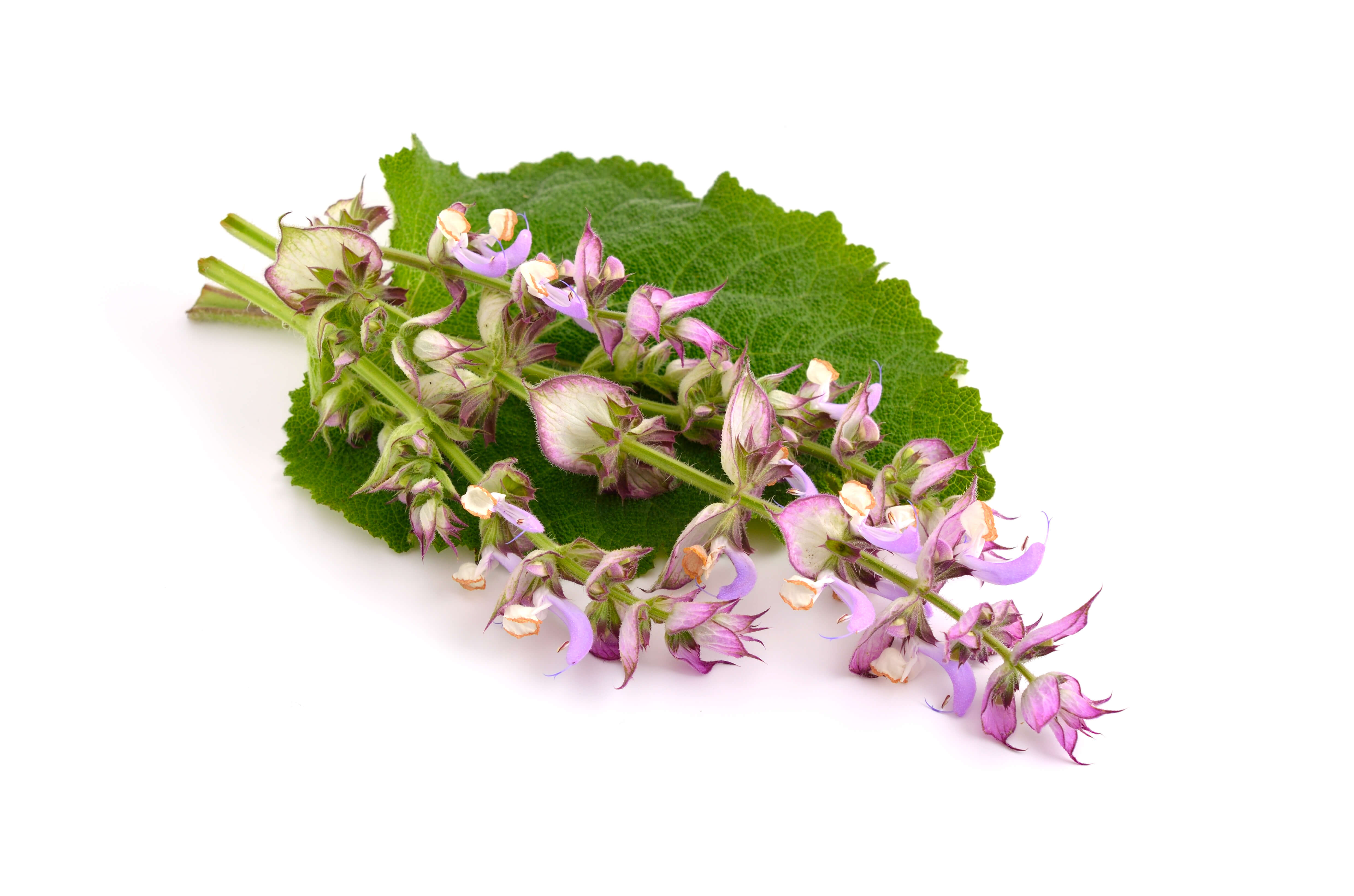
Clary sage absolute
Balsamic Ambery > Coumarinic > Grassy > Spicy > Agrestic
Salvia sclarea L.
Synonyms : Sclarea vulgaris Mill. // Aethiopis sclarea (L.) Fourr.


| Company | Ingredient Name | Learn more | Naturality | Certifications | MOQ | Latin name | Treated part | Origin |
|---|---|---|---|---|---|---|---|---|
|
SAUGE SCLAREE
F2630
|
Discover | Absolue |

|
- | Salvia sclarea L. | Partie aérienne | Bulgarie, France |
|
|
SAUGE SCLAREE
F2625
|
Discover | Extrait | - | Salvia sclarea L. | Partie aérienne | Bulgarie, France | |
|
CLARY SAGE ABS 100% P&N
SSABS-1
|
Discover | Naturel | 10 grs | - | - | - | |

|
CLARY SAGE ABS
981593
|
Discover | Naturals | - | SALVIA SCLAREA | - | - | |
|
|
CLARY SAGE IG GRASSE ABS
981609
|
Discover | Naturals | - | SALVIA SCLAREA | - | - | |
|
|
CLARY SAGE IG GRASSE ABS DEC
981604
|
Discover | Naturals | - | SALVIA SCLAREA | - | - | |

|
CLARY SAGE Absolute
M_0040092
|
Discover | Naturel | - | - | - | - | |

|
Clary Sage Absolute | Discover | Absolute | - | Salvia sclarea | - | - | |

|
Clary Sage Concrete | Discover | Absolutes, Extracts, Oleoresins, Vegetable Oils | - | - | - | - |
F2630

F2625
SSABS-1
981593
981609
981604
M_0040092

General Presentation
-
CAS N° :
8016-63-5 -
EINECS number :
84775-83-7 -
FEMA number :
3002
-
Volatility :
Base -
Price Range :
€€€
Physico-chemical properties
-
Appearance :
Dark yellow to greenish paste -
Density :
-
Refractive Index @20°C :
Donnée indisponible. -
Optical rotation :
-
Vapor pressure :
Donnée indisponible. -
Flash Point :
55°C (131°F) -
Acid Value :
Botanical informations
Botanical name :
Salvia sclarea L.
Synonyms : Sclarea vulgaris Mill. // Aethiopis sclarea (L.) Fourr.
Botanical profile :
Clary sage is an aromatic herb belonging to the Lamiaceae family and the genus Salvia L.
The Lamiaceae family is the most important family in perfumery, notably including lavenders, basils, mints, sages, rosemaries, patchoulis, and thymes.
Both rosemary and sages belong to the genus Salvia L.
Chemotypes :
The genus Salvia L. includes nearly 1,300 species, among which are the sages. A large number of sage varieties exist, but the following are the most relevant for perfumery:
Sages rich in linalyl acetate and other esters:
- Salvia sclarea L.: Clary Sage oil/ Clary sage absolute. Found mainly in Europe.
- Salvia dorisiana Standl.: Doris Sage. Native to Central America. Rich in perillyl acetate.
- Salvia desoleana Atzei & V. Picci: Sardinian Sage. Endemic to Sardinia (Italy). Rich in linalyl acetate and terpinyl acetate.
Sages rich in eucalyptol, linalool, or camphor:
- Salvia lavandulifolia Spreng.: Spanish Sage. Found on the eastern coast of Spain.
- Salvia fruticosa Mill.: Greek Sage (Three-lobed Sage). Found throughout the Mediterranean basin.
- Salvia bengalensis J. Koenig ex Roxb.: Bengal Sage. Found in India and Pakistan.
Sages rich in thujones:
- Salvia officinalis L.: Sage officnale flower oil / Common Sage Branch EO, along with all its derived varieties.
- Salvia pomifera L.: Apple Sage. Found in Greece, Crete, and Turkey. High in beta-thujone.
Sages rich in bisabolol or nerolidol:
- Salvia stenophylla Burch. ex Benth.: Including both chemotypes of Blue Mountain Sage from South Africa.
Sages rich in beta-caryophyllene and other sesquiterpenes:
- Salvia hispanica L.: Spanish Sage, rich in beta-caryophyllene.
- Salvia glutinosa L.: Jupiter’s Distaff (Sticky Sage), rich in gamma-muurolene.
- Salvia tomentosa Mill.: Woolly Sage (Large-flowered Sage), rich in beta-caryophyllene and borneol.
- Salvia elegans Vahl.: Pineapple Sage, rich in beta-caryophyllene and (E)-beta-ocimene.
Sages rich in diterpenoids:
- Salvia miltiorrhiza Bunge: Chinese Sage (Danshen), whose roots are extracted for their anti-inflammatory and antioxidant properties.
Extractions & Uses
Extraction process :
Clary sage is a short-lived plant that can grow up to 1.60 m in culture. In early spring, clary sage fields are perennialized by sowing the seeds of the plant. Harvests occur during the flowering period in August. The harvest is mechanical: a tractor cuts, crushes and collects the fresh plants before taking them to the extraction plant.
The leaves are extracted fresh, directly after the harvest to preserve the smell. The extraction is done in a tank with hexane and once the plant is removed from the extractor and the hexane has evaporated, the concrete is collected. The concrete is diluted in alcohol to precipitate the waxes after glazing the mixture at a temperature gradient from 140 °F to 32 °F. The absolute is obtained after evaporation of the solvent with a yield of about 80-85%.
The Clary Sage EO also exists but is more fruity and floral, close to Linalool.
Clary sage absolute can be bleached by distillation.
Uses in perfumery :
Suitable for tobacco, fougere, amber, chypre and to simulate the presence of Lavender EO.
Stability :
Solubility issues in perfumes
Sclareol identified in this raw material can polymerize when they are oxidized
Major Components :
- Sclareol (75 - 85%)
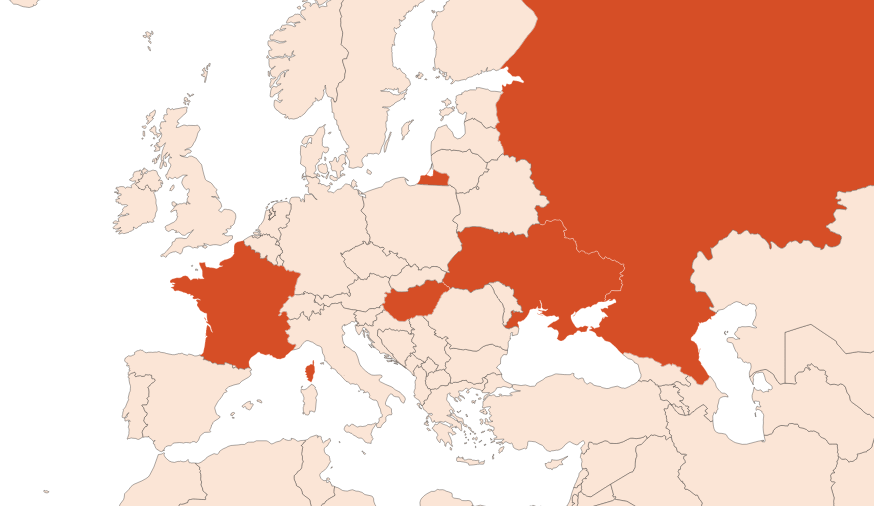
Photo credits: ScenTree SAS
Other comments :
Clary sage has long leafy stems with blue-violet flower heads. The leaves contain the essential oil.
The clary sage absolute is the main precursor of natural Sclareol, its major component. The essential oil contains much less but is richer in Linalool and Linalyl Acetate.
Clary sage has long leafy stems with blue-violet flower heads. The leaves contain the essential oil.
The clary sage absolute is the main precursor of natural Sclareol, its major component. The essential oil contains much less but is richer in Linalool and Linalyl Acetate.
Labelling
Allergens :
Signal word :
Warning
Hazard pictograms :
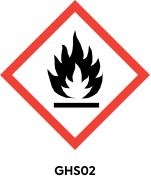
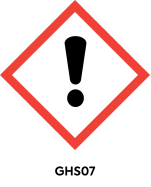
Precautionary statements :
| HAZARD | PRECAUTION |
|---|---|
| H228 Flammable solid.
H315 Causes skin irritation. H317 May cause an allergic skin reaction. H319 Causes serious eye irritation. H412 Harmful to aquatic life with long lasting effects. |
P210 Keep away from heat, hot surfaces, sparks, open flames and other ignition sources. No smoking. P241 Use explosion-proof [electrical/ventilating/lighting/…] equipment. P261 Avoid breathing dust/fume/gas/mist/vapours/spray. P302 + P352 IF ON SKIN: Wash with plenty of water/… P501 Dispose of contents/container to… |
IFRA
IFRA 51th :
This ingredient is restricted by the 51th amendment
Annexe I :
Some regulated synthetic ingredients are found in nature and in certain proportions in natural ingredients. This presence in nature has to be taken into account when calculating limits of use recommended by the IFRA. In case you do not know these concentrations, you can use the ones estimated by the IFRA. Here they are :
| List of regulated compounds contained in this ingredient | ||
|---|---|---|
| Regulated ingredient name | CAS N° | Estimated Concentration |
| Geraniol | 106-24-1 | 0,19 |
| Geraniol | 106-24-1 | 0,2 |
| Geraniol | 106-24-1 | 1,2 |
| 2-Hexenal | 505-57-7 | 0,04 |
Disclaimer :
ScenTree is solely responsible for the information provided here.
To learn more about IFRA's standards : https://ifrafragrance.org/safe-use/library