










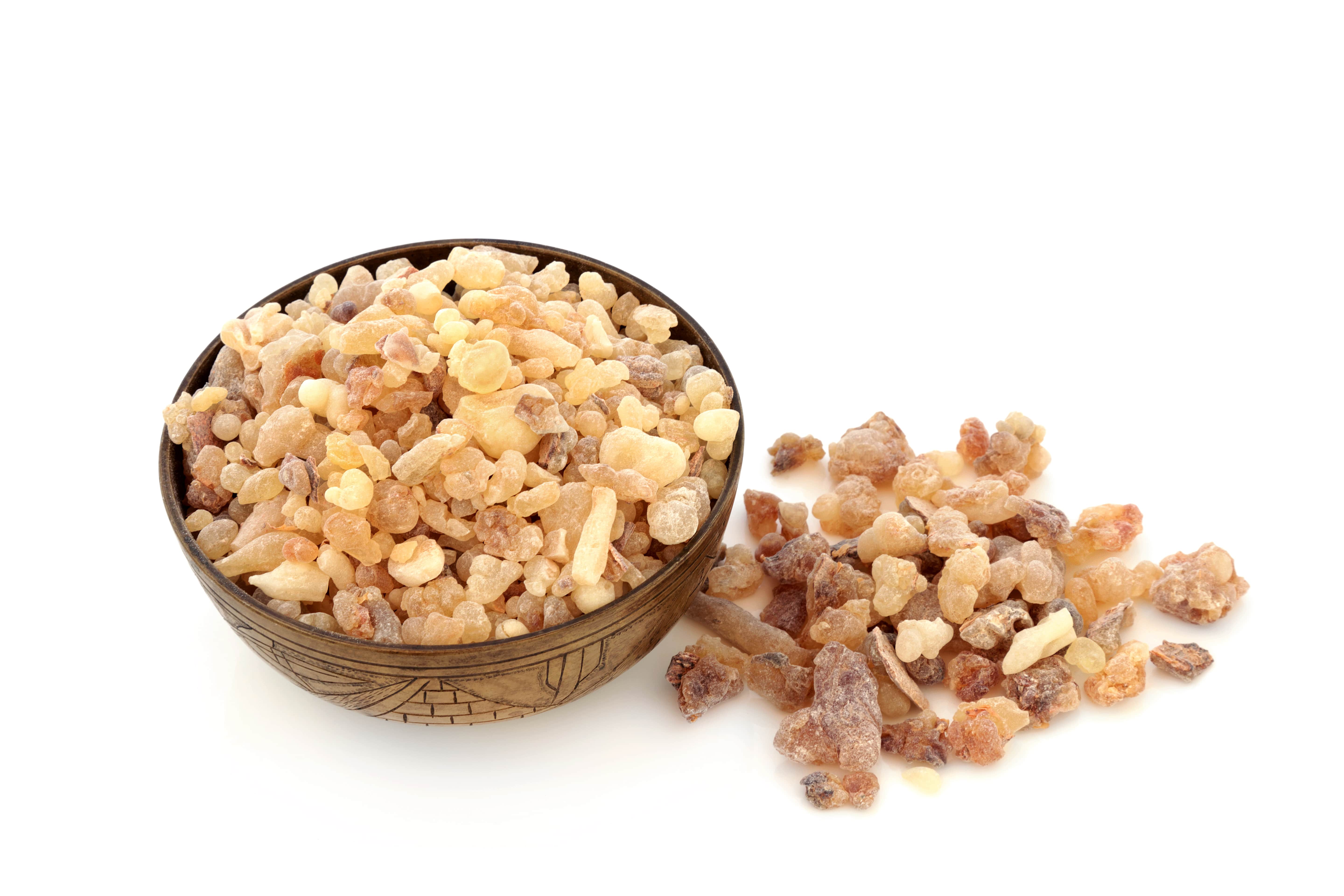
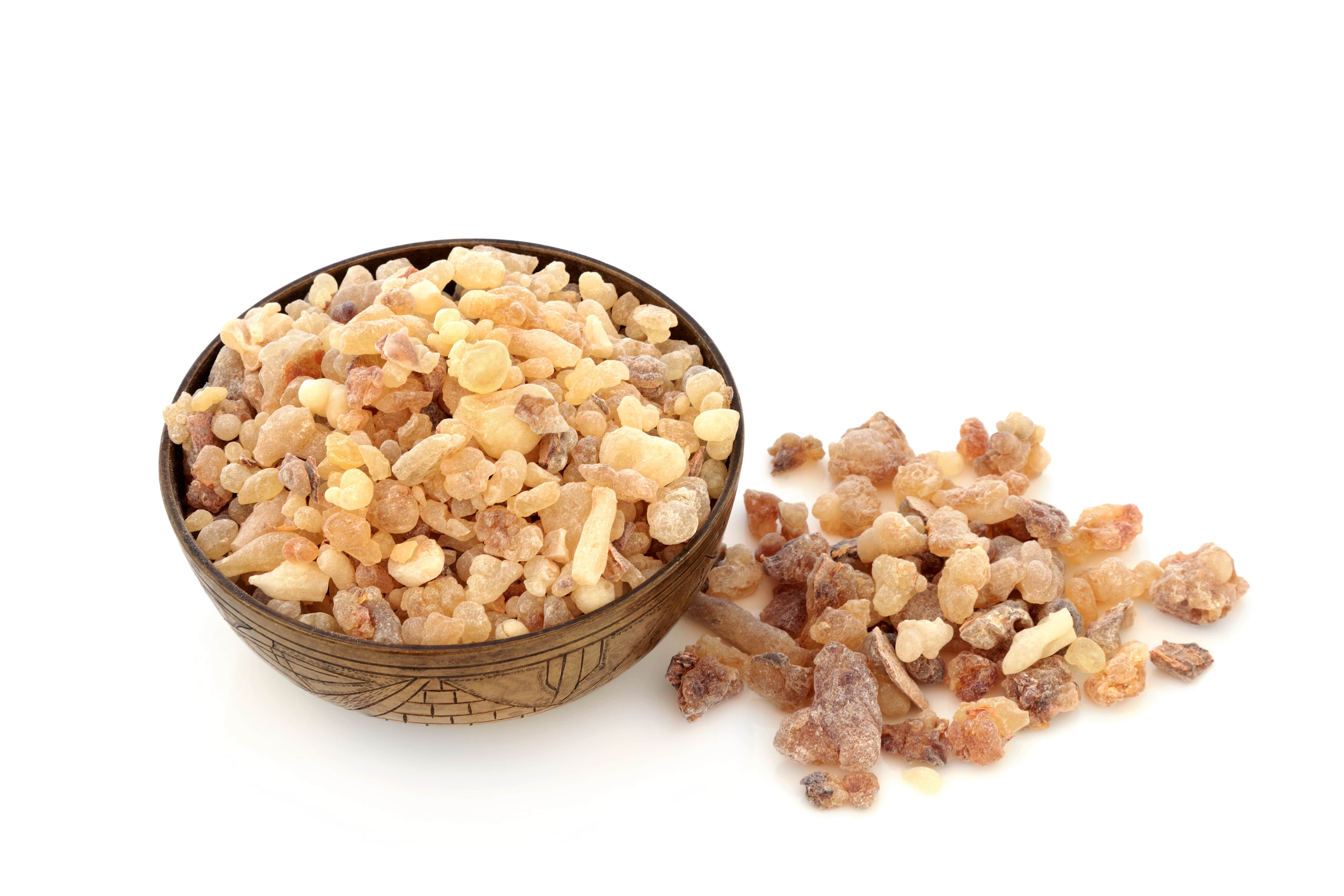
Incense oil
Woody > Coniferous > Zesty > Spicy


| Company | Ingredient Name | Learn more | Naturality | Certifications | MOQ | Latin name | Treated part | Origin |
|---|---|---|---|---|---|---|---|---|

|
ENCENS
F1248
|
Discover | Huile essentielle |


|
- | Boswellia carteri Birdw. | Résine de gomme | Somalie |
|
|
ENCENS
B356
|
Discover | Huile essentielle |

|
- | Boswellia carterii Birdw. | Résine de gomme | Somalie |
|
|
ENCENS
F1253
|
Discover | Huile essentielle | - | Boswellia carteri Birdw. | Résine de gomme | Oman | |

|
Huile essentielle d'Encens (olibanum) - 30 gr | Discover | - | 30grs | - | - | - |
F1248

B356
F1253

General Presentation
-
CAS N° :
8016-36-2 -
EINECS number :
308-366-6 -
FEMA number :
2816
-
Volatility :
Heart -
Price Range :
€€€
Physico-chemical properties
-
Appearance :
Viscous yellow liquid -
Density :
-
Refractive Index @20°C :
Donnée indisponible. -
Optical rotation :
-
Vapor pressure :
Donnée indisponible. -
Flash Point :
Donnée indisponible. -
Acid Value :
Botanical informations
Botanical name :
Botanical profile :
Incense comes from different varieties of trees belonging to the Burserraceae family and the genus Boswellia L.
Chemotypes :
The different true incenses differ in their composition. There are :
Incensyl Acetate incenses : The Boswellia sacra or "sheehaz" incense in Yemen and Oman (grown over 1000 meters above sea level) and Somalian "beyo" incense. Both contain less than 40% of α-Pinene and Limonene in their essential oil. Boswellia frereana or "Maydi" incense, from Somalia, contains less than 22% of α-Pinene and Sabinene in its essential oil. Boswellia rivae is a D-Limonene incense. Boswellia serrata or salai guggul and Bowellia neglecta or olibanum, are α-Thujene incenses.
Octyl Acetate Incenses : Boswellia papyrifera, from Eritrea and Ethiopia, contain around 50% of this molecule.
In addition, there are "fake" incenses. Among these are the Amazon incense or Protium heptaphyllum, the incense of Latin America or Bursera graveolens and the incense of the Mediterranean basin, better known as Styrax (Styrax HE, Styrax Resinoid).
Extractions & Uses
Extraction process :
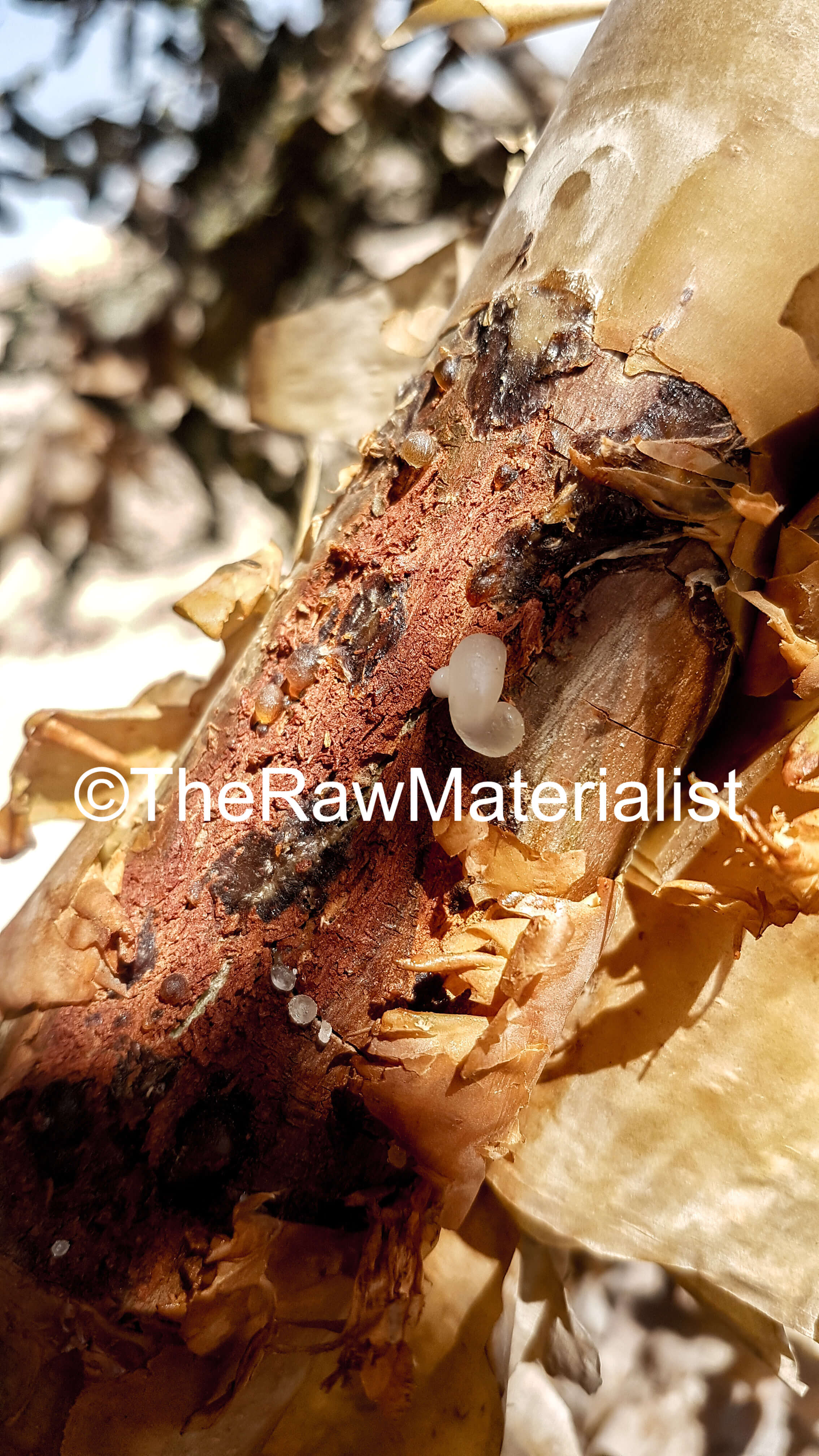
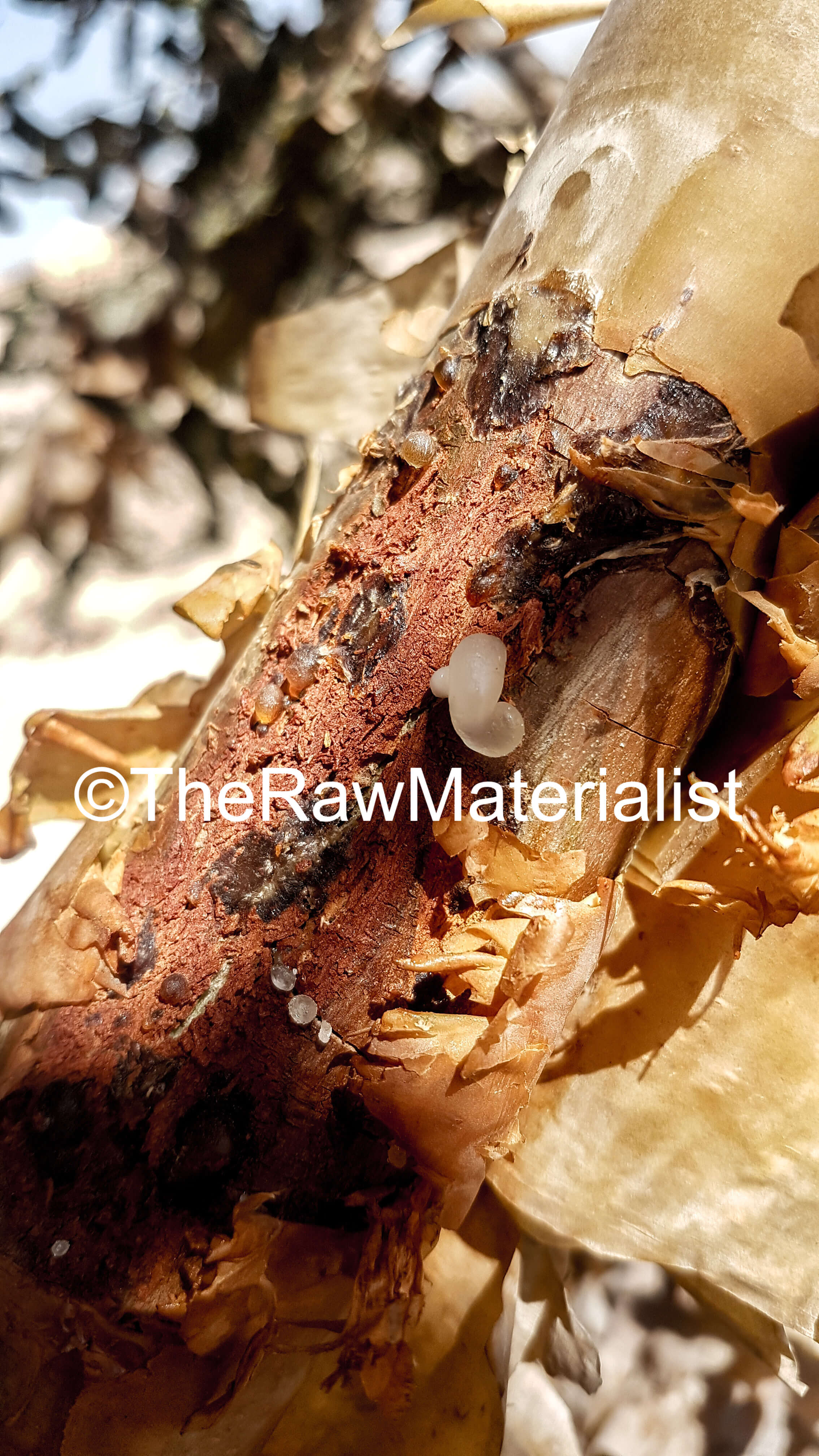
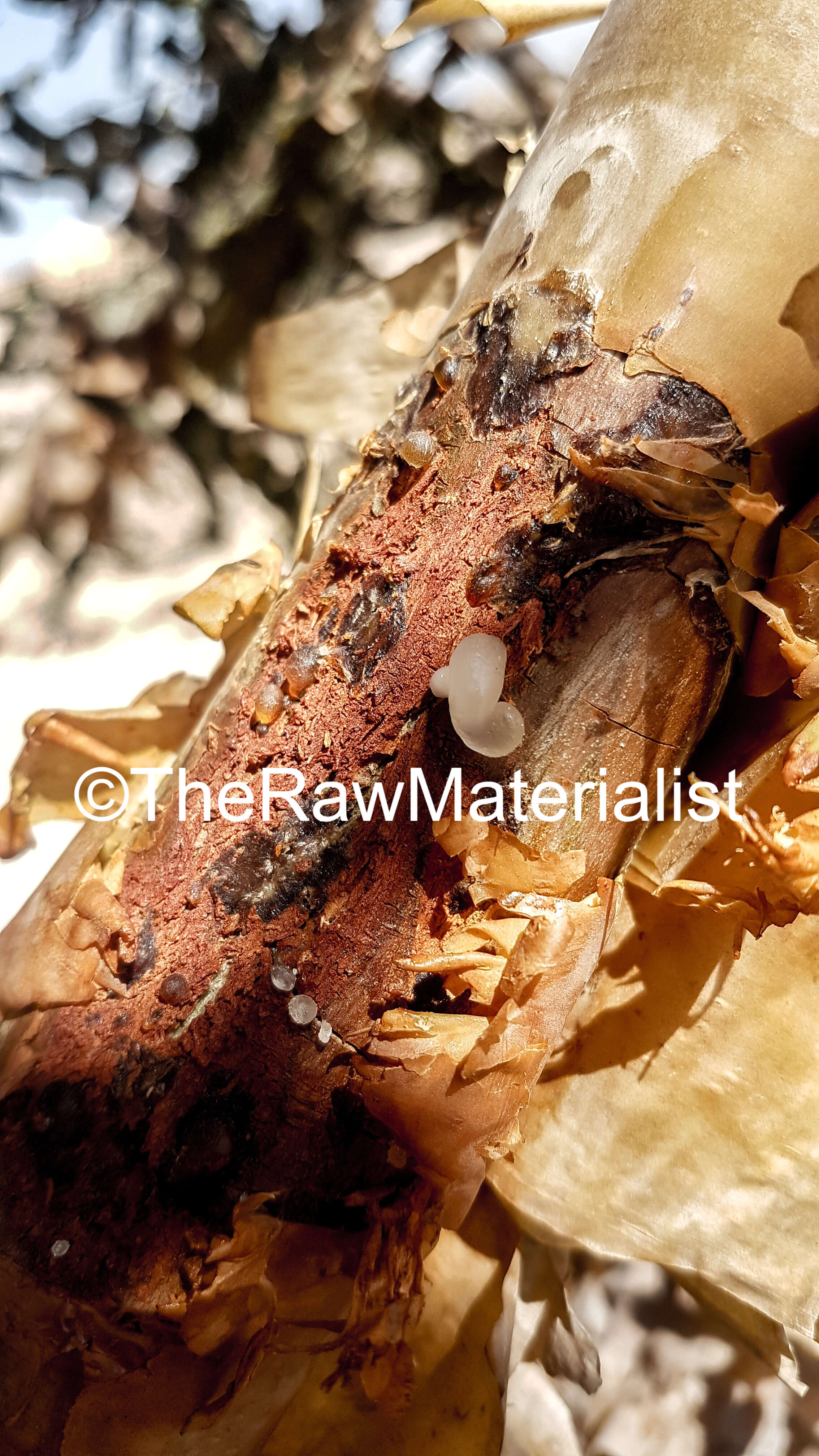
As for Siam Benzoin Resinoid and Sumatra Benzoin Resinoid, this compound is obtained after pruning the bark of the tree. Only male trees produce the cultivated resin. If the incision is made in summer, the resin is collected in autumn and is called "white incense" which is the highest quality. If the incision is made in winter, the harvest is done in spring and the incense, with a lower quality, is called "red incense". Also, the older the tree, the better the resin.
Once collected and dried, the hardened drops are harvested in the following weeks, sorted to remove impurities and treated in different ways: a hydrodistillation will give a colourless to pale yellow essential oil with a balsamic, smoke, green and oriental smell. An extraction made with volatile solvent will, however, yield a brown to red resinoid.
From the same botanical variety
Uses in perfumery :
Used in coniferous, spicy, woody, amber and floral notes.
Stability :
Solubility issues in perfumes
The terpenes identified in this raw material can polymerize when they are oxidized
Major Components :
| Component | % min | % max |
|---|---|---|
| Alpha-phellandrene | 10 | 24 |
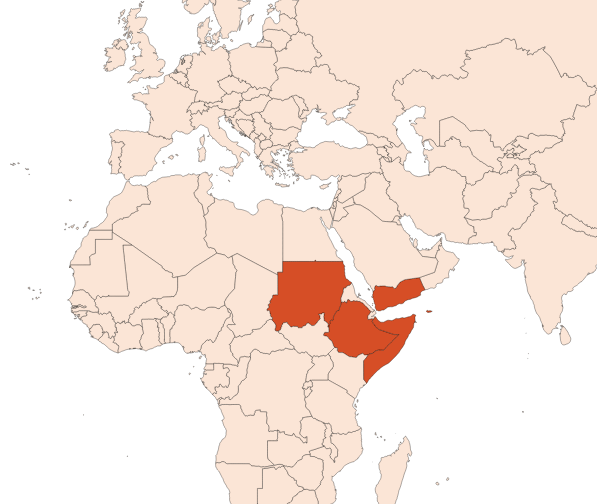
Photo credits: ScenTree SAS
Other comments :
Incense can also be called frankincense, or Olibanum for its resin, and is considered the world's oldest perfume as it was really often used in Egyptian mythology as an offering to the gods.
The essential oil is less used than the resinoid which is warmer, round, balsamic and resinous but less fresh, camphorated and spicy.
Incense can also be called frankincense, or Olibanum for its resin, and is considered the world's oldest perfume as it was really often used in Egyptian mythology as an offering to the gods.
The essential oil is less used than the resinoid which is warmer, round, balsamic and resinous but less fresh, camphorated and spicy.
Labelling
Allergens :
Signal word :
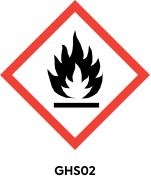
Danger
Hazard pictograms :
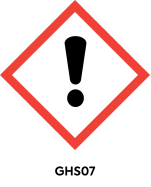
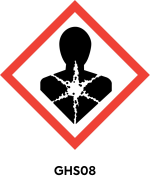
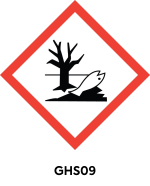
Precautionary statements :
| HAZARD | PRECAUTION |
|---|---|
| H226 Flammable liquid and vapour.
H302 Harmful if swallowed. H304 May be fatal if swallowed and enters airways. H315 Causes skin irritation. H317 May cause an allergic skin reaction. H319 Causes serious eye irritation. H410 Very toxic to aquatic life with long lasting effects. |
P210 Keep away from heat, hot surfaces, sparks, open flames and other ignition sources. No smoking. P233 Keep container tightly closed P241 Use explosion-proof [electrical/ventilating/lighting/…] equipment. P301 + P310 IF SWALLOWED: Immediately call a POISON CENTER/doctor/… P403 + P235 Store in a well-ventilated place. Keep cool. P501 Dispose of contents/container to… |
IFRA
IFRA 51th :
This ingredient is not restricted for the 51th amendment