












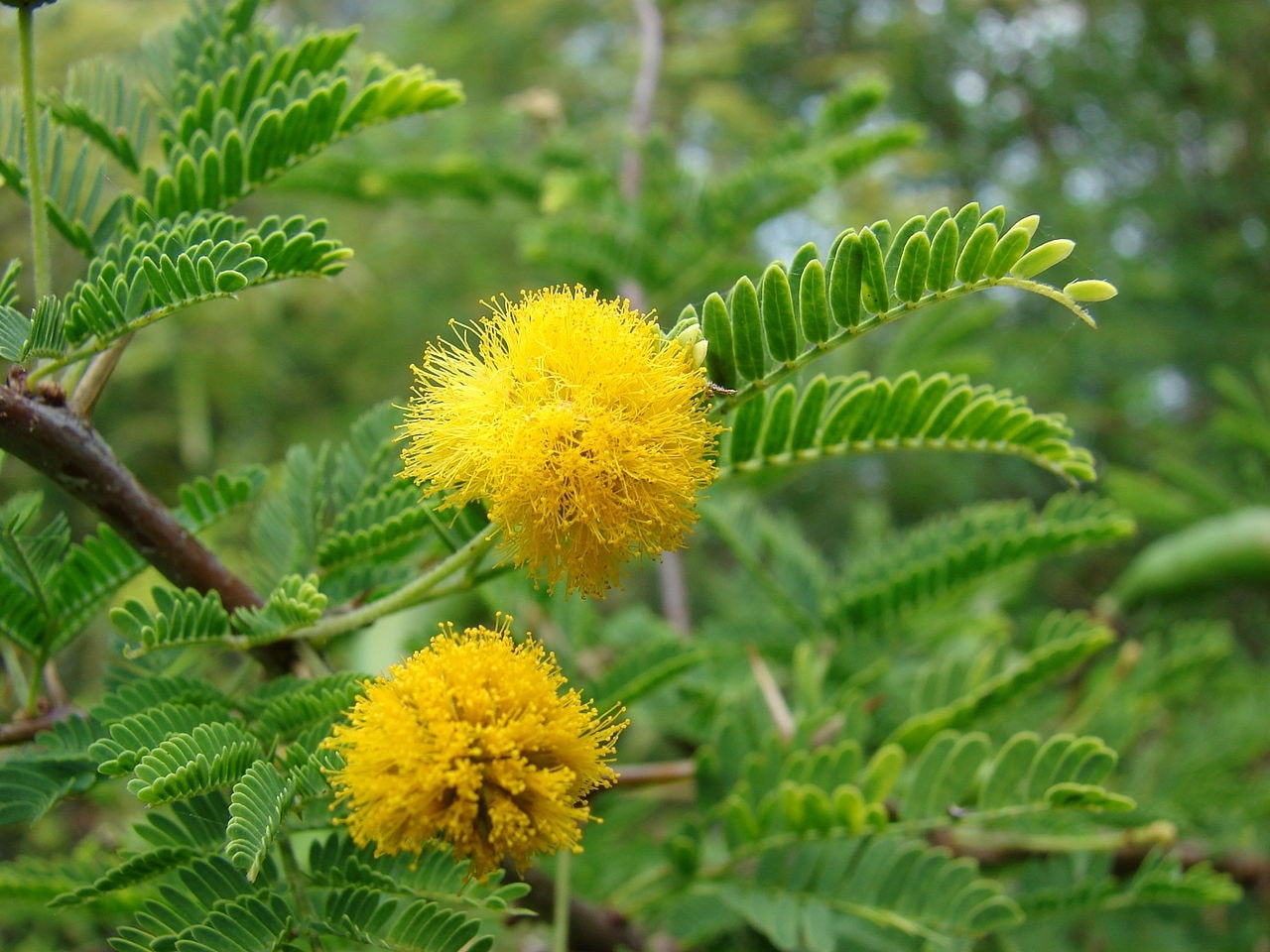
Cassie absolute
Floral > Powdery Flowers > Animalic > Feacal > Leather
Vachellia farnesiana (L.) Wight & Arn.
Synonyms : Mimosa farnesiana L. // Acacia farnesiana (L.) Willd.


| Company | Ingredient Name | Learn more | Naturality | Certifications | MOQ | Latin name | Treated part | Origin |
|---|---|---|---|---|---|---|---|---|

|
Cassie Absolute | Discover | Absolutes, Extracts, Oleoresins, Vegetable Oils | - | - | - | - |


General Presentation
-
CAS N° :
8023-82-3 -
EINECS number :
289-655-3 -
FEMA number :
2260
-
Volatility :
Heart -
Price Range :
Donnée indisponible.
Physico-chemical properties
-
Appearance :
Brown viscous liquid -
Density :
0,950 - 0,988 @20°C 0,947 - 0,985 @25°C -
Refractive Index @20°C :
1,488 - 1,515 @20°C 1,486 - 1,513 @25°C -
Optical rotation :
-
Vapor pressure :
Donnée indisponible. -
Flash Point :
>100°C (>212°F) -
Acid Value :
Botanical informations
Botanical name :
Vachellia farnesiana (L.) Wight & Arn.
Synonyms : Mimosa farnesiana L. // Acacia farnesiana (L.) Willd.
Botanical profile :
Cassie is the flower of a shrub of the Mimosaceae family and the genus Vachellia Wight & Arn.
Chemotypes :
There are only two varieties of Acacia Mill. used in perfumery:
Acacia delbata Link: Known as Mimosa (Mimosa Absolute / Mimosa Concrete), native to Australia but mainly cultivated in France.
Acacia farnesiana (L.) Willd.: or Mimosa de Farnese - (Cassie Absolue / Cassie Concrete), with a deeper and greener smell than the 'classic' mimosa
It is very easy to distinguish the two varieties since the Cassie has mucrons (thorns), while the mimosa does not have.
Extractions & Uses
Extraction process :
The small yellow flowers of the tree are harvested and then extracted with solvents to give a Cassie Concrete. After the extraction process, the Cassie Concrete is almost solid and has a dark black to brown color. However, it is generally not used in this form. It is then washed with alcohol to remove the waxes and obtain Cassie Absolute. This absolute is more liquid and has a brown color.
It is also possible to extract the flowers by enfleurage, but this method is rarely used.
Uses in perfumery :
Cassie Absolute has scent similar to Mimosa but it is greener, deeper and heavier. It is also distinguishable thanks to its watery cucumber undertones, its leathery notes and its anisic facets. Its use is thus close to the Mimosa Absolute. The powdery note characteristic of Mimosa is slightly lower in Cassie Absolue. It should be used in green and leathery formulas as well as to bring deepness to an accord. Note that the combination of Cassie Absolute and Heliotropine has led to the creation of a famous base, the Cassione.
Stability :
Good stability
Major Components :
- Linoleic acid (30%)
- Alpha-amyrin (15 - 20%)
- Ethyl linolenate (6 - 10%)
- Nonadecan (6%)
- Ethyl linoleate (4 - 10%)
- Methyl salicylate (3 - 6%)
- Benzyl linolenate (2%)
- Benzyl linoleate (1%)
- Benzyl alcohol (0,5 - 4,5%)

Photo credits: ScenTree SAS
Other comments :
Be aware that Cassie Absolute should not be mistaken with Mimosa Absolute. Both products are issued from very similar trees (botanically).
Beware of adulterations, this absolute can be modified with Mimosa Absolute or by adding Isoeugenol and/or Blackcurrant Base.
The botanical name "farnesiana" comes from the Farnese garden, located in Rome
Be aware that Cassie Absolute should not be mistaken with Mimosa Absolute. Both products are issued from very similar trees (botanically).
Beware of adulterations, this absolute can be modified with Mimosa Absolute or by adding Isoeugenol and/or Blackcurrant Base.
The botanical name "farnesiana" comes from the Farnese garden, located in Rome
Labelling
Allergens :
This ingredient does not contain any allergen.
Signal word :
Warning
Hazard pictograms :
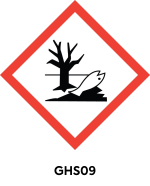
Precautionary statements :
| HAZARD | PRECAUTION |
|---|---|
| H317 May cause an allergic skin reaction.
H411 Toxic to aquatic life with long lasting effects. |
IFRA
IFRA 51th :
This ingredient is restricted by the 51th amendment
Annexe I :
Some regulated synthetic ingredients are found in nature and in certain proportions in natural ingredients. This presence in nature has to be taken into account when calculating limits of use recommended by the IFRA. In case you do not know these concentrations, you can use the ones estimated by the IFRA. Here they are :
| List of regulated compounds contained in this ingredient | ||
|---|---|---|
| Regulated ingredient name | CAS N° | Estimated Concentration |
| p-Methoxybenzaldehyde | 123-11-5 | 1 |
| Benzaldehyde | 100-52-7 | 0,3 |
| Citral | 5392-40-5 | 0,03 |
| Eugenol | 97-53-0 | 0,06 |
| Geraniol | 106-24-1 | 1 |
| Benzyl salicylate | 118-58-1 | 0,03 |
| Benzyl benzoate | 120-51-4 | 0,05 |
| Benzyl alcohol | 100-51-6 | 2,7 |
| Anisyl alcohol | 105-13-5 | 0,8 |
Disclaimer :
ScenTree is solely responsible for the information provided here.
To learn more about IFRA's standards : https://ifrafragrance.org/safe-use/library