










Artemisia vulgaris oil
Herbal > Agrestic > Terpenic > Camphoric
Artemisia vulgaris L.
Synonyms : Artemisia cannabifolia var. nigrescens H.Lév. // Artemisia indica var. heyneana Wall.


| Company | Ingredient Name | Learn more | Naturality | Certifications | MOQ | Latin name | Treated part | Origin |
|---|---|---|---|---|---|---|---|---|

|
Huile essentielle d'Armoise - 30 gr | Discover | - | 30grs | - | - | - |


General Presentation
-
CAS N° :
68991-20-8 -
EINECS number :
84775-75-7 -
FEMA number :
3116
-
Volatility :
Head -
Price Range :
€€€
Physico-chemical properties
-
Appearance :
Pale yellow liquid -
Density :
0,915 - 0,94 -
Refractive Index @20°C :
Donnée indisponible. -
Optical rotation :
-
Vapor pressure :
Donnée indisponible. -
Flash Point :
79°C (174,2°F) -
Acid Value :
Botanical informations
Botanical name :
Artemisia vulgaris L.
Synonyms : Artemisia cannabifolia var. nigrescens H.Lév. // Artemisia indica var. heyneana Wall.
Botanical profile :
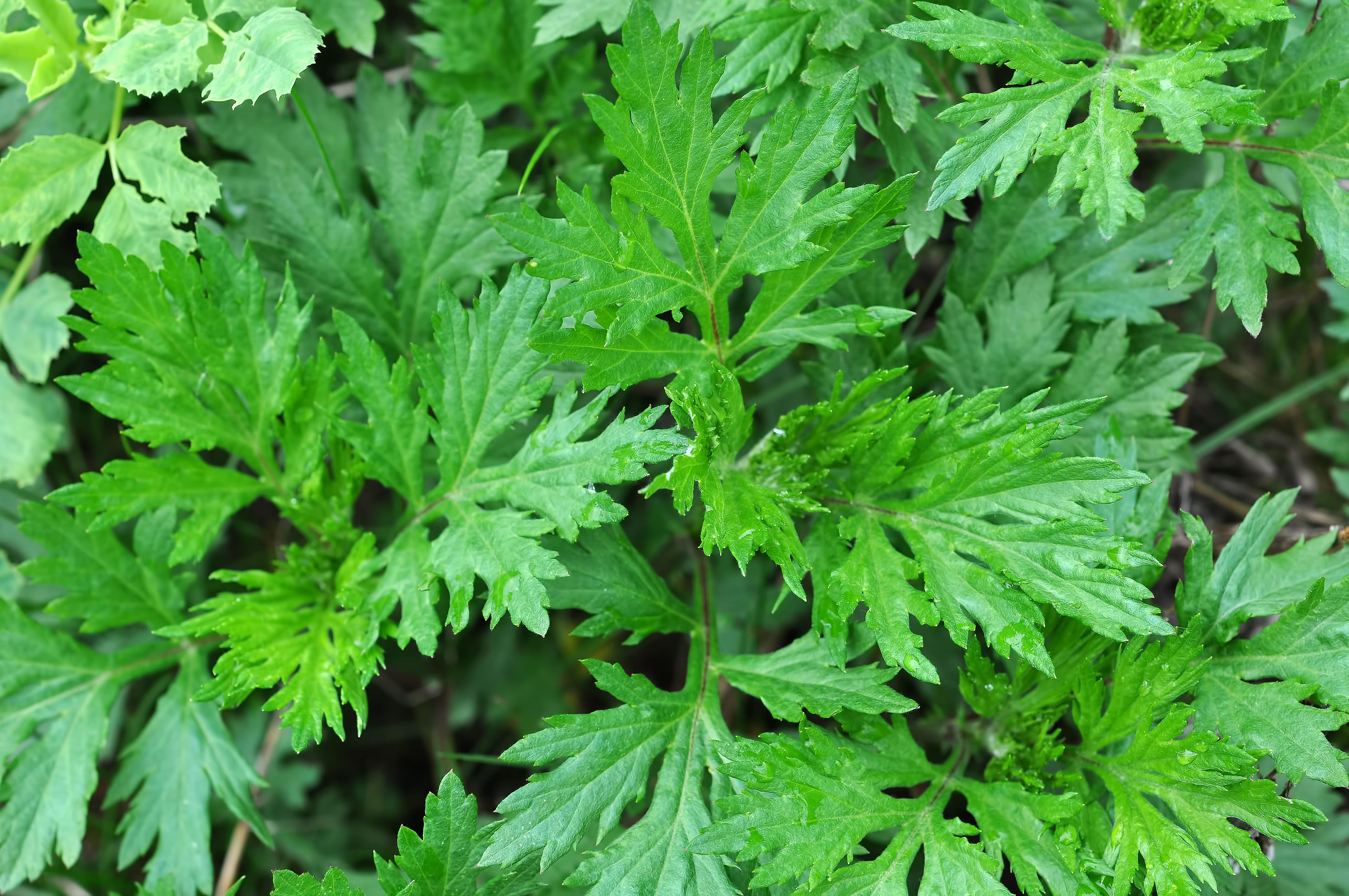
Armoise is a plant of the Asteraceae family and the genus Artemisia L.
Asteraceae family is one of the most important family in the fragrance world, it includes for example all the Artemisia (Wormwood, Armoise, Tarragon, Davana) and all the Tansy, the Everlasting and the tagetes.
Chemotypes :
Wormwood has numerous chemotypes, classified according to their oil constitution.
This variety is due to two possible botanical synthesis routes : isoprenic (containing Alpha-Terpineol, Eucalyptol, Thuyones, Borneol, Camphor...) and phenylpropanic (containing Estragole, Chavicol, Anethole...).
Thus, different chemotype can be distinguished :
Davanone-containing artemisia:
- Artemisia herba-alba L. : Artemisia herba-alba oil
- Artemisia pallens L. : Davana oil.
Thuyone-containing artemisia:
- Artemisia absinthium L. : Wormwood oil / Wormwood oil terpenless
- Artemisia arborescens L. (Arborescent Wormwood)
Camphor-containing artemisia:
- Artemisia douglasiana L. : Tarragon oil / Tarragon absolute / Tarragon oil (low methyleugenol)
- Artemisia vulgaris L. : Artemisia vulgaris oil
Extractions & Uses
Extraction process :
Wormwood is a very invasive plant because of its rootstocks which is why this plant is rather cultivated in fields or forests.
The stumps of the plant are harvested in the fall prior to losing about 65% of their weight after being dried. After a steam distillation, a yellow-green liquid with a thuyanic smell is obtained, with a yield of 0.15 to 0.7%.
It is also possible to obtain an absolute by treating the flower tops and the rootstock with petroleum ether. Afterward, the concrete is treated with alcohol to precipitate the waxes by glazing. A dark green to brown colour absolute with a camphorated and aniseed smell is obtained.
The essential oil of wormwood can contain a high rate of thujone which has a toxic effect on the body. The thujones can be removed by reprocessing the oil with a fractional distillation.
Uses in perfumery :
Useful in fougere, chypre and male notes.
Stability :
Solubility issues in perfumes
The terpenes identified in this raw material can polymerize when they are oxidized
Major Components :
- Alpha-thujone (≈50%)
- Camphor (30 - 35%)
- Beta-thujone (≈8%)
- Camphene (≈5%)
- Eucalyptol (≈5%)
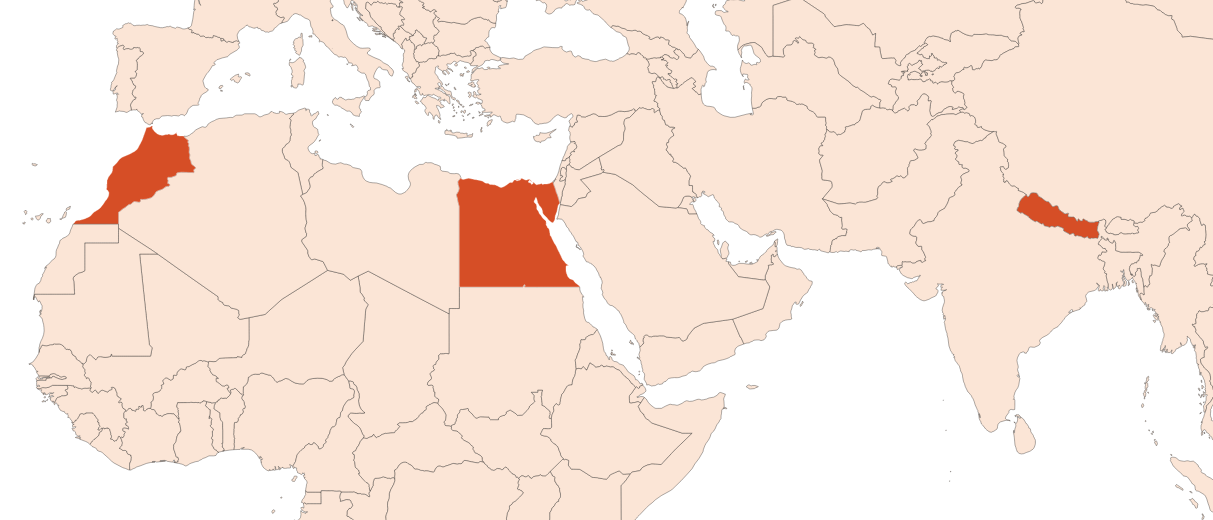
Photo credits: ScenTree SAS
Other comments :
Olfactively close to Wormwood EO as the proportion of thujone is important for both essential oils. Nevertheless, camphorated wormwood is more camphoraceous.
It is used as a precursor to obtain natural camphor.
The adulteration of the essential oil can be done by adding camphor. Still, the composition of the oil is subject to standards and the plant in its raw state must meet cultural and visual standards.
Olfactively close to Wormwood EO as the proportion of thujone is important for both essential oils. Nevertheless, camphorated wormwood is more camphoraceous.
It is used as a precursor to obtain natural camphor.
The adulteration of the essential oil can be done by adding camphor. Still, the composition of the oil is subject to standards and the plant in its raw state must meet cultural and visual standards.
Labelling
Allergens :
Signal word :
Danger
Hazard pictograms :

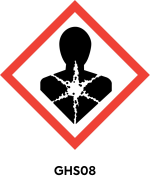
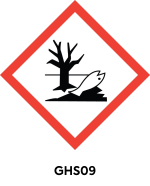
Precautionary statements :
| HAZARD | PRECAUTION |
|---|---|
| H226 Flammable liquid and vapour.
H228 Flammable solid. H302 Harmful if swallowed. H304 May be fatal if swallowed and enters airways. H315 Causes skin irritation. H317 May cause an allergic skin reaction. H319 Causes serious eye irritation. H330 Fatal if inhaled. H331 Toxic if inhaled. H341 Suspected of causing genetic defects. H351 Suspected of causing cancer. H371 May cause damage to organs. H400 Very toxic to aquatic life. H410 Very toxic to aquatic life with long lasting effects. H411 Toxic to aquatic life with long lasting effects. |
P261 Avoid breathing dust/fume/gas/mist/vapours/spray. P264 Wash ... thoroughly after handling. P270 Do no eat, drink or smoke when using this product. P271 Use only outdoors or in a well-ventilated area. P273 Avoid release to the environment. P301 + P312 IF SWALLOWED: Call a POISON CENTER/doctor/… if you feel unwell. P304 + P340 IF INHALED: Remove person to fresh air and keep comfortable for breathing. P311 Call a POISON CENTER/doctor/… P321 Specific treatment (see ... on this label). P330 Rinse mouth. P391 Collect spillage. P403 + P233 Store in a well-ventilated place. Keep container tightly closed. P405 Store locked up. P501 Dispose of contents/container to… |
IFRA
IFRA 51th :
This ingredient is restricted by the 51th amendment
Annexe I :
Some regulated synthetic ingredients are found in nature and in certain proportions in natural ingredients. This presence in nature has to be taken into account when calculating limits of use recommended by the IFRA. In case you do not know these concentrations, you can use the ones estimated by the IFRA. Here they are :
| List of regulated compounds contained in this ingredient | ||
|---|---|---|
| Regulated ingredient name | CAS N° | Estimated Concentration |
| Eugenol | 97-53-0 | 1 |
| Geraniol | 106-24-1 | 1 |
| alpha-Thujone | 546-80-5 | 50 |
Disclaimer :
ScenTree is solely responsible for the information provided here.
To learn more about IFRA's standards : https://ifrafragrance.org/safe-use/library