





Treemoss absolute low atranol
Undergrowth > Mossy > Green Fruits > Animalic
Pseudevernia furfuracea
Synonyms : Borrera furfuracea (L.) Ach. // Evernia furfuracea (L.) Ach.


| Company | Ingredient Name | Learn more | Naturality | Certifications | MOQ | Latin name | Treated part | Origin |
|---|---|---|---|---|---|---|---|---|
|
MOUSSE D’ARBRE
F0080
|
Discover | Absolue | - | Pseudevernia furfuracea (L.) Zopf | Mousse | France | |
|
|
MOUSSE D’ARBRE INCO 30 FAIBLE EN ATRANOL
F0225
|
Discover | Extrait | - | Pseudevernia furfuracea (L.) Zopf | Mousse | France | |
|
TREEMOSS FIRBEST 50 TEC
942626
|
Discover | Naturals | - | - | - | - | |
|
|
TREEMOSS RES FIRBEST
942638
|
Discover | Naturals | - | - | - | - |
F0080

F0225
942626
942638

General Presentation
-
CAS N° :
90028-67-4 -
EINECS number :
289-860-8 -
FEMA number :
Donnée indisponible.
-
Volatility :
Heart/Base -
Price Range :
€€€€
Physico-chemical properties
-
Appearance :
Green liquid -
Density :
-
Refractive Index @20°C :
Donnée indisponible. -
Optical rotation :
-
Vapor pressure :
Donnée indisponible. -
Flash Point :
Donnée indisponible. -
Acid Value :
Botanical informations
Botanical name :
Pseudevernia furfuracea
Synonyms : Borrera furfuracea (L.) Ach. // Evernia furfuracea (L.) Ach.
Botanical profile :
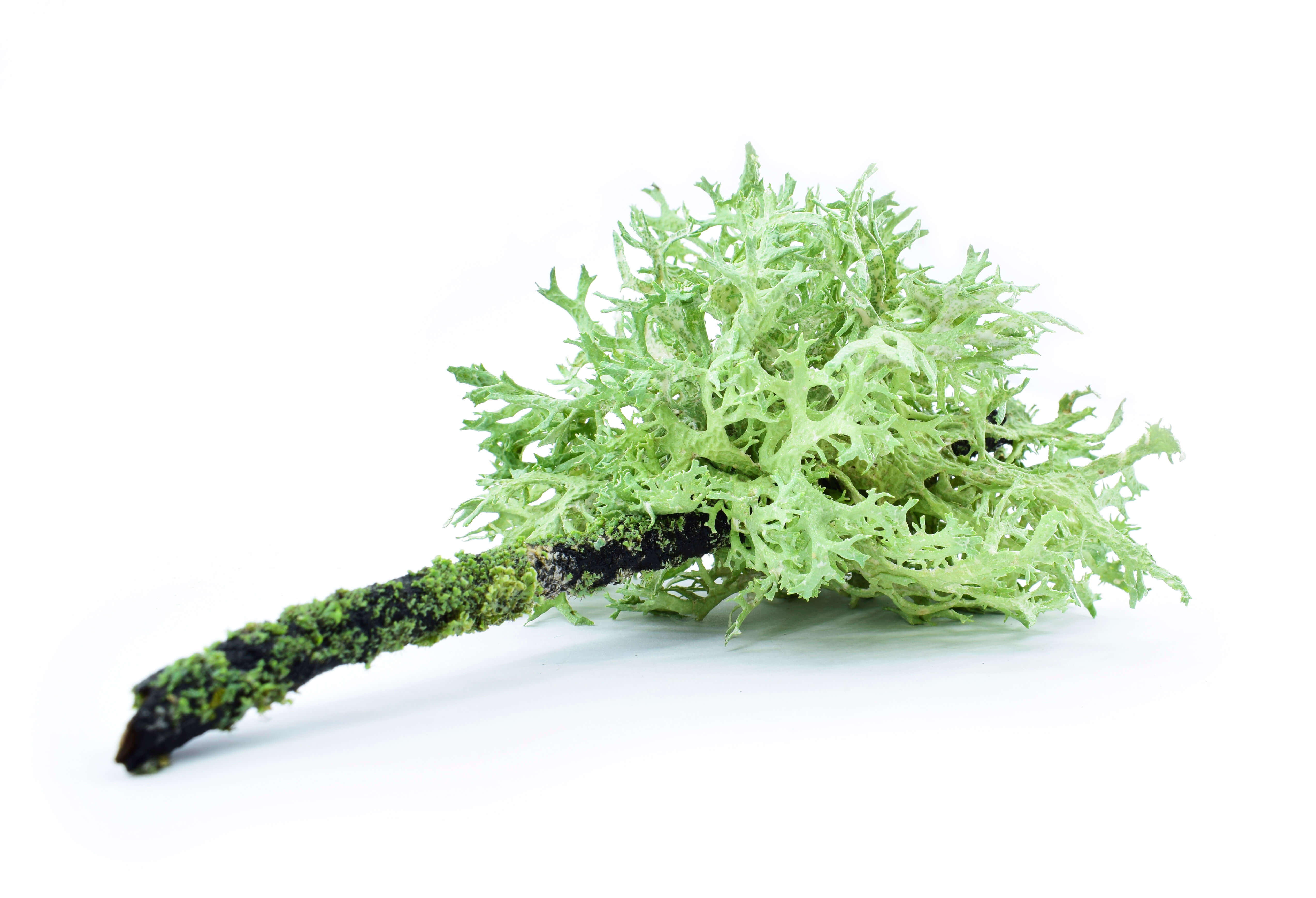
Tree moss is a lichen of the Parmeliacae family, and of the genus Pseudevernia Zopf.
Chemotypes :
In perfumery, three types of lichen are used:
- Evernia prunastri (L.) Ach.: Oak Moss Absolute
- Pseudevernia furfuracea (L.) Zopf : Tree Moss Absolute
- Usnea longissima Ach.: Cedar Moss Absolute, which can be found in China and Tibet, but of a different botanical family.
Other species of the genus Evernia are also distinguished: Evernia divaricata (L.) Ach., Evernia esorediosa (Müll.Arg.) Du Rietz and Evernia mesomorpha Nyl.. These are not used in perfumery.
Extractions & Uses
Extraction process :
Tree moss grows at the base of various trees. It is extracted in the same way as oak moss absolute.
Maceration in cold or hot water for 2 to 3 days is necessary to soften the lichens before extraction. They are then crushed to better fill the still, and increase the extraction yield. The extraction is done by a mixture of cyclohexane and isopropanol, in three successive washings. This step extracts the lichen and allows, after filtration and evaporation of the solvent, to obtain the concrete of tree moss. The absolute is then obtained by washing the concrete with alcohol to remove the waxes, which are insoluble in alcohol. The yield on the transition from concrete to absolute is 80%, for an overall extraction yield of about 3.5% (compared to 1.5% for oak moss).
The extract obtained contains Chloratranol and Atranol, which are highly allergenic compounds. A rectification is made to reduce the presence of these compounds in the extract.
Uses in perfumery :
Used in undergrowth notes, in fruity notes and in fig reproductions, to bring a natural effect and a slightly animalic facet.
Stability :
Solubility issues in eau de toilette, due to the residual presence of waxes.
Stable in eaux de toilette and various functional bases.
Major Components :
Data not available.
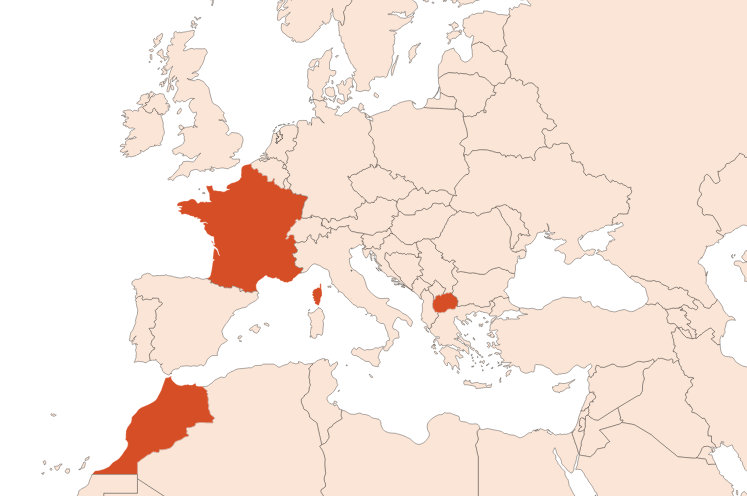
Photo credits: ScenTree SAS
Other comments :
Lichens are a crossing between a fungus and an algae. Botanically, we talk about lichen rather than moss for the Evernia genus.
Tree and oak moss are both regulated in the same way by IFRA.
The use of moss extracts tends to be replaced by unregulated compositions or synthetic molecules, such as Evernyl®.
Lichens are a crossing between a fungus and an algae. Botanically, we talk about lichen rather than moss for the Evernia genus.
Tree and oak moss are both regulated in the same way by IFRA.
The use of moss extracts tends to be replaced by unregulated compositions or synthetic molecules, such as Evernyl®.
Labelling
Allergens :
Treemoss Absolute is an allergenic ingredient alone
Signal word :
Warning
Hazard pictograms :
Precautionary statements :
| HAZARD | PRECAUTION |
|---|---|
| H317 May cause an allergic skin reaction. | P261 Avoid breathing dust/fume/gas/mist/vapours/spray. P272 Contaminated work clothing should not be allowed out of the workplace. P280 Wear protective gloves/protective clothing/eye protection/face protection. P321 Specific treatment (see ... on this label). P501 Dispose of contents/container to… |
IFRA
IFRA 51th :
This ingredient is restricted by the 51th amendment
-
Restriction type :
RESTRICTION_SPECIFICATION -
Cause of restriction :
DERMAL SENSITIZATION -
Amendment :
49
Quantitative limit on the use :
| Cat.1 | Cat.2 | Cat.3 | Cat.4 |
Cat.5
A
B
C
D
|
Cat.6 | |||
|---|---|---|---|---|---|---|---|---|
| 0,02 % | 0,016 % | 0,1 % | 0,1 % |
0,076 %
0,076 %
0,076 %
0,076 %
|
||||
|
Cat.5
A
B
C
D
|
Cat.6 | |||||||
|
0,076 %
0,076 %
0,076 %
0,076 %
|
0,18 % | |||||||
|
Cat.7
A
B
|
Cat.8 | Cat.9 |
Cat.10
A
B
|
Cat.11
A
B
|
Cat.12 | |||
|
0,1 %
0,1 %
|
0,032 % | 0,1 % |
0,1 %
0,1 %
|
0,1 %
0,1 %
|
||||
|
Cat.10
A
B
|
Cat.11
A
B
|
Cat.12 | ||||||
|
0,1 %
0,1 %
|
0,1 %
0,1 %
|
No Restriction | ||||||
Restricted ingredients: notes
For Treemoss and Oakmoss extracts, the restrictions in the Standards are directly linked to the presence of Atranol and Chloroatranol in the finished products. To ensure that those remain below trace levels, the upper concentration levels have not been increased (compared its last publication in the Amendment 43 (2008)).
In the presence of Oakmoss extracts, the level of Treemoss in the respective category has to be reduced accordingly, such that the total amount of both extracts does not exceed the maximum permitted level in each category as listed in the table above.
If the same fragrance mixture is intended to be used in more than one IFRA Category, then the most restrictive limitation (based on foreseen use concentrations and maximum permitted level) will apply.
Specified ingredients: notes
Treemoss extracts shall not contain more than 0.8% of Dehydroabietic acid (DHA) as a marker of 2% of total resin acids. The concentration of DHA (about 40% of the total resin acids) in Treemoss can be measured with an High Performance Liquid Chromatography (HPLC) reverse phase - spectrofluorometry method.
Further, levels of Atranol and Chloroatranol should each be below 100 ppm in Treemoss extracts.
Disclaimer :
ScenTree is solely responsible for the information provided here.
To learn more about IFRA's standards : https://ifrafragrance.org/safe-use/library