













Hydrocarboresin
Balsamic Ambery > Ambery Cistus > Animalic > Leather
Cistus ladanifer L.
Synonyms : Cistus ladaniferus L. // Cistus ladanifer f. immaculatus Dans.


| Company | Ingredient Name | Learn more | Naturality | Certifications | MOQ | Latin name | Treated part | Origin |
|---|---|---|---|---|---|---|---|---|

|
HYDROCARBORESINE
F1506
|
Discover | Extrait | - | Cistus ladaniferus L. | Feuille, Rameau | Espagne | |
|
HYDROCARBORESINE
HYC-1
|
Discover | Naturel | 10 grs | - | - | - | |

|
Hydrocarborésine - 30gr | Discover | - | 30grs | - | - | - |
F1506

HYC-1

General Presentation
-
CAS N° :
8016-26-0 -
EINECS number :
289-711-7 -
FEMA number :
2608
-
Volatility :
Heart/Base -
Price Range :
€€€€
Physico-chemical properties
-
Appearance :
Yellow to orange liquid -
Density :
-
Refractive Index @20°C :
Donnée indisponible. -
Optical rotation :
-
Vapor pressure :
Donnée indisponible. -
Flash Point :
Donnée indisponible. -
Acid Value :
Botanical informations
Botanical name :
Cistus ladanifer L.
Synonyms : Cistus ladaniferus L. // Cistus ladanifer f. immaculatus Dans.
Botanical profile :
The cistus belongs to the Cistaceae family and to the genus Cistus L.
Chemotypes :
The genus Cistus L. includes about 20 different species, the majority of which exudes fragrant gum.
Among these, the most used are:
Cistus ladaniferus var. albiflorus, var. maculatos, var. stenoiphyllus, which produce the resin used in perfumes.
Cistus creticus L., with rose to purple petals, surronding a tuft of stamens.
Cistus salviifolius L., with white petals.
Cistus parviflorus Lam., with pale rose petals.
Extractions & Uses
Extraction process :
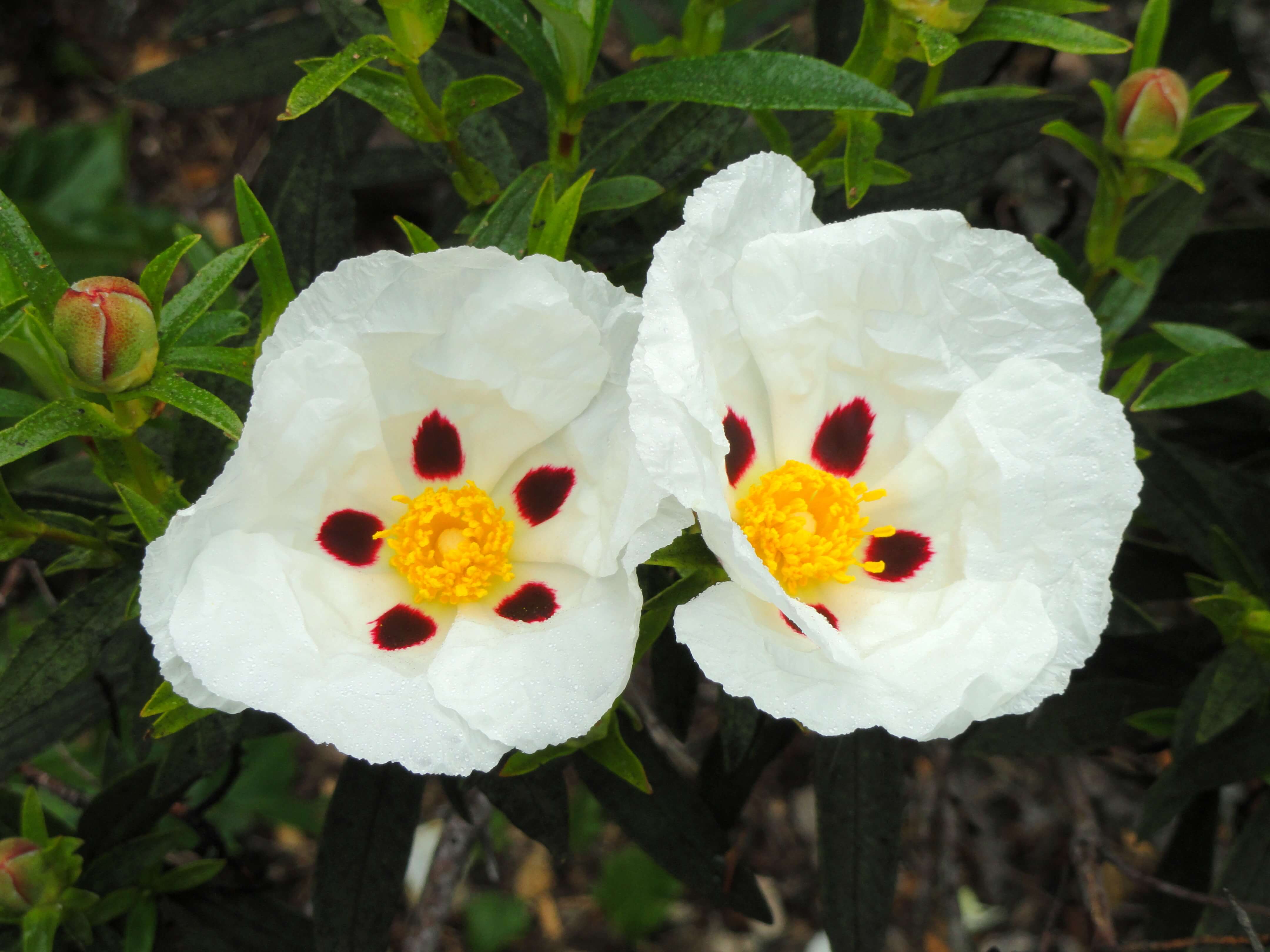
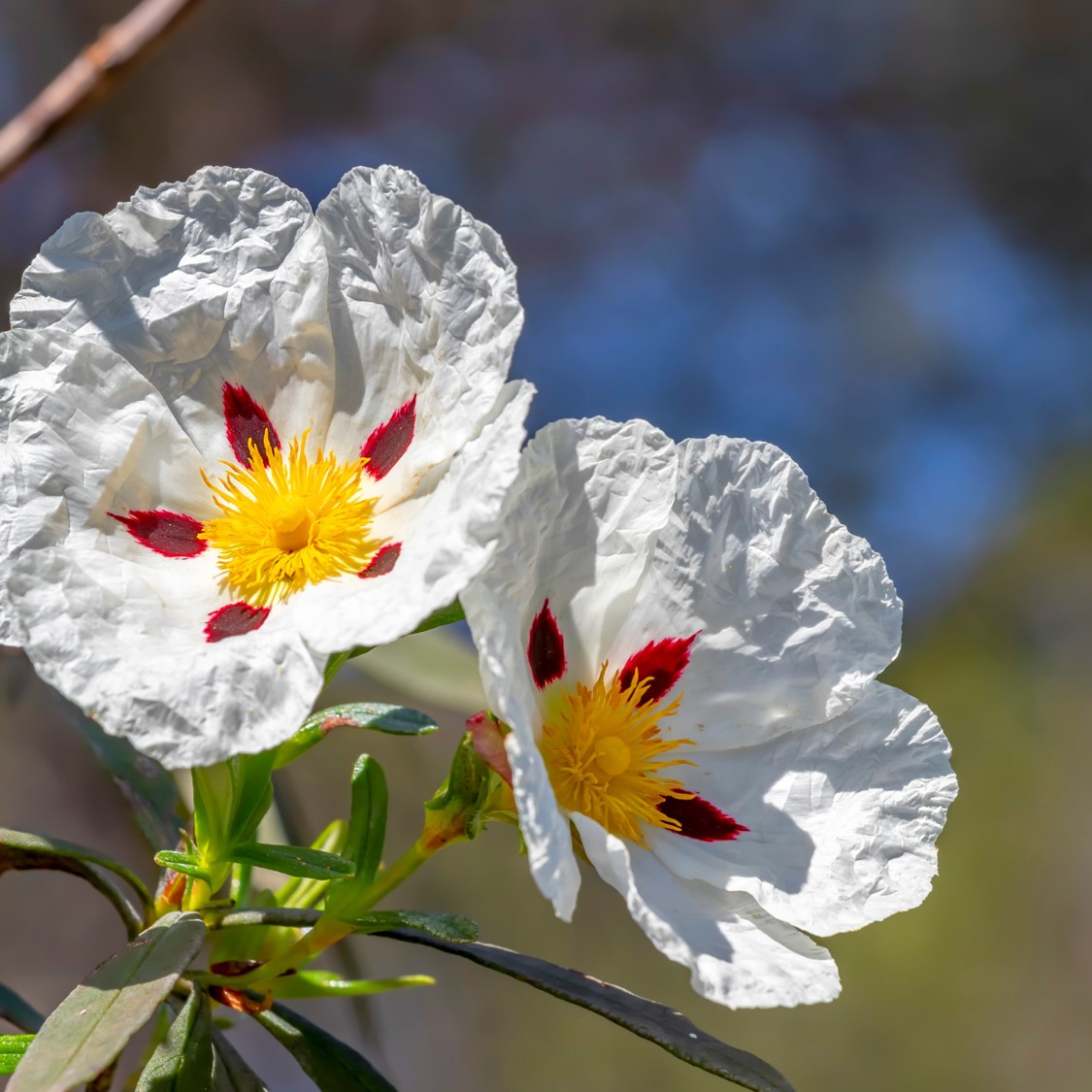
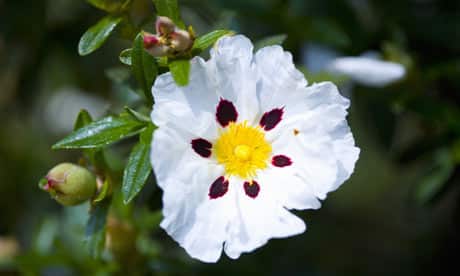
In April, Cistus ladaniferus fields are covered with the famous white flowers, but they don't smell and are very delicate (they only last a few days). It is necessary to wait a few months, around May-June, for a new shoot to appear. This new branch protects itself from the sun - and from the summer heat of southern Spain - by secreting a very fragrant viscous gum. We use the latter in perfumery.
In July, from dawn to noon, new branches are cut with a sickle, bundled and taken to the factory to extract the gum. It will then be necessary to wait another 3 years to harvest the cistus again.
Uses in perfumery :
Hydrocarboresin is used to bring a leather facet to cistus notes in oriental perfumes for example.
Stability :
Terpenes found in this extract may polymerize under the effect of oxydation.
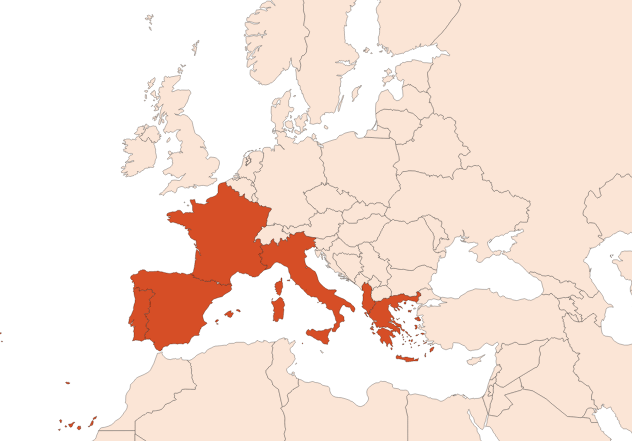
Photo credits: ScenTree SAS
Other comments :
Cistus is a shrub about two meters high, with pink, red or white flowers depending on the variety.
Cistus harvesting on an industrial scale was first done in the region of Salamanca, and was then exported to the South of Spain, along Portugal, to Andalusia, vers the greatest cultures in Europe can be found.
Other beses are obtained from Cistus Labdanum as Ambrarome Absolute, by esterification. Dynamone and Hydrocarboresin also exist.
Labelling
Allergens :
This ingredient does not contain any allergen.
Signal word :
Danger
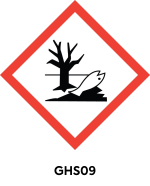
Hazard pictograms :



Precautionary statements :
| HAZARD | PRECAUTION |
|---|---|
| H226 Flammable liquid and vapour.
H304 May be fatal if swallowed and enters airways. H315 Causes skin irritation. H317 May cause an allergic skin reaction. H411 Toxic to aquatic life with long lasting effects. |
IFRA
IFRA 51th :
This ingredient is not restricted for the 51th amendment