














Guaiac wood oil
Woody > Balsamic > Smoky Woods > Spicy
Gonopterodendron sarmientoi (Lorentz ex Griseb.) Godoy-Bürki
Synonyms : Bulnesia sarmientoi Lorentz ex Griseb. // Bulnesia sarmienti Lorentz


| Company | Ingredient Name | Learn more | Naturality | Certifications | MOQ | Latin name | Treated part | Origin |
|---|---|---|---|---|---|---|---|---|

|
GUAIACWOOD EO CRUDE
944190
|
Discover | Naturals | - | BULNESIA SARMIENTOI | - | - | |

|
Huile essentielle de bois de Gaïac - 30 gr | Discover | - | 30grs | - | - | - |
944190


General Presentation
-
CAS N° :
8016-23-7 -
EINECS number :
293-632-8 -
FEMA number :
2534
-
Volatility :
Heart/Base -
Price Range :
€€
Physico-chemical properties
-
Appearance :
Viscous yellow liquid -
Density :
-
Refractive Index @20°C :
1,502 - 1,507 -
Optical rotation :
-
Vapor pressure :
Donnée indisponible. -
Flash Point :
Donnée indisponible. -
Acid Value :
Botanical informations
Botanical name :
Gonopterodendron sarmientoi (Lorentz ex Griseb.) Godoy-Bürki
Synonyms : Bulnesia sarmientoi Lorentz ex Griseb. // Bulnesia sarmienti Lorentz
Botanical profile :
The Gaiac used in perfumery is a tree of the family Zygophyllacées and the genus Gonopterodendron (Griseb.) Godoy-Bürki
Chemotypes :
The Gaiac wood used in perfumery is actually a "false Gaiac." Strictly speaking, the genus associated with true Gaiac woods is Guaiacum, which includes Guaiacum officinale (also called palo balsam) and Guaiacum sanctum (or Bahamas Gaiac), native to Central America.
Extractions & Uses
Extraction process :
The gaiac or palo santo (the "sacred wood" in Spanish) can be up to 15 meters tall and grows in tropical forests of South America. The propagation of this tree is done by cuttings and it grows quite fast. In Paraguay, 170 tons of gaiac wood are collected each year for perfumery.
In perfumery, the Gaiac wood EO is extracted by hydro-distilling the bark, the branches and the chips, lasting up to 30 hours with a yield of up to 6%. A viscous, yellowish essential oil, which recrystallizes because it mainly consist of Guaiol (precursor of Gaiyl Acetate) and Bulnesol, is obtained.
The essential oil of Gaiac wood is sometimes acetylated. During this process, the alcohols of the oil are reacted with acetic anhydride to be esterified. Therefore, Gaiyl Acetate becomes the main compound of the acetylated essential oil.
Uses in perfumery :
Good fixator of heart notes. Used in rose, vanilla and sandalwood notes. Natural antioxidant. Its low price allows it to be used in soaps or detergents.
Stability :
Stable oil in perfumes and in diverse functional bases
Major Components :
| Component | % min | % max |
|---|---|---|
| Bulnésol | 40 | 45 |
| Guaiol | 25 | 30 |
| Guaiacol | 20 | 30 |
| Gamma-eudesmol | 2 | |
| Elemol | 1 |
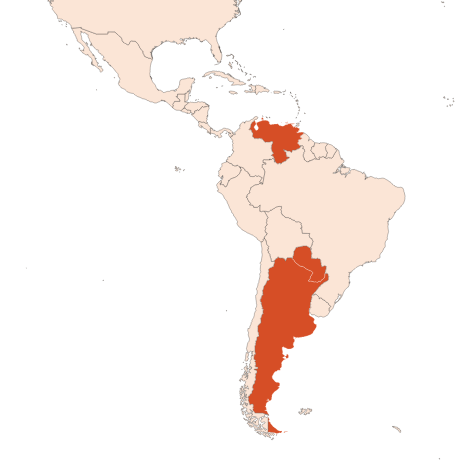
Photo credits: ScenTree SAS
Other comments :
In the past, palo santo wood was used in South America to practice fumigations as an offering to the gods. Nowadays, the exploitation and production of Gaiac wood is closely monitored because its cultivation and the intensive treatment that this specie has suffered has dangerously reduced the population.
Natural Guaiol can be obtained by recrystallizing Bulnesol, then Gaiyl acetate can be obtained by acetylation.
In the past, palo santo wood was used in South America to practice fumigations as an offering to the gods. Nowadays, the exploitation and production of Gaiac wood is closely monitored because its cultivation and the intensive treatment that this specie has suffered has dangerously reduced the population.
Natural Guaiol can be obtained by recrystallizing Bulnesol, then Gaiyl acetate can be obtained by acetylation.
Labelling
Allergens :
This ingredient does not contain any allergen.
Signal word :
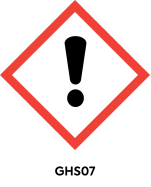
Warning
Hazard pictograms :
Precautionary statements :
| HAZARD | PRECAUTION |
|---|---|
| H317 May cause an allergic skin reaction. | P261 Avoid breathing dust/fume/gas/mist/vapours/spray. P272 Contaminated work clothing should not be allowed out of the workplace. P280 Wear protective gloves/protective clothing/eye protection/face protection. P302 + P352 IF ON SKIN: Wash with plenty of water/… P321 Specific treatment (see ... on this label). P501 Dispose of contents/container to… |
IFRA
IFRA 51th :
This ingredient is restricted by the 51th amendment
Annexe I :
Some regulated synthetic ingredients are found in nature and in certain proportions in natural ingredients. This presence in nature has to be taken into account when calculating limits of use recommended by the IFRA. In case you do not know these concentrations, you can use the ones estimated by the IFRA. Here they are :
| List of regulated compounds contained in this ingredient | ||
|---|---|---|
| Regulated ingredient name | CAS N° | Estimated Concentration |
| Isoeugenyl acetate | 93-29-8 | 0,12 |
Disclaimer :
ScenTree is solely responsible for the information provided here.
To learn more about IFRA's standards : https://ifrafragrance.org/safe-use/library