











Photo credits: ScenTree SAS
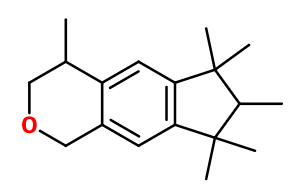
Galaxolide®
Musky > Berries > Milky
Musc 50® ; Pearlide® ; 1,3,4,6,7,8-hexahydro-4,6,6,7,8,8-hexamethylcyclopenta-2-benzopyran ; Astrolide ; 1,3,4,6,7,8-hexahydro-4,6,6,7,8,8-hexamethyl cyclopenta-gamma-2-benzopryan ; Hexahydrohexamethyl cyclopentabenzopyran ; Musk gx


Photo credits: ScenTree SAS
| Company | Ingredient Name | Learn more | Naturality | Certifications | MOQ | Purity |
|---|---|---|---|---|---|---|
|
MUSK 50 DEP
GA-2
|
Discover | - | 10 grs | 60.0 - 100.0 | |
|
|
MUSK 50 IPM
50IPM-2
|
Discover | - | 10 grs | 47% min. (Main isomer) | |
|
|
MUSK 50 BB
MBB-1
|
Discover | - | 10 grs | 50% min. (main isomer) | |
|
|
MUSK 50 DPG
50DPG-2
|
Discover | - | 10 grs | - | |

|
Galaxolide DPG - 30 Gr | Discover | - | 30grs | - | |

|
Galaxolide | Discover | Synthetic Aroma Chemicals | - | - | |
|
|
Galaxolide 50% D.E.P/I.P.M | Discover | Synthetic Aroma Chemicals | - | - |
GA-2

50IPM-2
MBB-1
50DPG-2

General Presentation
-
CAS N° :
1222-05-5 -
EINECS number :
214-946-9 -
FEMA number :
Donnée indisponible. -
FLAVIS number :
Donnée indisponible.
-
JECFA number :
Donnée indisponible. -
Volatility :
Base -
Price Range :
€
Physico-chemical properties
-
Appearance :
Colorless viscous liquid -
Density :
1,037 -
Refractive Index @20°C :
1,518 - 1,524 -
Optical rotation :
Donnée indisponible. -
Vapor pressure :
0,000143 mmHg @23°C -
Flash Point :
>100°C (>212°F)
-
Molecular formula :
C18H26O -
Molecular Weight :
258,41 g/mol -
Log P :
5,92 -
Fusion Point :
Donnée indisponible. -
Boiling Point :
304°C (579,2°F) -
Detection Threshold :
0,9 ng/l air
Chemistry & Uses
Uses in perfumery :
Galaxolide® gives hold and trail to a perfume. It is one of the freshest and most heady musks. To be combined with other musks to multiply the facets. Widely used in detergents and fabric softeners. Preferential use in laundry. Often used as a replacement for all other musks in the case of a reformulation at a lower cost.
Year of discovery :
Discovered in 1962.
Natural availability :
Galaxolide® is not available in its natural state.
Isomerism :
Galaxolide® contains several asymmetric carbons that give rise to several enantiomers. Thus, Galaxolide® used in perfumery is actually a mixture of at least seven isomeric molecules with different volatilities. Galaxolide® and Tonalide® are constitutional isomers and have a fairly similar overall structure. Both have a relatively similar smell, as they belong to the same family of musks.
Synthesis precursor :
Galaxolide® is not a precursor to the synthesis of another compound of olfactory interest.
Synthesis route :
Galaxolide® can be synthesized from tert-amylene by reaction with alpha-methylstyrene, to obtain 1,1,2,3,3-pentamethylindane. This intermediate molecule can be hydroxyalkylated by reaction with the propylene oxide, during a Friedel and Craft reaction, catalysed by aluminum chloride, for example. The alcohol function of the second intermediate product obtained during the previous process can be cyclized by reaction with formaldehyde, either in an alcoholic medium or with an acid anhydride, to obtain the final compound, Galaxolide®.
Stability :
Musks are very stable, as in alcoholic and in functional fragrances
Other comments :
Often, Galaxolide® is diluted in solvent as it is very viscous : Benzyl Benzoate, Isopropyl Myristate, Triethyl Citrate, Dipropylene Glycol.
Like some other polycyclic musk, Galaxolide® is not biodegradable and causes major pollution problems. As a result, some companies have decided to ban this compound from their products.
Labelling
Allergens :
This ingredient is classified as an allergen under European Regulation 2023/1545, dated August 26, 2023.
Its presence must therefore be declared on product labels when it exceeds 0.001% in leave-on products and 0.01% in rinse-off products.
Signal word :
Warning
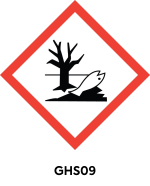
Hazard pictograms :
Precautionary statements :
| HAZARD | PRECAUTION |
|---|---|
| H410 Very toxic to aquatic life with long lasting effects. | P273 Avoid release to the environment.
P391 Collect spillage. P501 Dispose of contents/container to… |
IFRA
IFRA 51th :
This ingredient is not restricted for the 51th amendment