













Photo credits: ScenTree SAS
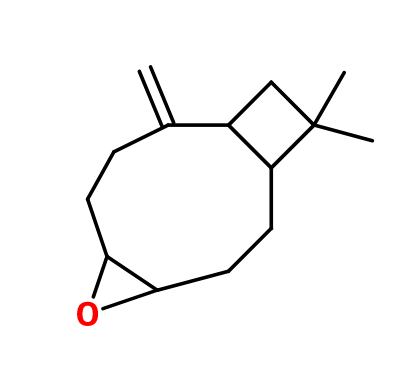
Caryophyllene oxide
Woody > Ambery Woods > Vetiver > Earthy > Mossy
beta-caryophyllene oxide ; beta-caryophyllene epoxyde ; Ambar crystal ; Caryophyllene epoxide


Photo credits: ScenTree SAS
| Company | Ingredient Name | Learn more | Naturality | Certifications | MOQ | Purity |
|---|---|---|---|---|---|---|

|
Caryophyllene Oxide
CL-605
|
Discover | Natural |


|
50 Kgs | 100 |

|
Natural Caryophyllene Oxide | Discover | Natural |
|
- | - |

|
Caryophellene Oxide | Discover | Synthetic Aroma Chemicals | - | - |
CL-605


General Presentation
-
CAS N° :
1139-30-6 -
EINECS number :
214-519-7 -
FEMA number :
4085 -
FLAVIS number :
Donnée indisponible.
-
JECFA number :
1575 -
Volatility :
Base -
Price Range :
Data not available.
Physico-chemical properties
-
Appearance :
Colorless crystal -
Density :
0,948 @20°C -
Refractive Index @20°C :
Donnée indisponible. -
Optical rotation :
Donnée indisponible. -
Vapor pressure :
Donnée indisponible. -
Flash Point :
Donnée indisponible.
-
Molecular formula :
C15H24O -
Molecular Weight :
220,35 g/mol -
Log P :
Donnée indisponible. -
Fusion Point :
64°C (147,2°F) -
Boiling Point :
-
Detection Threshold :
Donnée indisponible.
Chemistry & Uses
Uses in perfumery :
Year of discovery :
Data not available.
Natural availability :
Caryophyllene oxide can be found in a broad range of perfume materials. Among them, patchouli EO, some aromatics such as Lavender EO or species of the artemisia genus. Also contained in numerous spices such as peppers and cinnamon. In general, it is common to find caryophyllene oxide in ingredients with a high level of Caryophyllene-Beta. In the vast majority of cases, it shows up as trace.
| Ingredient | % min | % max |
|---|---|---|
| Pinus pinaster oil | 0.50 | |
| Black pepper oil (Ceylan) | 1 | |
| Black pepper oil (India) | 1 | |
| Black pepper oil (Madagascar) | 1 | |
| Turpentine oil | 0.50 |
Isomerism :
Data not available.
Synthesis precursor :
The Caryophyllene oxide is not a precursor to the synthesis of another compound of olfactive interest.
Synthesis route :
Data not available.
Stability :
Data not available.
Other comments :
Caryophyllene oxide is thought to be the molecule with which cannabis-seeking dogs are trained.
Labelling
Allergens :
This ingredient does not contain any allergen.
Signal word :
-
Hazard pictograms :
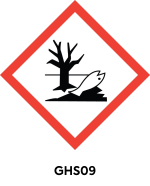
Precautionary statements :
| HAZARD | PRECAUTION |
|---|---|
| H411 Toxic to aquatic life with long lasting effects. |
IFRA
IFRA 51th :
This ingredient is not restricted for the 51th amendment