








Honey Provence Absolute Firabs
Balsamic Ambery > Honeyed > Coumarinic > Cinnamic > Orange Blossom
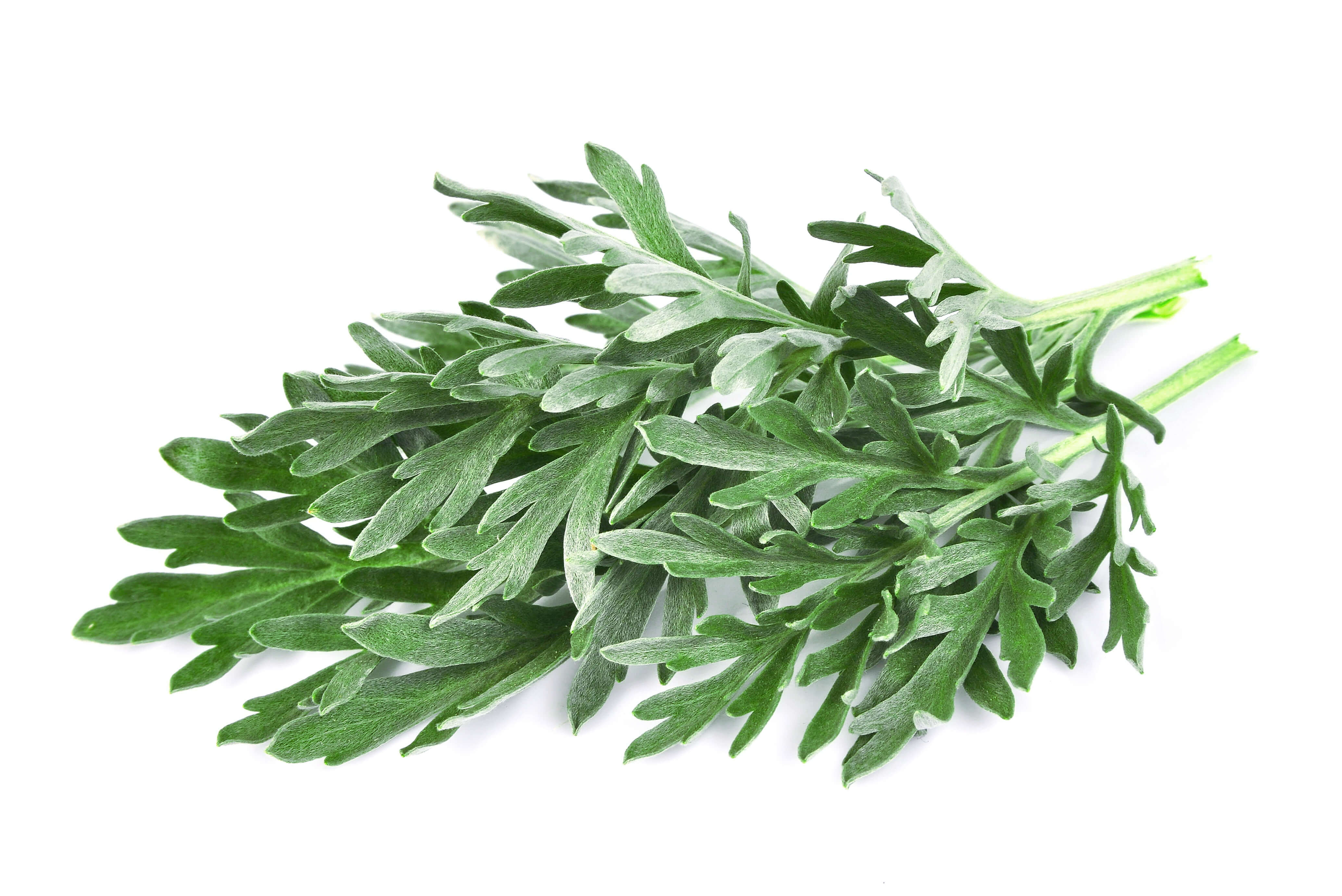
Artemisia absinthium L.
Synonyms : Artemisia absinthium var. absinthium // Absinthium officinale Brot.


| Company | Ingredient Name | Learn more | Naturality | Certifications | MOQ | Latin name | Treated part | Origin |
|---|---|---|---|---|---|---|---|---|
|
HONEY PROVENCE FIRABS
942539
|
Discover | Naturals | - | - | - | - |
942539


General Presentation
-
CAS N° :
N/A -
EINECS number :
232-383-7 -
FEMA number :
Donnée indisponible.
-
Volatility :
Base -
Price Range :
Donnée indisponible.
Physico-chemical properties
-
Appearance :
Yellow to orange liquid (can crystallize) -
Density :
1,090 - 1,121 @20°C 1,087 - 1,118 @25°C -
Refractive Index @20°C :
1,454 - 1,464 @20°C 1,452 - 1,462 @25°C -
Optical rotation :
-
Vapor pressure :
Donnée indisponible. -
Flash Point :
>100°C (>212°F) -
Acid Value :
Botanical informations
Botanical name :
Artemisia absinthium L.
Synonyms : Artemisia absinthium var. absinthium // Absinthium officinale Brot.
Botanical profile :
Woormwood is a plant of the Asteraceae family and the genus Artemisia L.
Asteraceae family is one of the most important family in the fragrance world, it includes for example all the Artemisia (Wormwood, Armoise, Tarragon, Davana) and all the Tansy, the Everlasting and the tagetes.
Chemotypes :
Wormwood has numerous chemotypes, classified according to their oil constitution.
This variety is due to two possible botanical synthesis routes : isoprenic (containing Alpha-Terpineol, Eucalyptol, Thuyones, Borneol, Camphor...) and phenylpropanic (containing Estragole, Chavicol, Anethole...).
Thus, different chemotype can be distinguished :
Davanone-containing artemisia:
- Artemisia herba-alba L. : Artemisia herba-alba oil
- Artemisia pallens L. : Davana oil.
Thuyone-containing artemisia:
- Artemisia absinthium L. : Wormwood oil / Wormwood oil terpenless
- Artemisia arborescens L. (Arborescent Wormwood)
Camphor-containing artemisia:
- Artemisia douglasiana L. : Tarragon oil / Tarragon absolute / Tarragon oil (low methyleugenol)
- Artemisia vulgaris L. : Artemisia vulgaris oil
Extractions & Uses
Extraction process :
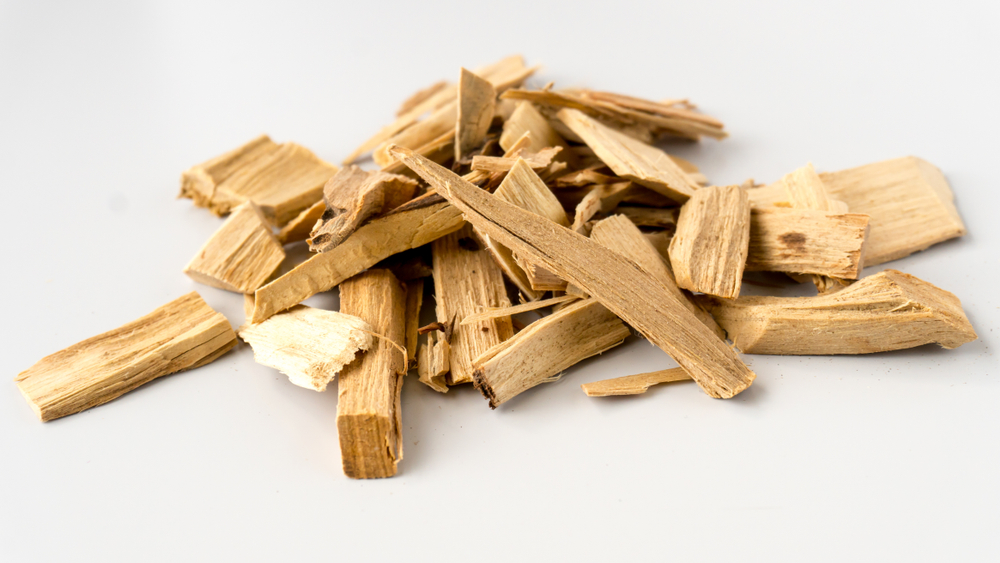
These ingredients comes from a Coextraction of natural (beeswax and honeycomb still containing traces of honey) and synthetic ingredients of which some are captives.
From the same botanical variety
Uses in perfumery :
Cet ingrédient est la quintessence de la note miellée, il est rare de voir un produit aussi proche de la note trouvée dans la nature. Utilisation intéressante dans les accords gourmands, ambrés, les tabacs ou encore pour soutenir des notes florales.
Stability :
Data not available.

Photo credits: ScenTree SAS
Other comments :
It is one of the essential oils with thujone (it contains about 40%) which explain its high toxicity. Other essential oils contain thujones: Cedar Leaf EO, Camphorated Wormwood EO, tansy, thuja or Dalmatian Sage EO.
Another name for absinthe is "wormwood".
Absinthe is known worldwide for the beverage made with its essential oil which has been banned in many countries because of its excessive alcohol content, but also because of thujone. However, in France, since 2011, the consumption of this drink has been authorized again, provided that the rate of thujone is very limited. The excessive consumption of absinthe has also given its name to a disease: absinthism. Thujones have long given a very bad press to the plant.
Data not available.
Labelling
Allergens :
This ingredient does not contain any allergen.
IFRA
IFRA 51th :
This ingredient is not restricted for the 51th amendment