












Coffee arabica roasted SFE
Woody > Roasted > Nutty > Tobacco
Coffea arabica L.


| Company | Ingredient Name | Learn more | Naturality | Certifications | MOQ | Latin name | Treated part | Origin |
|---|---|---|---|---|---|---|---|---|

|
Coffee Arabica Oil - CO2
CF-001
|
Discover | Natural |


|
10 Kgs | Coffea arabica | Seed | Indonesia |

|
COFFEE COLOMBIA SFE
918748
|
Discover | Naturals | - | COFFEA ARABICA | - | - | |
|
|
COFFEE ESPRESSO SFE
918743
|
Discover | Naturals | - | COFFEA ARABICA | - | - | |
|
|
COFFEE SANTOS SFE
918868
|
Discover | Naturals | - | COFFEA ARABICA | - | - | |
|
|
COFFEE SFE
918857
|
Discover | Naturals | - | COFFEA ARABICA | - | - |
CF-001

918748
918743
918868
918857

General Presentation
-
CAS N° :
84650-00-0 -
EINECS number :
283-481-1 -
FEMA number :
Donnée indisponible.
-
Volatility :
Base -
Price Range :
€€€€
Physico-chemical properties
-
Appearance :
Black to brown paste (more liquid than the extract) -
Density :
0,930 - 0,940 @25°C -
Refractive Index @20°C :
1,471 - 1,480 @20°C -
Optical rotation :
-
Vapor pressure :
Donnée indisponible. -
Flash Point :
Donnée indisponible. -
Acid Value :
Botanical informations
Botanical name :
Coffea arabica L.
Botanical profile :
Coffea arabica is a tree belonging to the Rubaceae family. It belongs to the Coffea L. gender
Chemotypes :
Coffea L. genus is very rich, there are more than 120 different species. The growing popularity and demand for coffee has led humans to create an endless number of hybrids species, it is so very difficult to establish the exact level of diversity in this genus.
It is however possible to highlight two main species.
- Coffea arabica L. (Coffee arabica CO2 / Coffee Absolute / Coffee arabica Absolute). This is the most commonly cultivated species. Today it is estimated that it accounts for almost 70% of the world's coffee production. It is considered as the most precious species because of its higher aromatic qualities compared to other species.
- Coffea canephora Pierre ex A.Froehner ( Coffee robusta CO2 / Coffee Absolute). Less widespread species. It is nevertheless widely used because its culture is easier (it requires lower altitude and less water conditions). This cultivation ease induces a lower production cost.
Extractions & Uses
Extraction process :
Coffee comes from the beans of a tree called "coffee tree". This tree is mainly found in tropical regions of the world. Whether it is for the Arabica or Robusta variety, it takes at least 3 years for the tree to produce harvestable seeds and about 8 years to have an optimal productivity.
The altitude of culture is very important since robusta can be cultivated from sea level weither the Arabica prefers higher altitudes, starting at 1200 meters above sea level.
It is quite difficult to estimate production yields since they are extremely fluctuating and my research has rarely led to any comparable figures.
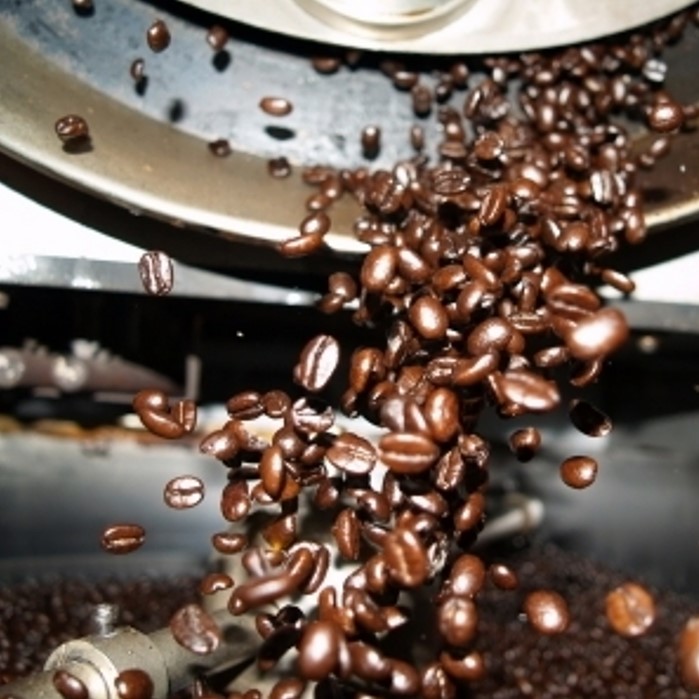
Once ripe, the coffee cherries are picked. At this stage, they are still green and totally unfit for consumption. They need to undergo a roasting process before anything else.
Uses in perfumery :
Used to bring an intense woody aromatic note, as a base note. It works wonderfully with Cardamom (Cardamom EO / Cardamom Absolute) or even with creamy sandalwood tones.
Combined with sweet notes such as Ethyl maltol or Ceylon Cinnamon EO, coffee becomes unbelievable.
Stability :
Data not available.
Major Components :
- It is very difficult to comment on the composition of this ingredient. Indeed, it is mainly driven by the purity of the beans and the roasting process.
- The compositions can therefore differ from one manufacturer to the other.
- It is worth mentioning that Coffea canephora (Robusta) has almost two times more caffeine than Coffea arabica. On the opposite, it contains much lower sugar concentration.
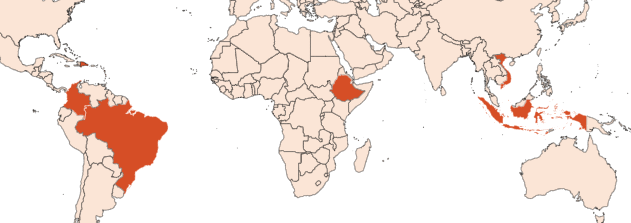
Photo credits: ScenTree SAS
Other comments :
Coffee is the second most traded resource in the world after oil (Source: International Coffee Organization, ICO)
There are many sources about coffee and more precisely about the difference between arabica and robusta. Among these sources, we particularly highly recommend the ICO website
Coffee is the second most traded resource in the world after oil (Source: International Coffee Organization, ICO)
There are many sources about coffee and more precisely about the difference between arabica and robusta. Among these sources, we particularly highly recommend the ICO website
Labelling
Allergens :
This ingredient does not contain any allergen.
Signal word :
Warning
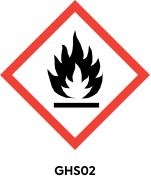
Hazard pictograms :
Precautionary statements :
| HAZARD | PRECAUTION |
|---|---|
| H226 Flammable liquid and vapour. |
IFRA
IFRA 51th :
This ingredient is not restricted for the 51th amendment