










Photo credits: ScenTree SAS
Calone®
Marine > Oceanic
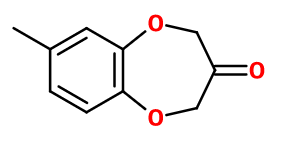
Aquamor® ; Ganone® ; Calone 161® ; 8-methyl-1,5-benzodioxepin-3-one ; 7-methyl-1,5-benzodioxepan-3-one ; Oceanone ; Oceone ; Ozonor ; Watermelon ketone


Photo credits: ScenTree SAS
| Company | Ingredient Name | Learn more | Naturality | Certifications | MOQ | Purity |
|---|---|---|---|---|---|---|
|
KANONE
CAL-2
|
Discover | - | 10 grs | 99 - 100 | |

|
Calone - 30 Gr | Discover | - | 30grs | - | |

|
CALONE®
918970
|
Discover | Molecules | - | - | |

|
Watermelon Ketone (Oceone, Calone) | Discover | Synthetic Aroma Chemicals | - | - |
CAL-2

918970

General Presentation
-
CAS N° :
28940-11-6 -
EINECS number :
249-320-4 -
FEMA number :
Donnée indisponible. -
FLAVIS number :
Donnée indisponible.
-
JECFA number :
Donnée indisponible. -
Volatility :
Base -
Price Range :
€€€
Physico-chemical properties
-
Appearance :
White solid -
Density :
1,1 -
Refractive Index @20°C :
Donnée indisponible. -
Optical rotation :
Donnée indisponible. -
Vapor pressure :
Donnée indisponible. -
Flash Point :
94°C (201,2°F)
-
Molecular formula :
C10H10O3 -
Molecular Weight :
178,18 g/mol -
Log P :
1,95 -
Fusion Point :
39°C (102,2°F) -
Boiling Point :
-
Detection Threshold :
0,031 ng/l air
Chemistry & Uses
Uses in perfumery :
Calone® is used in fresh, floral, white flower, spring and marine notes.
Year of discovery :
Discovered in 1966 by Pfizer company. Patent N°3,517,031 (US) published on Aug. 15, 1966 by Beeredoo.J, Old Lyme, Cameron.P, Stephens.C for Pfizer&Co.,Inc. Calone® brand has been published and protected by Firmenich SA since 28/08/1980
Natural availability :
Calone® is not available in its natural state.
Isomerism :
Calone® does not have any isomer used in perfumery.
Synthesis precursor :
Calone® is not a precursor to the synthesis of another compound of olfactory interest.
Synthesis route :
Calone® is synthesized in several stages. The first one is an esterification of 4-methyl pyrocatechol with two equivalents of alkyl 2-bromoacetate. The resulting molecule undergoes a Diekmann condensation followed by an acid hydrolysis and a decarboxylation to obtain the final product.
Stability :
Tends to get coloured under heat. Its smell can also change through an alcoholic maceration time.
Other comments :
The olfactory perception threshold of Calone® is equivalent to 31 picograms / litre, that is to say a grain of salt in an Olympic pool. However, it is less powerful than Azurone®, another molecule with a marine smell.
Calone® was the initiator of the aquatic scents trend during the 90's, embodying a trend of perfumes far from the skin and closer to nature.
Its production is around 30 tons / year.
Labelling
Allergens :
This ingredient does not contain any allergen.
Signal word :
Warning
Hazard pictograms :
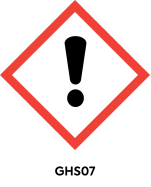
Precautionary statements :
| HAZARD | PRECAUTION |
|---|---|
| H302 Harmful if swallowed.
H412 Harmful to aquatic life with long lasting effects. |
P264 Wash ... thoroughly after handling. P270 Do no eat, drink or smoke when using this product. P273 Avoid release to the environment. P301 + P312 IF SWALLOWED: Call a POISON CENTER/doctor/… if you feel unwell. P330 Rinse mouth. P391 Collect spillage. |
IFRA
IFRA 51th :
This ingredient is not restricted for the 51th amendment